

Learn systematically how to professionally taste gin: from sensory analysis to mixability and quality factors. A practical guide for gin lovers 2026.
How to Taste Gin: A Comprehensive Guide to Enjoyment 2026
Mar 16, 2026

Tasting gin is much more than just a sip from the bottle. Many gin lovers overlook the subtle nuances that characterize craft spirits because they lack a structured approach. This guide shows you how to proceed systematically to discover the full aromatic profile. You will learn practical techniques that will elevate your tasting experience to a professional level and help you objectively assess quality.
Table of Contents
- Key Points at a Glance
- Preparation: The Basics for Gin Tasting
- Step-by-Step: Sensory Evaluation of Gin
- Checking Mixability: Evaluating Gin in Cocktails
- Understanding Evaluation Criteria and Quality Factors
- Discover Craft Gin at Mezzanotte
- Frequently Asked Questions about Gin Tasting
Key Points at a Glance
| Point | Details |
|---|---|
| Sensory Analysis | Systematically examine aroma, taste, and finish with targeted nosing techniques |
| Optimal Conditions | Use appropriate glasses at about 20 °C in a neutral environment |
| Test Mixability | Evaluate gin in classic cocktails like Gin & Tonic and Dry Martini |
| Consider Quality Factors | Pay attention to botanical origin, sustainability, and value for money |
| Use Rating System | Structure your impressions with scoring scales for objective comparisons |
Preparation: The Basics for Gin Tasting
A professional tasting begins long before the first drop touches your lips. The right equipment forms the foundation for precise sensory perceptions. Nosing glasses with a tulip-shaped opening optimally concentrate the aromas and allow you to identify even subtle botanical notes. Alternatively, white wine glasses also work, while wide tumblers reduce aroma concentration.
The temperature plays a crucial role in aroma development. Serve your gin at about 20 °C room temperature so that the essential oils of the botanicals can fully develop. Gin that is too cold locks in the aromas, while gin that is too warm overwhelms the nose. Take the bottle out of the refrigerator about 30 minutes before tasting.
Your tasting environment should be free of distracting odors. Avoid heavily perfumed rooms, candles, or freshly cooked food. Natural daylight helps you correctly assess the clarity and color of the gin. Also, prepare still water at room temperature to neutralize your palate between different samples.
Material list for tasting:
- 2 to 4 different gins for comparison
- Nosing glasses or tulip-shaped wine glasses
- Still water for neutralization
- Neutral bread or crackers as a palate cleanser
- Notebook for ratings and impressions
- Optional: Tonic water and cocktail accessories for mixability
The botanicals in gin significantly determine the aroma profile. Juniper forms the base of every gin, but citrus peels, coriander, angelica root, or exotic spices create the characteristic diversity. Familiarize yourself with the typical aroma notes that various botanicals produce. Citrus fruits bring freshness, coriander provides spicy notes, while iris or orris root contribute floral elegance.
Pro-Tip: Create an aroma chart with the most important botanical categories (citrus, spices, flowers, roots) and note during the tasting which notes you perceive. This significantly sharpens your sensory skills.
| Botanical Category | Typical Aromas | Examples |
|---|---|---|
| Citrus | Fresh, zesty, bright | Lemon, Orange, Grapefruit |
| Spices | Spicy, warm, complex | Coriander, Cardamom, Pepper |
| Flowers | Floral, elegant, perfumed | Lavender, Rose, Elderflower |
| Roots | Earthy, herbaceous, deep | Angelica, Iris, Ginger |
Step-by-Step: Sensory Evaluation of Gin
Sensory evaluation follows a systematic protocol that analyzes aroma, taste, and finish separately. Begin with visual inspection: Hold the glass against a white surface and assess its clarity. High-quality gin should be crystal clear, without cloudiness or suspended particles, unless it is an unfiltered craft gin.
When nosing, approach the glass cautiously at first. The alcohol content of 40 to 47 percent can numb the nose if you inhale too quickly. Hold the glass about five centimeters from your nose and inhale slowly through your nose. Swirl the glass lightly to release the aromas and try to identify individual botanical notes. Do you primarily smell juniper, or do citrus notes dominate? Do you recognize floral or spicy components?
Systematic tasting process:
- Visual: Check clarity, color, and viscosity in the glass
- Nosing: Perceive and identify aromas at different distances
- First sip: Distribute a small amount in the mouth, activate the front and middle palate
- Second sip: "Chew" with a little air to intensify aromas
- Finish: Evaluate the finish for length, balance, and aftertaste
- With water: Add a few drops and note changes
The taste test begins with a small sip, which you spread over your entire tongue. Let the gin sit in your mouth for a few seconds before swallowing. Pay attention to the initial sweetness, the medium spiciness, and any bitter notes. High-quality gins show a harmonious balance where no single note dominates. The infusion technique significantly influences how the flavors develop.

The finish describes what remains on your palate after swallowing. A short finish disappears within seconds, while a long finish lingers for minutes. Evaluate not only the length but also the quality: Does a pleasant juniper note remain, or does a burning alcohol taste dominate? Premium gins often leave a clean, slightly spicy aftertaste.
Pro-Tip: After the first tasting, add a few drops of still water. This lowers the alcohol content and can reveal hidden aromas that were previously masked by the alcohol. Many professionals swear by this technique.
Avoid these common mistakes: Tasting too quickly without breaks between samples fatigues your palate. Too much gin per sample (more than 2 cl) overwhelms your senses. Tastings immediately after heavily spiced meals distort your perception. Plan at least a two-hour gap since your last meal.
Checking Mixability: Evaluating Gin in Cocktails
The mixability of a gin only becomes apparent in combination with other ingredients. While some gins shine neat, others only unleash their full potential in classic cocktails. Start with a Gin & Tonic in a 1:3 ratio (5 cl gin, 15 cl tonic water). This mixing ratio is the gold standard for assessing how well the gin holds up against the bitterness and carbonation of the tonic.
For a Dry Martini, use a 7:1 ratio (7 cl gin, 1 cl dry vermouth). This cocktail is mercilessly honest: any weakness in the gin becomes immediately apparent. Stir the ingredients with ice for about 30 seconds until the outside of the glass mists up, then strain into a chilled martini glass. The dilution from melting ice is intentional and rounds out the flavor.
Blind tastings eliminate prejudice and brand loyalty. Ask a second person to mix several Gin & Tonics or Martinis without telling you which gin is in which glass. Number the glasses and evaluate each cocktail using the same criteria as for the neat tasting. You'll be surprised how often inexpensive gins outperform more expensive premium brands in cocktails.
Important aspects of cocktail evaluation:
- Balance: Do the gin, mixer, and any bitter components harmonize?
- Aroma persistence: Do the botanical notes remain recognizable despite dilution?
- Mouthfeel: Is the texture pleasant or too watery/oily?
- Finish in the cocktail: Does the mix leave a satisfying aftertaste?
The mixing techniques significantly influence the result. Stirring creates a silkier texture than shaking, which is particularly important for spirit-forward drinks like the Martini. For Gin & Tonic: build the drink directly in the glass, first add ice, then gin, and carefully pour the tonic along a bar spoon to preserve carbonation.
| Cocktail | Ratio | Preparation Method | Flavor Profile |
|---|---|---|---|
| Gin & Tonic | 1:3 | Build directly in glass | Refreshing, botanical, sparkling |
| Dry Martini | 7:1 | Stirred with ice | Clear, strong, elegant |
| Negroni | 1:1:1 | Stirred with ice | Bitter, complex, balanced |
Pro-Tip: Test the same gin with different tonic waters. Premium tonics like Fever-Tree or Thomas Henry emphasize different aspects of the gin and can create a completely different taste experience.
Understanding Evaluation Criteria and Quality Factors
The origin of botanicals is a crucial quality feature. Distilleries that use local or wild-foraged botanicals can often guarantee higher aroma quality than those that rely on standardized industrial goods. Italian craft distilleries, for example, often use Mediterranean herbs such as rosemary, basil, or citrus fruits from their own cultivation, which leads to unmistakable flavor profiles.
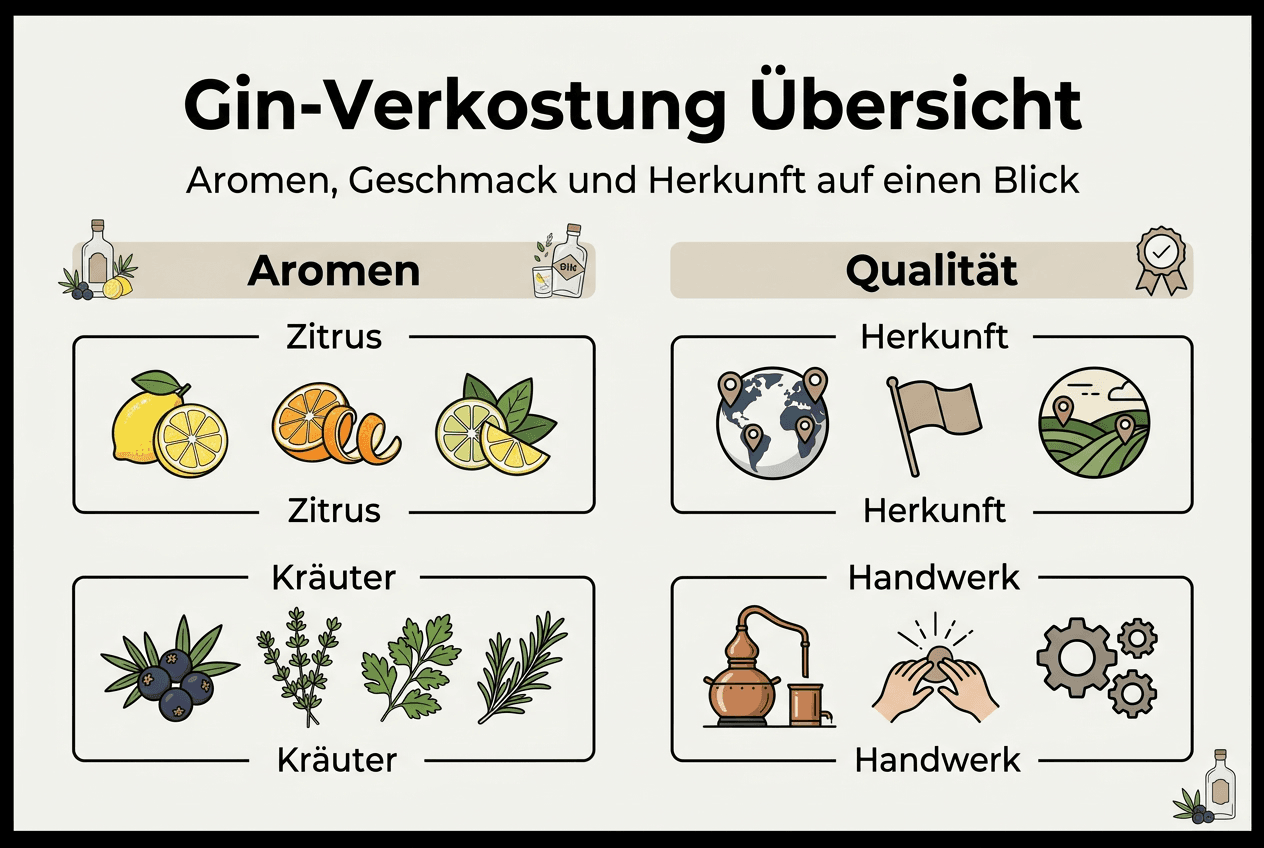
Sustainability is increasingly becoming a distinguishing feature. Pay attention to whether the distillery transparently informs about its production methods. Do they use renewable energies? Are botanicals organically grown? How do they deal with waste products? Empirical studies show that sustainable production methods often go hand in hand with greater care in distillation.
Awards and ratings offer guidance, but should be viewed critically. International competitions such as the International Wine & Spirit Competition or the San Francisco World Spirits Competition use standardized evaluation criteria. However, marketing budgets and submission strategies can influence the results. Primarily rely on your own taste.
Quality indicators when selecting gin:
- Transparent information on origin and production process
- Use of high-quality, ideally local botanicals
- Demonstrable sustainability practices in production
- Consistent quality across different batches
- Appropriate price-performance ratio for the complexity offered
The price-performance ratio is subjective, but analyzable. A gin for 25 euros should offer significantly more complexity and balance than one for 15 euros. Above about 40 euros, you move into the premium segment, where artisanal small batches, rare botanicals, or special distillation processes justify the price. Above 60 euros, you often pay for exclusivity, limited editions, or exceptional design.
"The true quality of a gin is not only reflected in its taste, but in the integrity of the entire production chain, from the selection of botanicals to bottling. Sustainability and transparency are not marketing terms, but commitments to the connoisseur and the environment."
If possible, visit the distillery or research its history. Family-run businesses with long traditions or innovative startups with a clear vision often produce more interesting gins than anonymous large corporations. The sustainability trends 2026 show that consumers increasingly value authentic stories and responsible production.
Discover Craft Gin at Mezzanotte
Now that you've mastered the art of gin tasting, it's time to deepen your knowledge with exceptional spirits. Mezzanotte combines Italian craftsmanship with innovative aroma profiles that will surprise even experienced gin connoisseurs. Each gin is distilled in small batches, using carefully selected botanicals from sustainable sources.

The craft gin collection provides the perfect foundation for your next tasting session. From classic London Dry interpretations to experimental infusions with Mediterranean herbs, you'll find spirits that challenge your sensory skills. Each bottle tells a story, inspired by Italian culture, mythology, and contemporary creativity.
Transparency and quality are at the heart of Mezzanotte. The distillery opens its doors to gin enthusiasts who want to learn more about the production processes. International awards confirm the commitment to the highest standards, while direct sales guarantee fair prices. Experience how professional tasting with exceptional spirits leads to unforgettable moments of pleasure.
Frequently Asked Questions about Gin Tasting
How should gin be stored before tasting?
Store gin upright in a cool, dark place at a constant temperature between 15 and 20 °C. UV light can impair the botanical aromas, while temperature fluctuations can reduce quality. Opened bottles should be consumed within 12 months, as the aromas slowly change due to oxidation.
Can gin be tasted without a special glass?
Yes, you can achieve good results with simple wine glasses. A tulip-shaped opening that concentrates aromas is important. Avoid wide tumblers or shot glasses, as they significantly limit aroma perception. Even a simple water glass with a slight taper upwards works better than specialized whisky glasses with too wide an opening.
What are typical misperceptions when tasting gin?
Many confuse alcohol sharpness with complexity or interpret dominant juniper as a sign of quality. In reality, quality is demonstrated in the balance of all botanicals. Another mistake is tasting gin too cold, which locks in aromas. Some tasters also overemphasize the visual aspect, while the aroma profile is crucial.
How does water influence the taste experience?
A few drops of water lower the alcohol content and can release hidden aromas that were masked by the alcohol. Too much water, however, dilutes the taste and destroys the balance. Start with 3 to 5 drops for 4 cl of gin and increase cautiously. Still water at room temperature works best, as it does not lower the temperature too much.
What role does temperature play exactly?
At 20 °C, the essential oils of botanicals unfold optimally, while gin that is too cold (below 15 °C) suppresses aromas. Above 25 °C, the alcohol dominates and covers subtle notes. Temperature also influences viscosity: warmer gin feels oilier, while cold gin appears more watery. Keep the temperature constant throughout the tasting to achieve comparable results.
Recommendation
- Types of Gin: 4 Types and 57% Alcohol for Intense Enjoyment – Mezzanotte | Distilleria & Spirits
- Gin Tasting Guide 2026: Mastering the Art of Tasting – Mezzanotte | Distilleria & Spirits
- Mixing Techniques for Gin: Creative Cocktails 2026 – Mezzanotte | Distilleria & Spirits
- Traditional Gin Production: Craftsmanship and Character – Mezzanotte | Distilleria & Spirits