

Discover detailed gin cocktail recipes, from the classic gin and tonic to creative variations. Learn exact proportions, professional techniques, and how to choose the ideal cocktail for every occasion with artisan gin.
Examples of gin cocktails for creative mixology 2026
Mar 19, 2026

Exploring gin cocktails can be an exciting challenge for those seeking a balance between botanical flavors and creativity. Many enthusiasts want to go beyond the traditional gin and tonic, discovering recipes that enhance the unique aromatic profiles of each spirit. This article will guide you through essential selection criteria, perfected classic recipes, and creative variations that will transform your mixology experience. You will learn professional techniques, exact proportions, and how to choose the ideal cocktail for any occasion, always prioritizing the artisanal authenticity that defines the best Italian gins.
Index
- Criteria for selecting gin cocktails
- Classic Gin and Tonic: secrets for the perfect balance
- Gin Lemon: fresh and light version for modern palates
- Gin Espresso Martini: sophisticated cocktail with intense aromas
- Comparison of gin cocktails: when to choose each one
- Explore artisanal gin for unique cocktails
- Frequently asked questions about gin cocktails
Key points
| Point | Details |
|---|---|
| Fundamental proportions | The balance between gin, mixers, and modifiers determines the success of the cocktail |
| Diverse styles | From refreshing classics to sophisticated coffee-based drinks, each recipe offers unique experiences |
| Method and presentation | Preparation and serving techniques preserve aromas and maximize botanical expression |
| Artisanal botanicals | Artisanal gins provide complexity and distinctive profiles impossible to replicate with industrial products |
Criteria for selecting gin cocktails
Selecting the right cocktail requires understanding various technical and sensory factors. Correct proportions are fundamental: an imbalance of just 5ml can transform a brilliant cocktail into a mediocre one. The relationship between the base alcohol, modifiers, and dilution must create harmony without any single element completely dominating.
The type of gin determines which recipes will work best. Gins with a predominance of juniper are perfectly suited for classic cocktails like the Negroni, while those with botanicals in gin that are floral or citrusy shine in lighter, more refreshing preparations. Knowing the aromatic profile of your spirit allows you to anticipate which complementary ingredients will work.
Preparation methods directly impact the final result. Consider these key variables:
- Shaken in a shaker: ideal for integrating fresh juices and creating texture
- Built directly in the glass: preserves carbonation in highballs
- Stirred in a mixing glass: maintains clarity and temperature in spirit-forward cocktails
- Contact time with ice: affects dilution and final temperature
The choice of complementary ingredients defines the cocktail's personality. Fresh citrus provides vibrant acidity, while syrups and liqueurs add complexity and body. Toppings such as tonic water, soda, or ginger ale must be selected based on their quality and bubble profile, as cheap versions can ruin even the best gin.
Professional tip: Taste your gin neat before mixing it. Identify its dominant and secondary notes to choose ingredients that enhance them rather than hide them.
Classic Gin and Tonic: secrets for the perfect balance
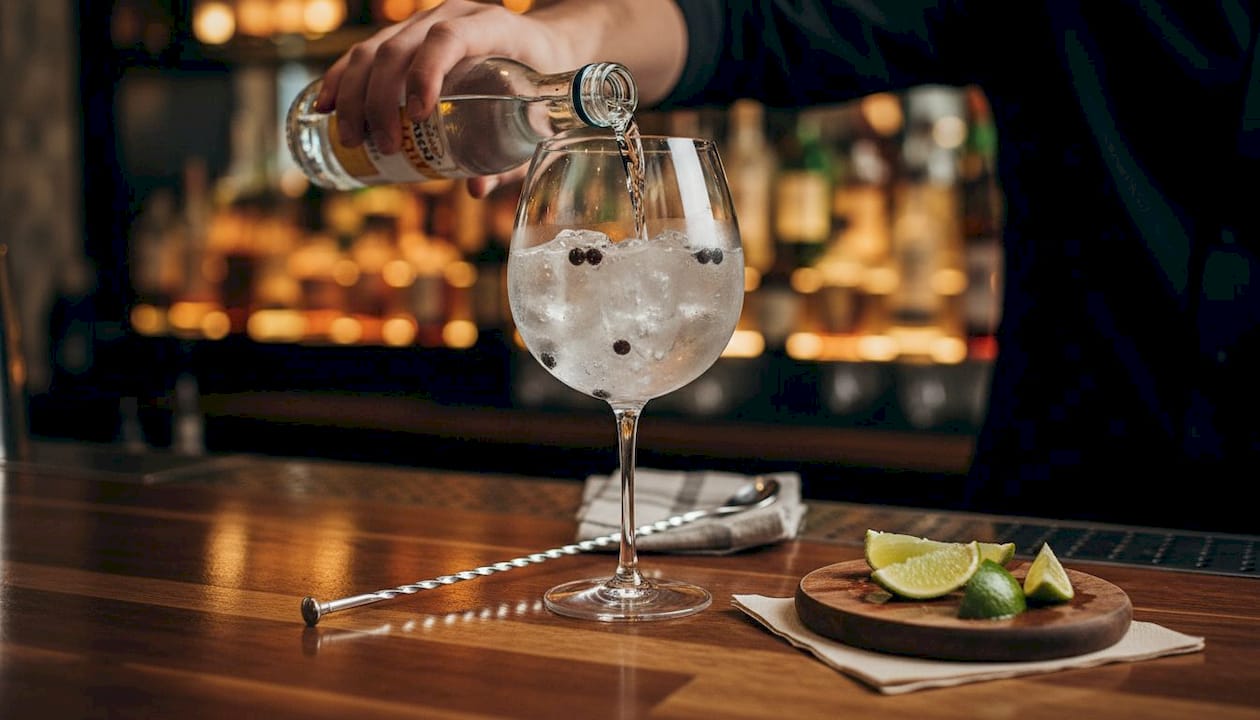
The gin and tonic represents the purest expression of the spirit, where every technical detail makes the difference between the ordinary and the exceptional. The ideal 1:2 ratio for gin and tonic allows the botanicals to shine without being overwhelmed by the bitterness of quinine. Some prefer 1:3 for longer sessions, but never exceed this dilution if you are looking for aromatic intensity.
Follow these steps for professional results:
- Chill a balloon glass in the freezer for at least 10 minutes
- Fill two-thirds of the glass with large ice cubes or spheres
- Pour 50ml of gin directly over the ice
- Slowly add the tonic along the side of the glass, never from a height
- Stir once with a gentle, upward motion
- Add garnish according to the dominant botanicals of your gin
The choice of garnish is not decorative but functional. A citrusy gin is enhanced with grapefruit or lemon peel expressed over the surface. Floral gins harmonize with rose petals or fresh juniper berries. Spicy profiles benefit from cardamom, pink pepper, or a cinnamon stick.
“Temperature and ice size are as important as the quality of the gin. Small ice dilutes quickly and ruins the balance, while large cubes maintain the ideal temperature without premature watering down.”
Professional tip: Pour the tonic in two stages: first half, stir gently, then complete. This method preserves more carbonation than pouring all at once.
To maximize the sensory experience, the gin and tonic balance recipe requires a cold balloon glass that concentrates aromas towards the nose. Avoid narrow glasses that disperse volatile compounds or wide glasses that allow excessive CO2 escape.
Gin Lemon: fresh and light version for modern palates
The gin lemon offers a vibrant alternative for those seeking refreshing acidity and less bitterness than the traditional gin and tonic. This preparation combines 50ml gin with 25ml fresh lemon juice, creating a balance between botanicals and citrus that is surprisingly versatile.
The preparation technique differs completely from the gin and tonic:
- Combine 50ml gin, 25ml freshly squeezed lemon juice, and 15ml simple syrup in a shaker
- Add ice until three-quarters of the shaker is filled
- Shake vigorously for 12 seconds to integrate and chill
- Strain with a fine strainer into a highball glass filled with fresh ice
- Top with 100ml of very cold soda
- Garnish with a thin lemon slice and an aromatic herb like basil or mint
Appropriate garnish enhances citrus aromas without competing with them. Consider these options depending on your gin:
- Fresh basil for gins with herbal notes
- Lemon thyme for Mediterranean profiles
- Mint for gins with cucumber or fresh botanicals
- Rosemary for spirits with spicy touches
The fundamental difference compared to the classic gin and tonic lies in texture and acidity. While the gin and tonic offers dry bitterness and persistent bubbles, the gin lemon presents bright acidity, balanced sweetness, and a smoother mouthfeel. It is ideal for accompanying light meals or as an aperitif in warm climates.
Explore more variations in our gin cocktails guide to discover combinations that suit your personal preferences.
Gin Espresso Martini: sophisticated cocktail with intense aromas
The gin espresso martini represents the pinnacle of contemporary mixology, fusing the botanical complexity of gin with the intensity of freshly brewed coffee. The combination of gin terpenes with espresso pyrazines creates a unique aromatic profile that captivates experienced palates.
The exact ingredients and proportions are:
- 45ml of gin with a robust botanical profile
- 30ml of freshly brewed and chilled espresso
- 20ml of quality coffee liqueur
- 15ml of simple syrup or liquid sugar
- Ice cubes for shaking
Shaking time is critical: exceeding 15 seconds extracts excessive bitterness from the coffee and dilutes the mixture too much. Shake vigorously but with temporal precision to achieve the characteristic foam without compromising balance. The foam should have a creamy consistency and a light caramel color.
Professional tip: Chill the espresso to room temperature before mixing. Hot espresso instantly melts the ice, ruining the cocktail's texture and dilution.
This mixture particularly benefits palates that enjoy intense and complex flavors. It works as a digestif after important dinners or as an after-dinner cocktail at evening gatherings. The caffeine from the espresso balances the alcohol, creating a stimulating yet refined experience.
| Element | Function | Technical note |
|---|---|---|
| Botanical gin | Spirit base | Prefer London Dry or gin with pronounced juniper |
| Cold espresso | Bitterness and body | Use medium roast coffee, never instant |
| Coffee liqueur | Sweetness and depth | Kahlúa or Mr. Black work excellently |
| Short shake | Foam and texture | Maximum 15 seconds to avoid over-dilution |
Presentation requires a pre-chilled martini glass and three coffee beans floating on the foam as a traditional garnish. Serve immediately to enjoy the foam at its optimal creaminess.
Discover more sophisticated options in gin cocktails 2026 to expand your repertoire of advanced mixology.
Comparison of gin cocktails: when to choose each one
Selecting the right cocktail based on the occasion and personal preferences optimizes the experience. This comparative table facilitates informed decisions:
| Cocktail | Key ingredients | Difficulty | Ideal occasion | Flavor profile |
|---|---|---|---|---|
| Gin Tonic | Gin, tonic, garnish | Low | Casual, aperitif | Refreshing, bitter, botanical |
| Gin Lemon | Gin, lemon, soda, syrup | Medium | Summer, light meal | Citrusy, fresh, balanced |
| Gin Espresso Martini | Gin, espresso, coffee liqueur | High | After-dinner, evening | Intense, creamy, complex |
Quick recommendations for specific moments:
- Casual afternoons: classic gin and tonic with simple garnish
- Elegant dinners: gin espresso martini as a refined digestif
- Summer gatherings: gin lemon with abundant fresh herbs
- Novice explorers: gin and tonic with conservative proportions
- Experienced mixologists: gin espresso martini with personalized adjustments
For novices, the gin and tonic offers less margin for error and allows experimentation with different tonics and garnishes without complex techniques. Experts can explore the gin espresso martini, where small adjustments in shaking time or proportions create significant variations.
Combining with artisanal gin elevates any of these recipes. Artisanal spirits provide unique botanicals that transform known cocktails into memorable experiences. A gin with Mediterranean botanicals can revolutionize your usual gin and tonic, while Japanese floral profiles create extraordinary gin lemons.
Explore 8 recommended gin cocktails to discover more options that perfectly suit your needs and mixology skill level.
Explore artisanal gin for unique cocktails
Mastering these recipes is just the beginning of your gin mixology journey. The true transformation occurs when you use Italian artisanal spirits that provide unique botanicals impossible to find in industrial gins. Each artisanal gin tells a story through its carefully selected ingredients, from alpine herbs to Mediterranean citrus.

At Mezzanotte, you will find a curated selection of artisanal gins that will elevate your cocktails to complete sensory experiences. From traditional London Dry to contemporary expressions with innovative botanicals, each bottle represents the excellence of Italian distillation. The ease of acquiring these exclusive products allows you to experiment with aromatic profiles that will completely transform your favorite recipes, creating cocktails that reflect authenticity and artisanal passion.
Frequently asked questions about gin cocktails
What is the ideal time to prepare a gin and tonic?
A well-executed gin and tonic requires between 2 and 3 minutes from chilling the glass to final service. Rushing compromises the preservation of carbonation and the proper expression of garnish aromas.
What alternatives to the classic gin and tonic work for dinners?
Gin lemon offers refreshing acidity that perfectly accompanies fish and seafood. For meats, consider a Negroni or Martinez that provide bitterness and complexity without dominating the flavors of the main dish.
How to store gin to maintain its aroma?
Store bottles upright, away from direct sunlight and heat sources. Once opened, gin maintains optimal quality for 12 months if stored correctly with a tightly sealed stopper.
What ingredients pair best with artisanal gin?
Fresh citrus, aromatic herbs like basil and rosemary, and mild spices like cardamom complement artisanal gin without hiding its unique botanicals. Avoid overly sweet mixers that mask the complexity of the spirit.
Can I substitute tonic with other mixers?
Yes, experiment with ginger ale for spicy sweetness, coconut water for tropical softness, or simply soda with artisanal syrup for total control over sweetness and flavor.
When to choose gin espresso martini over other options?
Choose this cocktail as a digestif after important dinners, at evening gatherings where you seek stimulation without excessive alcohol, or when you want to impress with advanced mixology techniques.
Discover additional techniques in our complete gin cocktails guide to perfect your mixology repertoire with Italian artisanal spirits.
Recommendation
- 8 Gin Cocktails to Try in 2026 for Unique Evenings – Mezzanotte | Distilleria & Spirits
- 10 Gin-Based Cocktails to Try in 2026 – Mezzanotte | Distilleria & Spirits
- Why Use Botanicals in Gin for Unique Flavor in 2026 – Mezzanotte | Distilleria & Spirits
- Mixing Techniques for Gin: Creative Cocktails 2026 – Mezzanotte | Distilleria & Spirits