

Discover how to recognize and choose the best award-winning Italian craft spirits: grappa, gin, vodka, and bitters certified by official 2026 competitions.
Award-winning spirits: a guide to the best Italian craft spirits 2026
Mar 19, 2026

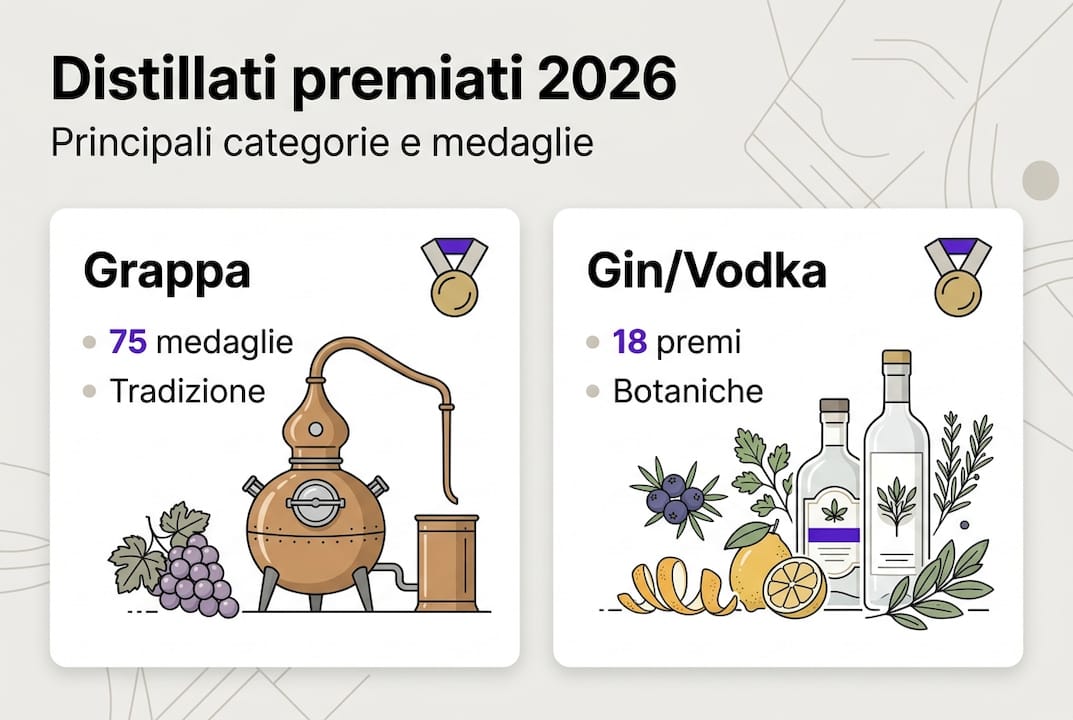
In 2025, the Alambicco d’Oro awarded 100 medals to Italian spirits, with 75 grappas and 18 gins recognized for exceptional quality. This evolution reflects how traditional Italian competitions have embraced innovative categories, transforming the landscape of craft spirits. Today, these awards represent an essential benchmark for enthusiasts and collectors seeking distinctive products, where distillation tradition and botanical experimentation converge in labels certified by expert juries. Understanding these accolades means accessing a curated selection of the best Italian spirits, where each medal tells a story of productive excellence and territorial identity.
Table of Contents
- Major Italian Competitions for Award-Winning Spirits
- Types of Award-Winning Spirits: Grappa, Gin, Vodka, and Bitter
- How to Read and Interpret Awards and Medals
- The Best Award-Winning Spirits to Try in 2026
- Discover Mezzanotte's Unique Award-Winning Spirits
- Frequently Asked Questions
Key Points
| Point | Details |
|---|---|
| Main competitions | Alambicco d’Oro and Grappa Award use expert panels and blind tastings to evaluate Italian spirits |
| Awarded categories | Grappa dominates with 75 medals in 2025, followed by gin with 18 accolades, plus vodka and craft bitters |
| Evaluation system | Juries assign scores out of 100 points, with Best Gold, Gold, and Silver distinctions based on aroma, taste, and balance |
| Value for consumers | Awards guarantee verified quality and help identify authentic craft products in an expanding market |
Major Italian Competitions for Award-Winning Spirits
The Alambicco d’Oro represents the most authoritative competition in Italy for spirits, managed by ANAG with over 60 certified tasters who evaluate grappas, gins, brandies, and other spirits through completely anonymous tastings. This approach eliminates biases related to brand or packaging, focusing judgment exclusively on measurable organoleptic parameters. Categories range from single-varietal grappas to London Dry gins, with Best Gold medals reserved for the highest scores that exceed rigorous qualitative thresholds.
The Grappa Award, on the other hand, focuses on celebrating grappa as a symbol of Italian distillation, awarding the Gran Medaglia d’Oro to products that excel in typicality and aromatic complexity. Both competitions publish detailed results with numerical scores, allowing producers and consumers to objectively compare performance. This transparent system has raised the quality standards of the entire sector, prompting even small craft distilleries to refine production techniques to compete with established realities.
For craft distilleries, winning medals in these contests means immediate visibility among specialized wine shops, Michelin-starred restaurants, and online retailers. Consumers use these accolades as a quality filter, reducing the risk of disappointing purchases in a market where craft offerings are rapidly growing. The history of Italian spirits shows how these competitions have catalyzed innovation, encouraging botanical experimentation in gin and creative aging in grappas.
“The blind tastings of the Alambicco d’Oro ensure that only organoleptic excellence is rewarded, regardless of brand recognition.”
Evaluation criteria include:
- Intensity and cleanliness of the aroma on the nose
- Balance between alcohol and aromatic components
- Persistence and complexity of the finish
- Fidelity to the declared type (single-varietal, botanical, aged)
This methodological rigor has made Italian awards comparable to international competitions such as the International Wine & Spirit Competition, positioning Italian craft spirits as a global benchmark of quality.
Types of Award-Winning Spirits: Grappa, Gin, Vodka, and Bitter
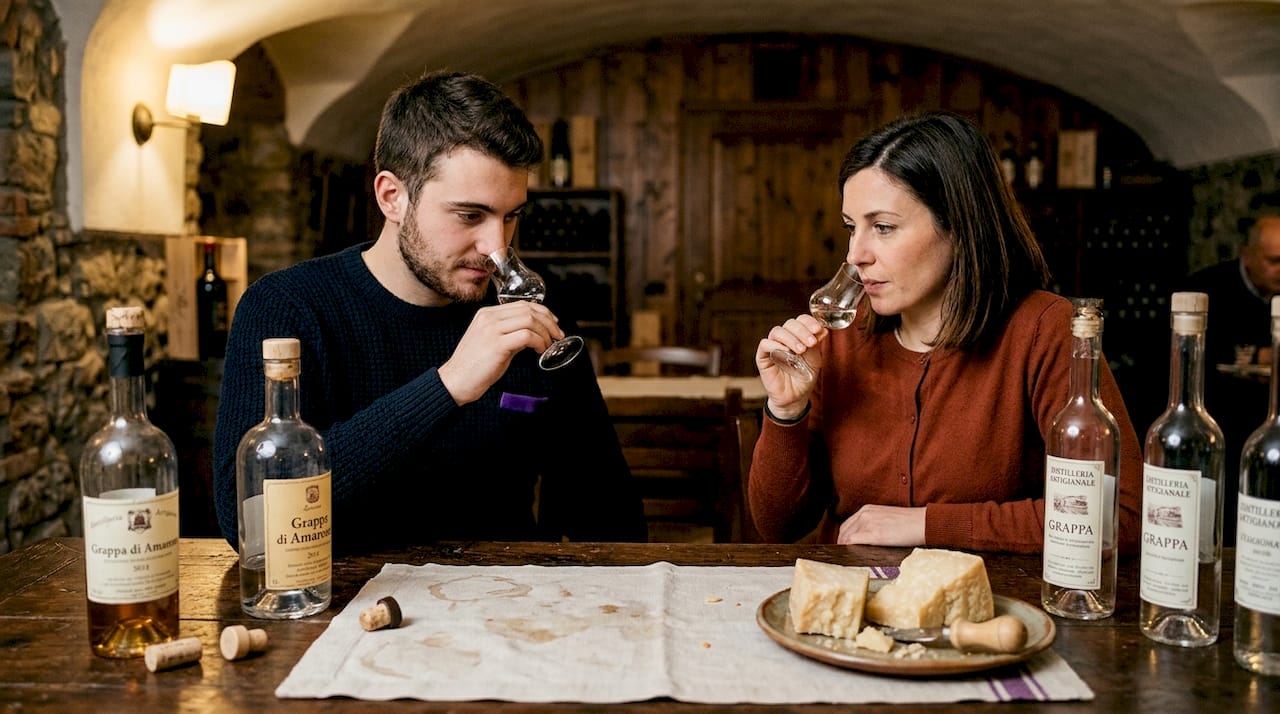
Grappa dominates Italian competitions due to tradition and production volume, with 75 medals awarded in 2025 reflecting the diversity between single-varietal, blended, and wood-aged grappas. Award-winning grappas are distinguished by their ability to express the varietal character of the original grape, with floral notes in Moscato, fruity notes in Prosecco, and spicy notes in Nebbiolo. Aging in oak, cherry, or acacia barrels adds complexity, with soft tannins and vanilla hints that balance the typical alcoholic strength of the category.
Gin has only gained traction in Italian competitions in recent years, but the 18 awards in 2025 demonstrate surprising production maturity. Italian distillers excel in Distilled gins, where Mediterranean botanicals such as Tuscan juniper, Sicilian citrus, and alpine herbs create distinctive aromatic profiles compared to Anglo-Saxon London Drys. The guide to Italian gin highlights how Italy's botanical biodiversity offers unique competitive advantages, with products that balance distillation tradition and sensory innovation.
Italian craft vodkas, though fewer in awards, are emerging thanks to local raw materials like Italian durum wheat or alpine potatoes, distilled multiple times for crystal purity. Award-winning bitters reinterpret historical formulas with complex botanical amari, often inspired by regional recipes that combine rhubarb, gentian, and citrus in sophisticated balances. These products attract mixologists seeking distinctive ingredients for signature cocktails.
Pro Tip: Understanding the difference between London Dry gin (botanicals added during distillation) and Distilled Gin (possible additions post-distillation) helps interpret awarded aromatic profiles and choose based on personal preferences.
| Category | 2025 Medals | Distinctive Characteristics | Average Score |
|---|---|---|---|
| Grappa | 75 | Varietal expression, creative aging | 88/100 |
| Gin | 18 | Mediterranean botanicals, unique aromatic profiles | 90/100 |
| Vodka | 4 | Purity, premium local raw materials | 87/100 |
| Bitter | 3 | Botanical complexity, bitter-sweet balance | 89/100 |
The table shows how gin, despite fewer total medals, achieves higher average scores, reflecting the high quality of craft productions entering the contests. Grappas maintain their numerical supremacy thanks to established tradition, while vodka and bitter represent growing niches where Italian craftsmanship can express creativity without rigid style constraints.
How to Read and Interpret Awards and Medals
Blind tastings form the methodological foundation of Italian competitions, with numerically coded samples presented to juries who are completely unaware of brand, price, or origin. Each taster fills out detailed sheets evaluating visual appearance, olfactory intensity, gustatory balance, and retro-olfactory persistence, assigning numerical scores for each parameter. The sum determines the final score out of 100 points, with predefined thresholds for different medals: Best Gold above 95 points, Gold between 90 and 94, Silver between 85 and 89.
The Grappa Award evaluation system uses panels of at least 5 judges per sample, discarding extreme scores to calculate a weighted average that reduces subjective variability. The Gran Medaglia d’Oro is awarded only when at least 80% of the judges agree on a score above 92, ensuring broad consensus on exceptional quality. This statistical rigor makes the results reliable and comparable year after year, allowing for tracking qualitative evolutions over time.
To correctly interpret awards on labels or in online descriptions, follow these steps:
- Verify the award year, as formulations and quality can vary between different vintages of the same product
- Check the type of medal (Best Gold, Gold, Silver) to understand the quality level compared to competitors
- Look for the numerical score when available, which is more informative than just the medal for detailed comparisons
- Consider the competition category, as a Gold in a crowded category like single-varietal grappa has greater competitive value
- Evaluate the reputation of the contest, prioritizing Alambicco d’Oro and Grappa Award for methodological reliability
“Scores assigned by certified juries through blind tasting represent the most objective guarantee of quality in the Italian craft spirits market.”
Professional tasting methodology requires a neutral environment, standardized glasses, and controlled temperatures to ensure identical conditions for all samples. Certified tasters follow rigorous protocols, rinsing their palate between samples and noting impressions before comparing them with colleagues. This process eliminates external influences and ensures that only sensory excellence is rewarded, regardless of marketing or presentation.
The Best Award-Winning Spirits to Try in 2026
Among the grappas awarded in 2025, Poli 36 Pomace Brandy achieved 92.8 points out of 100, distinguishing itself for aromatic elegance and exceptional smoothness resulting from prolonged aging in fine woods. Notes of vanilla, caramel, and sweet spices perfectly integrate with the base of selected pomace, creating a balance that justifies the high score. This grappa represents the pinnacle of Venetian tradition, where generations of master distillers have refined techniques passed down since 1898.
In the gin segment, Sir Miller Borsci won Best Gold thanks to a botanical profile that balances intense Tuscan juniper with Calabrian citrus and alpine herbaceous notes. Distillation in small batches allows precise temperature control, extracting essential oils without bitter or aggressive alcoholic notes. The result is a versatile gin, excellent both neat and in classic cocktails like Negroni or Martini, where the Italian botanicals distinctly emerge without overpowering other ingredients.
Award-winning craft vodkas include productions from Italian durum wheat distilled six times, achieving crystal purity with delicate hints of toasted cereal. These spirits challenge the perception of vodka as a neutral spirit, instead offering a subtle personality that enhances minimalist cocktails or room temperature tastings. Award-winning bitters reinterpret historical recipes with modern balances, reducing the excessive sweetness typical of vintage formulations and accentuating botanical complexity through prolonged infusions.
Pro Tip: Pair aged grappas with 70% dark chocolate or aged cheeses like 36-month Parmigiano Reggiano to enhance spicy and tannic notes, while Mediterranean gins pair perfectly with fresh oysters or raw fish with citrus.
| Spirit | Producer | Category | Score | Distinctive Notes |
|---|---|---|---|---|
| Acquavite 36 | Poli | Aged Grappa | 92.8/100 | Vanilla, caramel, exceptional smoothness |
| Sir Miller | Borsci | Distilled Gin | 95/100 | Tuscan juniper, Calabrian citrus, perfect balance |
| Durum Wheat Vodka | Artigianale | Premium Vodka | 88/100 | Crystal purity, toasted cereal notes |
| Alpine Bitter | Tradizione | Craft Bitter | 89/100 | Gentian, rhubarb, botanical complexity |
These products represent qualitative benchmarks in their respective categories, offering sensory experiences that justify higher investments compared to standardized industrial productions. The ranking of the best Italian gins includes many of these award winners, confirming how official accolades align with the preferences of enthusiasts and industry professionals.
Distinctive features include:
- Certified and traceable local raw materials from vine or field to bottle
- Artisanal distillation in discontinuous stills that preserve delicate aromas
- Fresh or naturally dried botanicals, without industrial extracts
- Aging in selected woods that add complexity without masking the base
- Bottling at optimal alcohol content for aromatic expression, often non-cold filtered
Trying these spirits means accessing the certified excellence of contemporary Italian distillation, where innovation and tradition merge into products that compete with the best international spirits while maintaining a strong territorial identity.
Discover Mezzanotte's Unique Award-Winning Spirits
After exploring the world of award-winning Italian spirits, it is natural to seek out producers who embody these standards of excellence with a distinctive identity. Mezzanotte represents the avant-garde of Italian craft distillation, combining traditional techniques with unique cultural inspirations that transform each bottle into a narrative experience. Our craft gins have earned international recognition thanks to botanical profiles that celebrate Mediterranean biodiversity, while premium vodkas reinterpret purity and character through selected Italian raw materials.
Each Mezzanotte spirit is born from a precise cultural concept, whether classical mythology, anime aesthetics, or pop iconography, translating visual storytelling into sensory complexity. This philosophy attracts collectors and enthusiasts looking for spirits with strong personalities, perfect for meditative tastings or signature cocktails that tell stories. Explore the complete catalog to discover how distillation tradition and contemporary creativity converge in award-winning bottles that redefine the Italian drinking experience.
Frequently Asked Questions
What are the main criteria for judging an award-winning spirit?
Juries evaluate aroma, taste intensity, balance between alcohol and aromatic components, retro-olfactory persistence, and fidelity to the declared type. Blind tastings eliminate biases related to brand or packaging, concentrating judgment exclusively on measurable organoleptic parameters through standardized evaluation sheets. Each spirit receives numerical scores from panels of certified experts, with weighted averages determining the final medals.
How to recognize a quality award-winning gin?
Look for medals from recognized competitions like Alambicco d'Oro with scores above 90/100, which indicate excellence in the balance between juniper and complementary botanicals. Check the type of production: London Dry or Distilled gin influences aromatic profile and complexity. Fresh Italian botanicals such as Calabrian citrus or alpine herbs create distinctive profiles compared to standardized industrial productions. However, awards are a starting point: personal tasting remains essential to identify individual preferences.
What is the difference between Best Gold and Gold?
Best Gold is awarded to spirits with scores above 95/100, representing absolute excellence in the category with broad consensus among judges. Gold covers scores between 90 and 94, indicating excellent quality but with room for improvement compared to top performers. Both medals guarantee products superior to the market average, but Best Gold identifies qualitative benchmarks that redefine category standards.
Are award-winning Italian spirits easily found in stores?
The artisanal nature of many award-winning producers limits traditional retail distribution, with reduced production volumes mainly destined for specialized wine shops and Michelin-starred restaurants. Specialized online shops like Mezzanotte offer direct access to these spirits, eliminating intermediaries and ensuring freshness. Distilleries often sell directly from their website or through exclusive wine clubs, allowing enthusiasts to purchase limited editions not available elsewhere.
How much do award-winning spirits cost compared to standard ones?
Award-winning Italian craft spirits generally range between 35 and 80 euros per 700ml bottle, reflecting premium raw materials, discontinuous distillation, and limited batches. This premium price is justified by superior organoleptic quality verified by independent juries, complete supply chain traceability, and careful packaging. Standard industrial productions cost 15-25 euros but use extracts, continuous distillation, and standardized botanicals that reduce the complexity and personality of the final product.
How to properly store an award-winning spirit?
Store bottles upright away from direct light and heat sources, ideally in a cellar or closed cabinet at a constant temperature between 15 and 20 degrees. High-proof spirits do not expire but can oxidize slowly after opening, so consume within 12-18 months to preserve optimal aromatic profile. Always close the stopper tightly after each use and consider decanting into smaller bottles when the level drops below half to reduce residual oxygen.
Recommendation
- Spirits Distillation Guide 2026: Avoid 40% Common Mistakes – Mezzanotte | Distillery & Spirits
- What does premium spirit mean: complete guide 2026 – Mezzanotte | Distillery & Spirits
- Why choose craft spirits in 2026: unique quality – Mezzanotte | Distillery & Spirits
- History of Italian spirits: craft tradition 2026 – Mezzanotte | Distillery & Spirits