

Discover the key differences between gin and vodka: botanicals vs neutrality, production by addition vs subtraction, and their impact on your tasting experience.
Gin and vodka: aromatic profiles and craft production
Mar 11, 2026

Many believe that gin and vodka are almost identical, two clear spirits that look alike. Yet, this visual similarity masks fundamental differences. Gin is characterized by its complex botanical aromas, while vodka seeks absolute neutrality. This article dissects their key distinctions, from production to aromatic profiles, to enrich your tasting experience and help you better appreciate each glass.
Table of Contents
- Origin and Common Alcoholic Base
- Production Process: Subtraction vs. Addition
- Aromatic Profile and Regulation
- Nuances, Exceptions, and Impact on Tasting
- Explore Our Artisanal Gins and Vodkas
- Frequently Asked Questions
Key Points
| Point | Details |
|---|---|
| Main Difference | Gin is flavored with mandatory botanicals including juniper, vodka is neutral and without a dominant flavor. |
| Alcoholic Base | Both share a neutral alcohol derived from grains or potatoes, but processed differently thereafter. |
| Production Method | Vodka is defined by subtraction (intensive filtration), gin by addition (botanical maceration). |
| Regulatory Framework | Gin requires a minimum of 37.5% alcohol and a predominance of juniper, vodka has no imposed aromas. |
| Tasting Impact | Gin offers a rich aromatic palette, vodka serves as an ideal neutral canvas for various cocktails. |
Origin and Common Alcoholic Base
Contrary to what their similar appearance and alcohol content suggest, both gin and vodka start from a neutral alcohol obtained through agricultural fermentation. This base can come from grains like wheat, rye, barley, or even potatoes and fruits. The initial objective remains the same for both spirits: to produce an alcohol devoid of distinctive aromas.
This initial neutrality forms the blank canvas on which distillers work. For vodka according to Britannica, this purity is kept intact. For gin, it becomes the medium for aromatic creation.
Common raw materials include:
- Traditional grains (wheat, rye, barley)
- Potatoes for creamier textures
- Fruits and molasses in some artisanal productions
- Beet sugar for economical distillates
The similarity stops at this basic stage. From this neutral alcohol, the paths diverge radically depending on the philosophy of each spirit.
Production Process: Subtraction vs. Addition
Vodka and gin take opposite paths after obtaining the base alcohol. Vodka focuses on subtraction through intensive filtration, systematically eliminating all traces of flavor or odor. Distillers repeatedly pass the liquid through various filters: activated carbon, quartz, volcanic lava sand.
Some brands even filter seven times or more to achieve near-perfect neutrality. This obsession with purity defines the very identity of vodka. The result? A clear spirit with an almost imperceptible taste, leaving only a clean alcohol sensation.
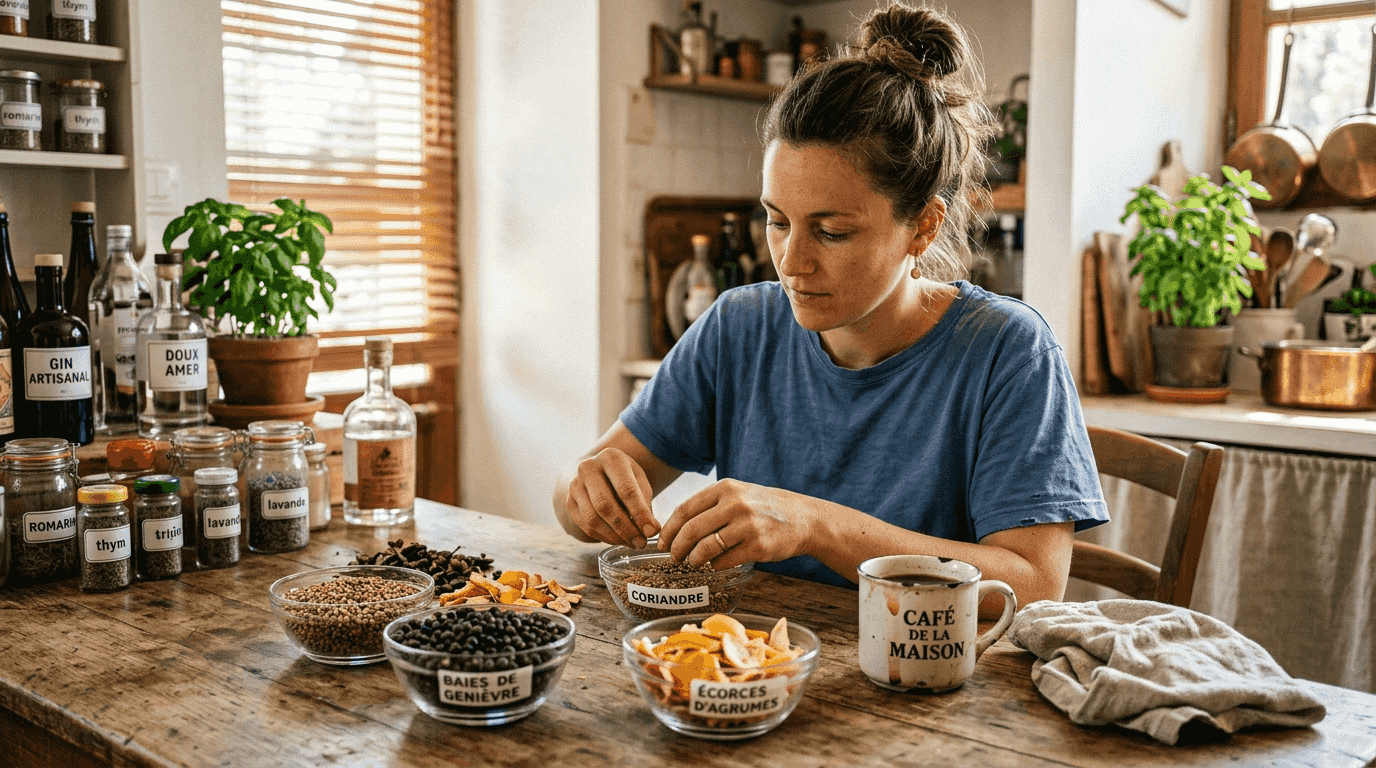
Gin adopts the inverse strategy of addition, infusing the neutral alcohol with carefully selected botanicals. Juniper remains the mandatory and dominant ingredient, bringing its characteristic resinous notes. Aromatization methods vary depending on the distillation techniques used.
The three main approaches include:
- Direct maceration of botanicals in alcohol before redistillation
- Vapor infusion where alcoholic vapors pass through a basket of botanicals
- Separate redistillation of each botanical followed by blending
Pro tip: During a comparative tasting, first smell both spirits at room temperature. Vodka will reveal almost nothing to the nose, while gin will explode with complex aromas from the first inhalation. This olfactory difference perfectly illustrates their opposing philosophies.
The complexity of gin depends on the number and quality of botanicals added. Some artisanal gins incorporate more than 30 different botanical ingredients, creating unique aromatic profiles. Roots, barks, citrus fruits, spices, and flowers combine for endless results.
Aromatic Profile and Regulation
European legislation establishes strict criteria to define these two spirits. Gin must contain a minimum of 37.5% alcohol and present a predominant juniper flavor according to EC Regulation 2019. This legal requirement guarantees gin's aromatic identity, preventing any drift towards overly neutral profiles.
Vodka, conversely, is defined as a neutral spirit without distinct aromatic characteristics beyond the alcohol itself. The European regulations 2025 specify that vodka is distilled to remove most congeners responsible for taste.
Let's compare their regulatory and sensory characteristics:
| Characteristic | Gin | Vodka |
|---|---|---|
| Minimum Alcohol | 37.5% vol. | 37.5% vol. |
| Dominant Aroma | Mandatory juniper | None (neutrality) |
| Botanicals | Multiple, variable | None required |
| Filtration | Moderate | Intensive, multiple |
| Taste Profile | Complex, herbaceous, resinous | Neutral, clean, mineral |
| Regulatory Base | Agricultural alcohol + botanicals | Purified agricultural alcohol |
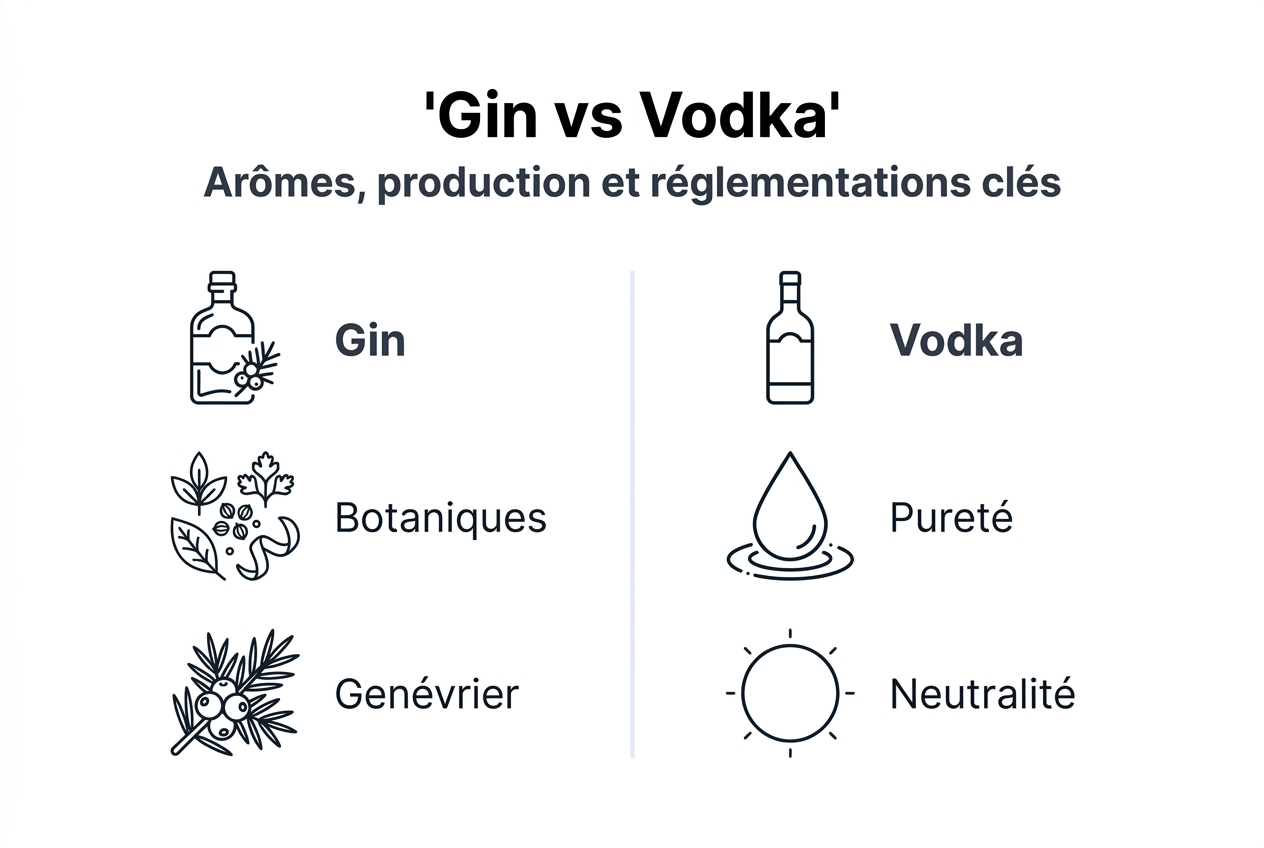
The botanicals of gin create a rich aromatic palette. Beyond juniper, one often finds coriander, angelica, citrus, cardamom, and iris root. Each distiller composes their secret recipe, giving rise to unique aromatic signatures.
The impact of botanicals goes beyond mere taste. They also contribute polyphenols and volatile aromatic compounds that enrich the sensory experience. Some gins present delicate floral notes, others pronounced spicy or citrus profiles.
Vodka, free from any aromatic obligation, can technically be produced from any fermentable agricultural matter. Its quality is judged by its purity, its smoothness on the palate, and the absence of an unpleasant burn. A premium vodka stands out for its silky texture and extreme gustatory cleanliness.
Nuances, Exceptions, and Impact on Tasting
The boundary between gin and vodka has some intriguing gray areas. Flavored vodkas blur the classic definition of neutrality by adding flavors after distillation. Vanilla, lemon, chili, or cucumber transform neutral vodka into a flavored base, without, however, making it fall into the gin category.
On the gin side, botanical diversity reaches new heights. Some artisanal distillers incorporate surprising local ingredients: sea algae, rare Nordic berries, regional wild herbs. This creativity constantly pushes the boundaries of the classic profile while respecting the predominance of juniper.
The final quality depends as much on know-how as on the recipe. Two critical factors influence the result:
- Precision of botanical infusion timing (too long = excessive bitterness)
- Chosen extraction method (maceration versus vapor versus separate distillation)
- Quality and freshness of botanical ingredients used
- Number of redistillations and selection of cuts (heads, heart, tails)
Pro tip: to develop your palate, taste each spirit neat at room temperature before discovering it in a cocktail. Vodka will reveal its texture and sweetness, gin will explode in successive aromatic layers. Then add a drop of water to release more volatile aromas in the gin.
The historical and cultural variations further enrich the landscape. Traditional English gin (London Dry) favors dryness and frank juniper notes, while Old Tom adds a touch of sweetness. Polish vodka differs from Russian vodka by subtle nuances of cereals.
The impact on your tasting choices becomes evident. For complex cocktails where flavors mingle (Negroni, Martinez), gin brings structure and personality. For mixtures where you want to highlight other ingredients (Bloody Mary, Espresso Martini), vodka offers an ideal neutral base.
Some contemporary gins push botanical exploration so far that they deviate from the classic profile. Japanese gins with notes of yuzu and sakura, Mediterranean gins dominated by thyme and rosemary, Scandinavian gins with arctic berries. This diversity transforms gin into an almost infinite category.
Explore Our Artisanal Gins and Vodkas
Now that you master the fundamental differences, put them into practice with spirits that embody these distinct philosophies. Our collection of Italian artisanal gin features creations crafted with carefully selected botanicals, each telling a unique story through its aromas.

At the same time, explore our selection of Italian artisanal vodka where purity meets traditional craftsmanship. Each bottle reflects the commitment to quality and authenticity that defines artisanal distillation. Discover how these technical differences concretely translate into memorable tasting experiences.
Frequently Asked Questions
What is the essential difference between gin and vodka?
Gin is a flavored spirit where juniper mandatorily dominates, accompanied by other botanicals creating a complex profile. Vodka seeks absolute neutrality through successive filtrations, eliminating any distinctive flavor. This fundamental opposition (addition vs. subtraction) defines their respective identity and their use in tasting.
Is vodka always tasteless?
Classic vodka indeed aims for maximum neutrality, with a taste profile almost imperceptible beyond the alcohol. However, flavored vodkas add flavors after distillation (vanilla, citrus, chili), moving away from this traditional neutrality while remaining technically vodkas.
What role does juniper play in gin?
Juniper is the mandatory main aroma of gin according to European regulations, bringing those characteristic resinous and slightly peppery notes. Without juniper predominance, a spirit cannot legally be called gin. This berry literally defines the aromatic identity of gin since its historical origins.
How does the distillation method differ?
Vodka undergoes multiple distillations and intensive filtrations to achieve maximum purity, eliminating congeners and flavors. Gin redistills neutral alcohol with botanicals through direct maceration, vapor infusion, or separate distillation then blending. These opposing approaches create spirits with radically different profiles despite their common base.
How do these differences influence tasting?
Gin offers a rich aromatic complexity allowing it to be enjoyed neat or in structured cocktails like the Negroni. Vodka provides an ideal neutral base to highlight other ingredients in various mixtures, from the Moscow Mule to the Cosmopolitan. Your choice depends on whether you are looking for character or neutrality in your glass.
Recommendation
- Difference between vodka and gin: aromas and stories compared – Mezzanotte | Distillery & Spirits
- Origin of gin ingredients: 70% of berries come from Europe – Mezzanotte | Distillery & Spirits
- Italian premium gin 2026: 73% value local botanicals – Mezzanotte | Distillery & Spirits
- Collector's Gin 2026: Complete Guide for 90% More Accuracy – Mezzanotte | Distillery & Spirits