

Discover what makes a vodka collection valuable: limited editions, artistic design, artisanal production, and unique cultural stories to savor and preserve.
Vodka Collections: Art, Stories, and Unique Design
Apr 21, 2026

TL;DR:
- Collectible vodka bottles are works of art with unique stories and designs.
- The most iconic collections include Absolut Art and Italian Sera Vodka.
- Craft production, limited editions, and exclusive packaging increase their value.
Behind every collectible vodka bottle lies something unexpected: not just a spirit, but a cultural manifesto, a work of art, a story worth telling. Those who truly know this world understand that choosing a bottle is never a trivial act. It’s an action that blends taste, aesthetics, and meaning. In this article, you’ll discover what makes a vodka collection valuable, what the most iconic examples globally and in Italy are, how these extraordinary bottles are produced, and how you can begin your collecting journey with awareness and passion.
Table of Contents
- What Makes a Vodka Collection Valuable
- Iconic Examples: Absolut Art Collection and Sera Vodka
- Craft Production: Techniques and Materials in Collectible Vodka
- Tasting and Valuing: How to Experience a Vodka Collection
- Vodka Collecting: Beyond the Bottle
- Discover and Choose Your Collectible Vodka
- Frequently Asked Questions About Vodka Collecting
Key Points
| Point | Details |
|---|---|
| Beyond Tasting | Vodka collections encapsulate art, stories, and culture in every bottle. |
| Excellence and Innovation | Production techniques and materials make each bottle unique and sought-after. |
| Full Valorization | Proper tasting and storage allow for a full appreciation of every collectible bottle. |
| Attention to Detail | Sustainable packaging and artistic collaborations are distinctive features to look for. |
What Makes a Vodka Collection Valuable
Not all vodka bottles are created equal. Some are produced in millions of identical copies, destined for any shelf. Others, however, are designed to last, to tell a story, to be admired as well as consumed. This is the fundamental difference between a common vodka and a collectible one.
As enthusiasts point out, a "vodka collection" primarily refers to limited editions and artisanal or iconic bottles that combine cultural stories, distinctive designs, and unique production methods. In other words, collecting vodka means choosing objects that carry a value beyond their contents.
The factors that transform a bottle into a collector's item are diverse:
- Limited Edition: Reduced production numbers increase rarity and value over time.
- Exclusive Packaging: Hand-blown glass bottles, sculptural shapes, labels illustrated by artists.
- Artist Signatures: Collaborations with renowned names in pop art, illustration, or contemporary design.
- Craft Production: Small distilleries, selected raw materials, traditional or innovative techniques.
- Storytelling: Each bottle carries a narrative, a specific cultural or geographical context.
"A collectible bottle isn't just opened for drinking: it's opened to discover a story."
Here's a quick comparison between mass-produced vodka and collectible vodka:
| Feature | Mass-produced Vodka | Collectible Vodka |
|---|---|---|
| Production | Industrial | Craft or limited edition |
| Design | Standardized | Exclusive, often signed |
| Value over time | Stable or declining | Can increase |
| Storytelling | Absent or minimal | Central and distinctive |
| Enjoyment | Immediate | To be savored and preserved |
Collecting vodka is a choice that combines passion and investment. It's not uncommon for rare bottles to reach high prices in the secondary market, just like fine wines or works of art. But for those approaching this world with genuine curiosity, the greatest value remains emotional and cultural.
Having illustrated how a vodka collection embodies stories and uniqueness, let's now discover the most iconic creations in the world of collectible vodkas.
Iconic Examples: Absolut Art Collection and Sera Vodka
Some collections have rewritten the rules of spirits, transforming vodka into a cultural phenomenon capable of engaging with the world of contemporary art. Two examples, in particular, deserve attention: Absolut and Sera Vodka.
The Absolut Art Collection is probably the most daring initiative ever undertaken in the industry. Active between 1986 and 2004, it produced over 850 works by 550 artists, turning bottles into true works of art with unique designs linked to pop art and 20th-century visual culture. Names like Keith Haring and Andy Warhol signed bottles that became part of collecting history. Each edition was a visual dialogue between the brand and the artist, with consistently surprising results.
Sera Vodka, on the other hand, represents Italian excellence in this sector. It is an Italian craft vodka with a seasonal collection comprising 4 variations, each flavored with typically Italian aromas and associated with a specific time of year. The packaging reflects a concrete commitment to sustainability: the cap is organic, made from wine-making waste, while the label is made from recycled paper. The bottles are also sold in tasting kits inside wooden boxes, turning the purchasing experience into a true ritual.
Here's a comparative table between the two collections:
| Aspect | Absolut Art Collection | Sera Vodka |
|---|---|---|
| Period | 1986 to 2004 | Ongoing |
| Origin | Sweden | Italy |
| Artists Involved | Over 550 | Italian artisans and designers |
| Sustainability | Not declared | High (organic cap, recycled label) |
| Format | Single bottle | 4 seasonal variations + wooden kit |
These realities demonstrate how types of craft vodka are much more varied than one might think. Each collection presents a different worldview, yet both share the idea that vodka can be much more than just a spirit.
Having seen some famous examples, let's now analyze the production processes and techniques that make these bottles truly exclusive.
Craft Production: Techniques and Materials in Collectible Vodka
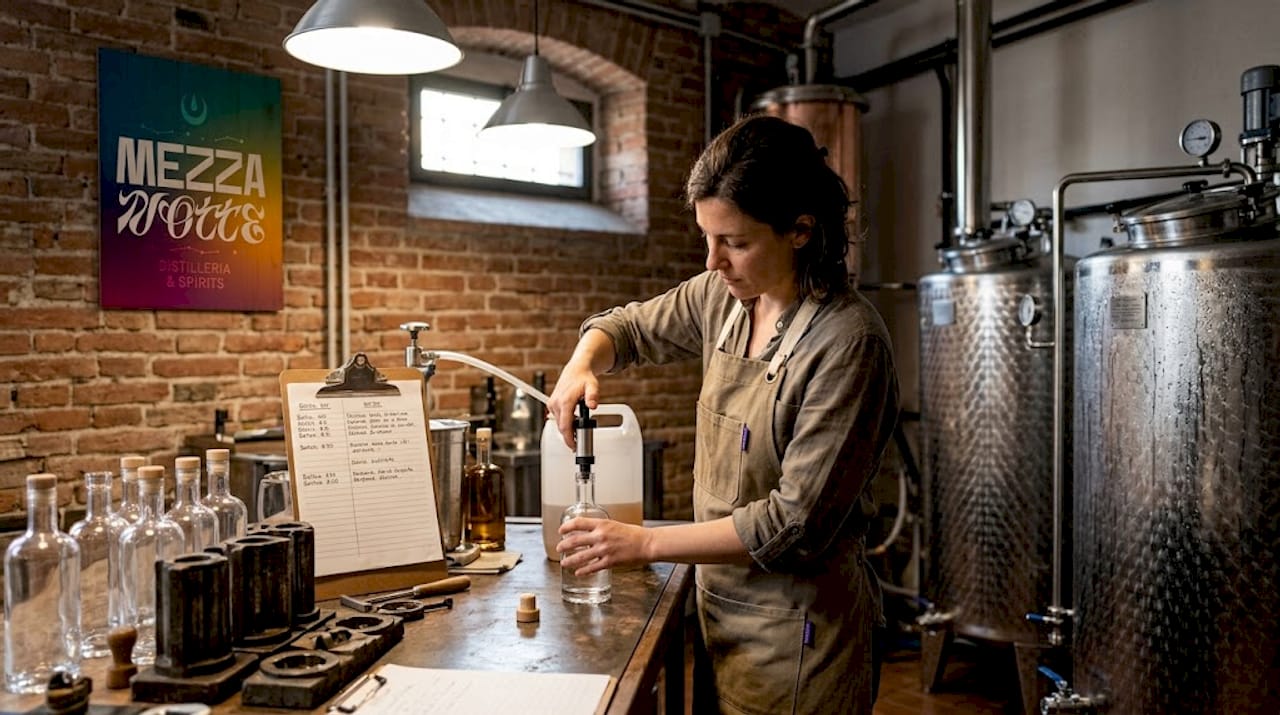
Understanding what's inside a collectible bottle means looking beyond the label. The production details tell a story of care, precision, and conscious choices that clearly separate craft vodka from industrial vodka.
The fundamental steps of craft production are:
- Raw Material Selection: Grains like wheat and rye or potatoes, often organic or certified.
- Controlled Fermentation: The mash is fermented with selected yeasts to achieve specific aromatic profiles.
- Multiple Distillation: Multiple distillations, up to 5 times for premium vodkas, remove impurities and refine the spirit's character.
- Advanced Filtration: Activated carbon filters are used, or in special cases, marble filters to neutralize residual impurities.
- Packaging Choice: Collectible bottles use hand-blown glass, eco-sustainable cork stoppers or recycled materials, and labels illustrated by artists.
An emblematic case is Belvedere, which produces organic vodka with certified Dankowskie rye, distilled four times without additives. The result is a clean, precise spirit, with a recognizable character even to non-experts.
The vodka ABV guide is an excellent starting point to understand how alcohol percentage affects the final sensory profile. It's not just about strength: a five-times distilled vodka can be smoother than a two-times distilled one, precisely because the process removes harsh notes.
Purity in craft vodka is often the decisive factor for the most demanding collectors. A pure vodka is not flat: it is neutral in the best sense, capable of expressing subtle nuances that are only perceived with attention.
Pro Tip: When evaluating a collectible vodka, always ask how many times it has been distilled and what type of filtration was used. These details will tell you a lot about the distiller's production philosophy.
Having understood what makes production processes special, let's now see how to taste and value a collection.
Tasting and Valuing: How to Experience a Vodka Collection
Having a beautiful collection to look at is already something. But truly experiencing it, through tasting and sharing, is another dimension. High-quality tasting requires attention to ABV, aromas, pairings, and proper storage.
Here are some practical tips to get started:
- Serving Temperature: Collectible vodka is served between 2 and 5 degrees Celsius, never frozen to the point of masking aromas.
- Appropriate Glassware: Use a tulip glass to concentrate aromas, or a traditional shot glass if you want a more authentic experience.
- Presentation: Open the bottle as a ritual. Describe it to your guests, tell the story it carries.
- Food Pairings: Craft vodka pairs well with caviar, smoked salmon, aged cheeses, and rye bread. Flavored variations also lend themselves to pairings with fresh fruit or light desserts.
The spirits tasting guide can help you structure a tasting session professionally, even if you are a beginner. Follow the visual, olfactory, and gustatory order: color, aroma, palate, finish.
If you also want to experiment with mixing, vodka-based cocktails will show you how some collectible bottles can become the base of extraordinary drinks without losing their identity.
For storage, remember:
- Keep bottles away from direct light and heat sources.
- Vertical positioning is preferable for vodkas with screw caps or synthetic stoppers.
- A cabinet or wine cooler at a constant temperature is the ideal environment.
Pro Tip: Use every tasting as an opportunity to observe the bottle's design closely. Often, graphic details reveal hidden meanings that enrich the overall experience.
After these strategies, let's explore a less conventional perspective on vodka collecting.
Vodka Collecting: Beyond the Bottle
There's a truth that those who have been collecting vodka for years know well: you're not just collecting bottles. You're building an archive of stories, visions, and values. Every bottle you choose says something about you, your cultural affinities, your relationship with beauty and artisanal care.
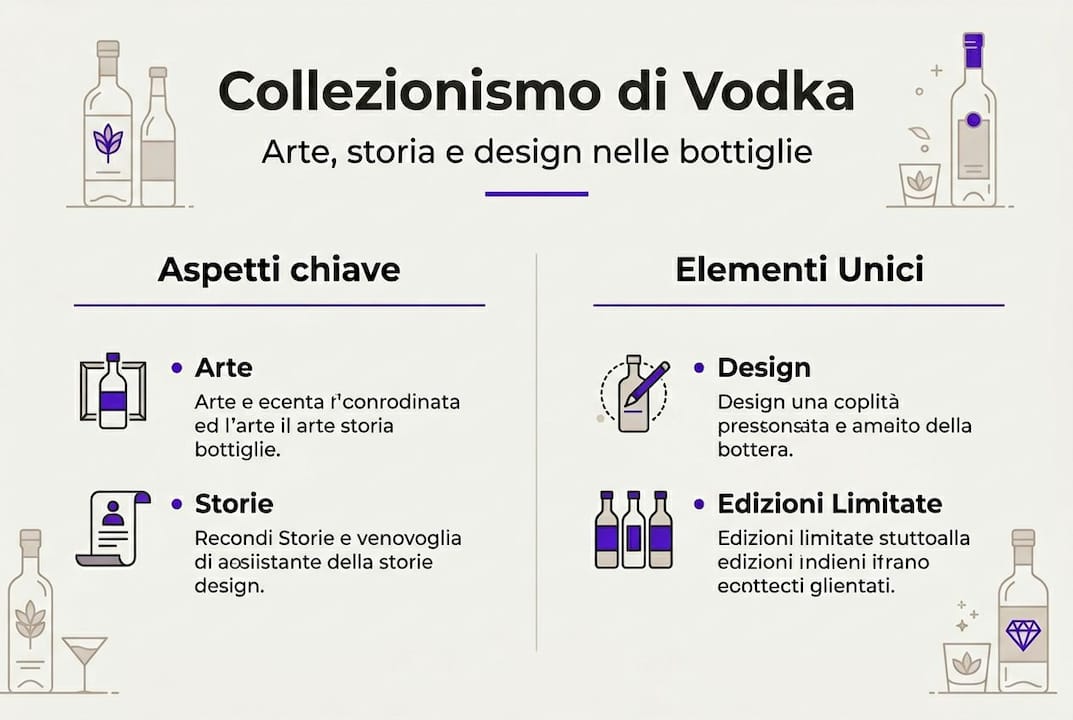
Vodka collecting has evolved into a movement that touches sustainability, art, and community. Realities like Sera Vodka with its sustainable packaging demonstrate that even spirits can be a meeting point between pleasure and environmental responsibility. This is not a marginal detail: it is a sign of how the sector is changing.
A true collector doesn't just pursue rarity. They seek dialogue. They want to understand the difference between worlds like the differences between vodka and gin, they want to compare traditions, explore new territories. In this sense, collecting vodka is a cultural act, not just a hobby. It's a way to be in the world with more awareness and curiosity.
Discover and Choose Your Collectible Vodka
If this reading has sparked something in you, the next step is simple: start exploring. On mezzanotte.shop you'll find a curated selection of Italian craft vodka with bottles that combine production quality, refined design, and authentic stories. Every bottle in the catalog has been chosen with the same criteria you've read about here: excellent raw materials, strong visual identity, cultural narrative.

If you want to expand your collection to other spirits, you can discover craft gins with equally interesting aromatic profiles and enviable packaging. The catalog is designed for those looking for more than just a simple bottle. Welcome to your next collector's ritual.
Frequently Asked Questions About Vodka Collecting
What is a vodka collection?
A vodka collection is a set of bottles unique in design, history, and production, often made in limited editions or with artisanal methods that clearly distinguish them from standard commercial versions.
What are the most famous vodka collections?
Among the most well-known are the Absolut Art Collection, with over 850 works by 550 artists, and Sera Vodka, the Italian seasonal collection with 4 aromatic variations and sustainable packaging.
What makes a collectible vodka different from a commercial one?
Artisanal care, exclusive packaging, and limited editions are the main factors. Multiple distillation and advanced filtration also contribute to creating a product incomparable to mass-produced versions.
What is the best way to store a collection-grade vodka?
It should be kept away from direct light and temperature fluctuations, preferably upright and in a dry environment with a constant temperature between 15 and 20 degrees Celsius.
Recommendation
- Plain vodka: authentic purity and artisanal stories – Mezzanotte | Distillery & Spirits
- Italian vodka: guide to artisanal excellences – Mezzanotte | Distillery & Spirits
- Instructions for collecting spirits: complete guide 2026 – Mezzanotte | Distillery & Spirits
- Vodka and alcohol content: complete guide for enthusiasts – Mezzanotte | Distillery & Spirits
- Custom Glasses: Unique Memories for Weddings – Shotglass24