

Discover how Italian art and design enrich premium spirits, influencing up to 70% of the perception of quality and the unique cultural experience.
The art of Italian premium spirits in 2026
Mar 6, 2026

Art in Italian premium spirits is not superficial decoration. Design influences up to 70% of the consumer's perception of quality and sensory experience. In Italy, where artisanal tradition merges with cultural innovation, each bottle tells a visual and emotional story that transforms the act of drinking into a multisensory adventure. Discover how art defines the authenticity and exclusivity of these spirits.
Table of Contents
- Historical and cultural context of art in premium spirits in Italy
- Artistic design and visual presentation: beyond a bottle
- Cultural narrative and storytelling in Italian artisanal spirits
- Personalization and exclusivity: art as the soul of author's spirits
- Common misunderstandings about art in premium spirits
- Impact of art and design on the market and consumer experience
- Conclusion: art and culture as keys to enjoying premium spirits in Italy
- Explore artisanal premium spirits with an artistic soul at Mezzanotte
- Frequently asked questions about the role of art in Italian premium spirits
Key points
| Point | Details |
|---|---|
| Art and design enrich the spirit culture | The integration of Italian aesthetics generates differentiation and economic value in the premium market. |
| Cultural storytelling creates an emotional connection | Narratives based on Italian symbols and territory strengthen the consumer-product relationship. |
| Artistic personalization defines exclusivity | Limited editions and collaborations with artists make author's spirits unique. |
| Design impacts perception of quality | Visual presentation decisively influences how the consumer values the product. |
| Artistic innovation drives growth | The premium market grew 15% thanks to differentiating artistic and cultural proposals. |
Historical and cultural context of art in premium spirits in Italy
The fusion between art and distillation in Italy is no coincidence. Italian art and design have evolved by integrating functionality and aesthetics to enrich industrial products like spirits. Since the Renaissance, Italian craftsmanship has been characterized by seeking beauty in everyday objects, turning each piece into a functional work of art.
In 20th-century Italian distilleries, this tradition was consolidated by integrating graphic design, heraldry, and symbolism into labels and bottles. Master distillers collaborated with local artists to create visual identities that reflected the territory and culture. This approach not only distinguished their products but elevated them to cultural symbols.
Today, contemporary Italian art influences the design of premium products through collaborations and culturally authentic visual language. Distilleries seek artists who interpret Italian myths, legends, and landscapes on labels and packaging, creating experiences that go beyond taste. This guide to buying exclusive spirits with authentic storytelling helps you appreciate these narratives.
Cultural elements present in Italian premium spirits include:
- Regional heraldry that connects the product with specific territories like Tuscany or Sicily
- Illustrations inspired by Roman and Greek mythology that evoke ancient traditions
- Typographies and finishes that replicate artisanal historical printing techniques
- Collaborations with contemporary artists for limited editions with unique visual identity
Artistic design and visual presentation: beyond a bottle
The bottle of an Italian premium spirit is a canvas where form, color, texture, and narrative converge. Design acts as a sensory and emotional vehicle that influences the perception of exclusivity and quality. Each visual element is carefully planned to communicate the essence of the liquid it contains.
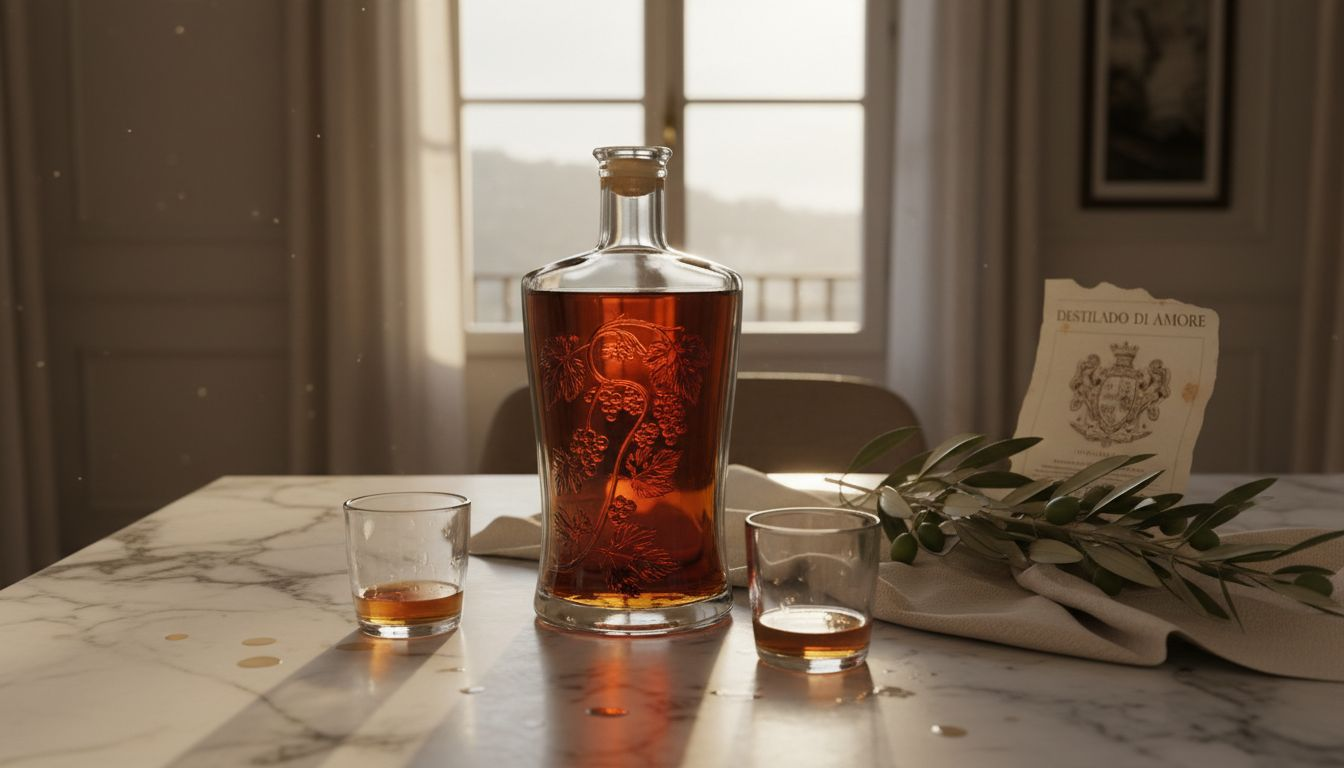
Key design components include the choice of glass, which can be transparent to showcase the spirit's color or colored to create mystery. Labels incorporate embossing, metallic foil, or artisanal screen printing techniques that provide tactile texture. The stopper is not just functional; it can be ceramic, natural cork, or engraved metal, adding a luxurious detail.
To maximize visual and sensory impact, premium distilleries follow this process:
- Define the cultural or symbolic story they want to communicate with the product
- Select artists or designers whose visual style resonates with that narrative
- Develop prototypes that integrate tactile, visual, and functional elements
- Conduct consumer perception tests to validate emotional impact
- Produce limited editions that maintain exclusivity and artistic authenticity
Limited editions with artistic collaborations are especially valued. Italian distilleries have worked with illustrators, sculptors, and graphic designers to create bottles that become collectible pieces. These collaborations not only elevate perceived value but also build a community among art and spirit enthusiasts.
Pro tip: When identifying authentic artisanal spirits, observe the coherence between visual design and product origin. An authentic design reflects the territory, ingredients, and tradition without falling into generic clichés.
Cultural narrative and storytelling in Italian artisanal spirits
Every Italian premium spirit carries a story. Cultural narrative uses historical symbols to reflect the unique essence of the spirit, enriching the consumer's experience. These stories transform a purchase into an emotional connection with Italian culture.
Heraldry has traditionally been a powerful visual language in Italy. Family crests, regional symbols, and historical emblems appear on spirit labels to communicate lineage, tradition, and authenticity. A Tuscan gin might incorporate the Florentine lily, while a Sicilian amaro uses the triskele, an ancient symbol of the island.
The stories accompanying these symbols connect the product to the territory. A distillery might narrate how its botanicals come from medieval monastic gardens or how its recipe was rescued from centuries-old family archives. These stories are not empty marketing; they are documented and linked to real people, places, and moments.
The differential emotional experience arises when the consumer feels part of that narrative. By uncorking a bottle with illustrations from the Divine Comedy, one not only tastes a liquor but travels through Dante's imagination. This guide on storytelling in spirits delves into how to evaluate narrative authenticity.
Notable examples of Italian cultural storytelling include:
- Spirits inspired by classical operas that incorporate visual and aromatic references to emblematic characters
- Gins that narrate the history of Italian explorers with ancient maps on their labels
- Vodkas that reinterpret Roman myths through contemporary illustrations by local artists
- Amaros that celebrate regional festivals with special editions capturing the essence of each celebration
Personalization and exclusivity: art as the soul of author's spirits
Author's spirits represent the pinnacle of artistic personalization in Italy. Author's spirits allow for the personalization of ingredients and design, merging art and craftsmanship to achieve unique exclusivity. Each bottle is the result of an individual creative vision that challenges conventions.
Personalization encompasses multiple dimensions. In content, master distillers experiment with rare botanicals, non-traditional aging processes, and aromatic blends inspired by personal experiences. In design, they collaborate with artists to create hand-painted labels, glass engravings, or sculptural packaging.
Limited editions are essential to maintain exclusivity. Producing only 500 or 1000 bottles of an artistic collaboration creates urgency and collectible value. Enthusiasts actively seek out these releases, turning each acquisition into a cultural event. Furthermore, these unique artisanal spirits appreciate over time.
| Aspect | Commercial Spirit | Artistic Author's Spirit |
|---|---|---|
| Production | Thousands or millions of units | Limited editions of hundreds |
| Design | Standardized for mass market | Personalized with artistic collaboration |
| Narrative | Generic or brand-centric | Culturally specific and profound |
| Price | Accessible and competitive | Premium with added artistic value |
| Experience | Functional and consistent | Emotional, collectible, and unique |
Pro tip: When investing in author's spirits, verify the authenticity of the artistic collaboration. The best ones include certificates signed by the artist or detailed information about the creative process.
Common misunderstandings about art in premium spirits
There are myths that minimize the real impact of art in spirits. The most common is to think that design is mere superficial decoration with no influence on the liquid's quality. This belief ignores how visual presentation sets sensory expectations that affect the actual tasting.
Another misunderstanding suggests that art merely justifies inflated prices without adding tangible value. The reality is that art is a strategic factor influencing up to 70% of quality perception and goes beyond visual appearance. Neuroscience studies of consumer behavior show that design activates pleasure-related brain regions even before tasting the product.
Some consumers believe that all premium spirits use similar art, making this factor irrelevant. However, authentic art radically differentiates products in a saturated market. A bottle with culturally specific illustrations and coherent narrative stands out against generic or copied designs.
The idea also circulates that art is secondary to the quality of the spirit. In reality, both are complementary. An excellent spirit without artistic presentation misses opportunities to communicate its value. Likewise, an impressive design with mediocre liquid disappoints and harms long-term reputation.
Evidence disproving these myths includes:
- Measurable increases of up to 40% in willingness to pay when design incorporates authentic cultural art
- Higher repurchase and recommendation rates for spirits with coherent artistic narratives
- International awards that recognize design as a criterion as important as taste
- Accelerated growth of premium segments where art and culture are primary differentiators
Impact of art and design on the market and consumer experience
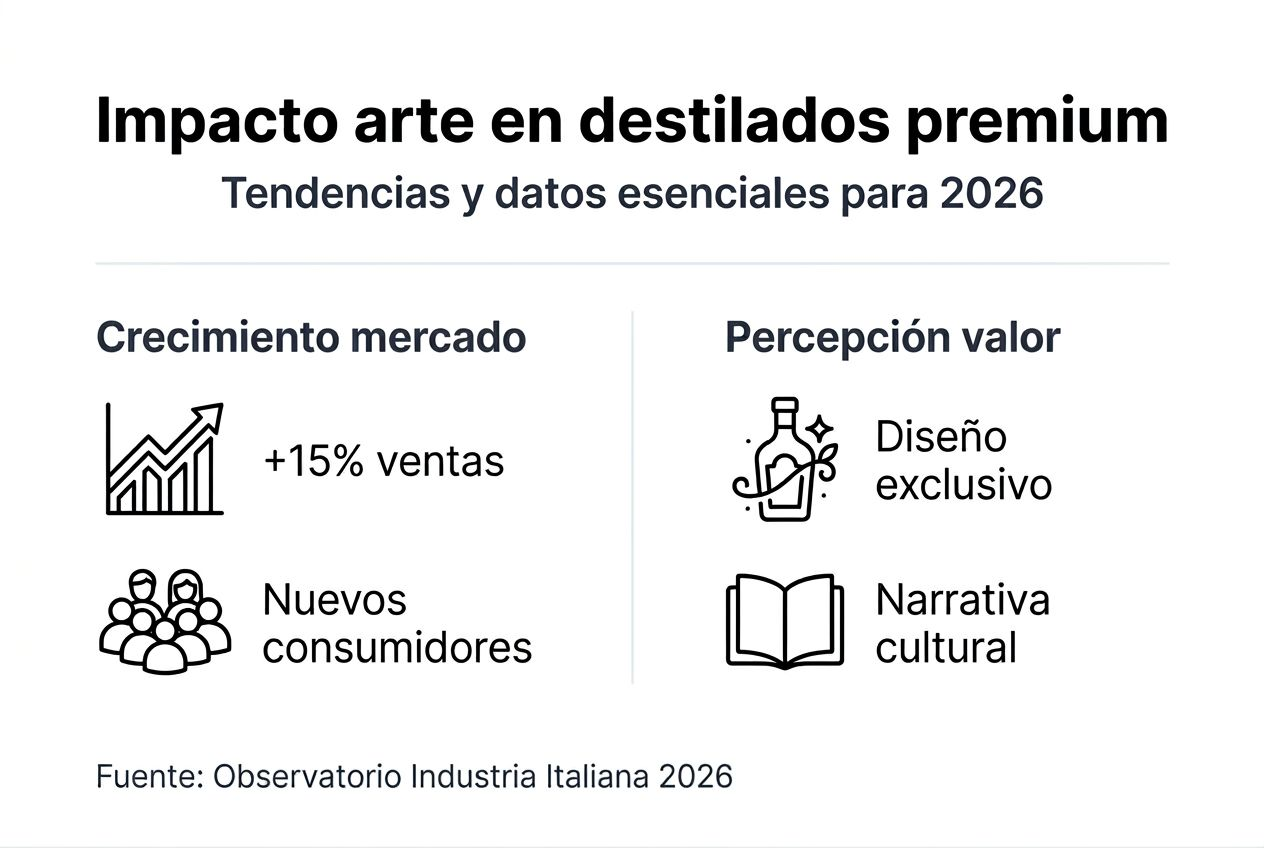
The premium spirits market has undergone a radical transformation driven by art and culture. The global premium spirits market grew 15% in 2024, driven by artistic and cultural innovations that add exclusivity and value. This growth continues in 2026, especially in segments where design and narrative play a leading role.
Perceived value increases exponentially when the cultural narrative is authentic and coherent. Italian consumers, knowledgeable about their rich artistic heritage, quickly detect when a design is superficial versus when it genuinely reflects tradition and territory. Products that achieve this authenticity justify premium prices without resistance.
The cultural and emotional benefits for Italian consumers go beyond the physical product. Acquiring a spirit with significant art is participating in the preservation of traditions, supporting local artists, and celebrating cultural identity. This social and cultural dimension adds layers of satisfaction that generic products cannot offer.
The Italian premium gin market clearly shows this trend, with consumers valuing local botanicals and cultural design.
| Indicator | Impact of art and design |
|---|---|
| Premium market growth | 15% annually driven by artistic innovation |
| Increased perceived value | Up to 40% more willingness to pay with cultural design |
| Repurchase rate | 25% higher for products with authentic narrative |
| Word-of-mouth recommendation | 30% higher when design generates conversation |
| Collector segment | 20% annual growth in limited artistic editions |
Conclusion: art and culture as keys to enjoying premium spirits in Italy
Art is not an accessory in Italian premium spirits; it is their soul. From bottle design to cultural narrative, every artistic element enriches the consumer's sensory and emotional experience. The integration of Italian artisanal tradition with contemporary innovation creates unique products that transcend functionality.
The emotional and cultural connection differentiates memorable spirits from forgettable products. When you choose a spirit with authentic art, you are not just acquiring an exceptional liquid, but a piece of living Italian culture. Value the storytelling, verify the coherence between design and origin, and look for genuine artistic collaborations.
Explore Italian artisanal spirits that celebrate art and culture. Your experience will be richer, more authentic, and more meaningful.
Explore artisanal premium spirits with an artistic soul at Mezzanotte
At Mezzanotte, every bottle tells a unique visual and cultural story. Our artisanal Italian spirits integrate exceptional design, narratives inspired by myths and pop culture, and internationally awarded quality. Discover Italian artisanal gin with local botanicals and labels that celebrate tradition.
Explore Italian artisan vodka with handcrafted processes and presentations that elevate every experience. Our collection of Italian artisan spirits offers exclusivity and authenticity for those who value art, culture, and exceptional taste. Live the sensory adventure you deserve.
Frequently asked questions about the role of art in Italian premium spirits
What role does art play in Italian premium spirits?
Art is fundamental for creating multisensory experiences and communicating cultural authenticity. It influences the perception of quality, generates emotional connection, and differentiates products in competitive markets through visual design and coherent narrative.
How does bottle design affect the tasting experience?
Design sets sensory expectations that influence taste perception. Visual and tactile elements activate pleasure centers in the brain before tasting the spirit, increasing satisfaction and memorability of the experience by up to 70%.
Why are designer spirits more exclusive?
Designer spirits combine artistic personalization, limited editions, and collaborations with artists to create unique products. This exclusivity is reflected in rare ingredients, non-traditional processes, and collectible designs that are not mass-produced.
Does art in spirits justify premium prices?
Yes, when the art is authentic and consistent with the quality of the liquid. Investment in cultural design, artistic collaborations, and genuine narratives adds tangible value that consumers recognize and pay for, increasing purchase intent by up to 40%.
How to identify authentic art in Italian spirits?
Verify consistency between visual design and the product's territorial origin. Authentic art reflects specific cultural symbols, includes information about collaborating artists or artisanal techniques used, and avoids generic clichés that do not connect with real Italian tradition.
What artistic trends dominate premium spirits in 2026?
Collaborations with contemporary artists, reinterpretation of classical myths with modern aesthetics, minimalist designs highlighting artisanal quality, and sustainable packaging with traditional printing techniques. The fusion of pop culture with Italian heritage is also gaining relevance among young consumers.
Recommendation
- Exclusive Spirits Buying Guide: 87% Prefer Authentic Storytelling – Mezzanotte | Distillery & Spirits
- 6 types of premium spirits you need to know today – Mezzanotte | Distillery & Spirits
- Top 6 Vodka Cocktails in 2026 for Mixology Enthusiasts – Mezzanotte | Distillery & Spirits
- Master the use of vodka in Italian mixology in 2026 – Mezzanotte | Distillery & Spirits