

Want to discover Italy's best amaros of 2026? History, tips, tastings, and news await to guide you in making the perfect choice. Which one will you try?
7 Best Italian Liqueurs You Absolutely Must Try in 2026
Dec 28, 2025

In recent years, the renaissance of amaro has captivated conviviality and culture enthusiasts, becoming the symbol of a new era. In 2026, tradition and innovation intertwine, bringing Italian amaro to unprecedented levels of excellence.
In this article, I'll guide you through the seven best Italian amaros you absolutely must try in 2026. We'll analyze their history, unique characteristics, prices, benefits, and who they're ideal for. Get ready to be inspired by their unique flavors and choose your next favorite amaro.
History and Culture of Italian Amaro
Discovering the history of amaro is like taking a journey through mysterious herbs and convivial rituals. This liqueur has always accompanied moments of celebration and conviviality, becoming a true icon of Italian culture. But how did it come about and why is it still so beloved today?
Origins of bitters in Italy
Italian amaro has its roots in the 19th century, when it was prepared as a digestive remedy in pharmacies and monasteries. The first recipes originated within the walls of convents and abbeys, where monks experimented with blends of local herbs, roots, and spices.
These elixirs, designed to aid digestion, have been passed down from generation to generation, becoming increasingly refined. The recipes were often secret and jealously guarded within the family. For example, some families still preserve ancient notebooks with precise doses of gentian, rhubarb, or red cinchona.
According to ISTAT, over 60% of Italians consume amaro at least once a year. If you'd like to learn more about the history and traditions of amaro, I recommend reading this article on the history and culture of Italian amaro .
Evolution and recent trends
In recent years, amaro has experienced a true renaissance thanks to the mixology boom. More and more bartenders are choosing artisanal amaro to create original and surprising cocktails. The return to traditional methods and the use of local ingredients have made these products even more sought-after.
Exports grew 15% in 2023, a sign that the passion for amaro is growing abroad too. New generations are attracted not only by the taste, but also by the creative packaging and the storytelling that accompanies each bottle. Some historic brands have succeeded in reinventing themselves, launching limited edition versions that combine innovation and tradition.
Bitter as a social and cultural symbol
Amaro is not just a liqueur, but a true symbol of sociality. It's drunk after dinner, during aperitifs, or on special family occasions. In many families, offering guests a glass of amaro is a gesture of welcome and sharing.
During the holidays, amaro is often paired with traditional regional desserts, creating unique gastronomic pairings. Experts emphasize how important this ritual is for strengthening a sense of belonging and passing down traditions. Enthusiasts often recount special tastings in the company of friends and family.
Differences between regional bitters
One of the riches of Italian amaro lies in its regional diversity. In the North, aromatic profiles based on Alpine herbs, such as genepì or absinthe, prevail. In Central Italy, amaros with roots, spices, and a distinct bitterness are found. In the South, however, citrus fruits and Mediterranean plants such as myrtle and licorice dominate.
Here is a summary table:
Region |
Typical ingredients |
Bitter example |
|---|---|---|
North |
Alpine herbs, gentian |
Amaro Nardini |
Center |
Roots, spices |
Bitter Sibyl |
South |
Citrus fruits, licorice |
Amaro del Capo |
Preferences vary greatly from one area to another. Interesting fact: some historic denominations are protected and enhance the connection with their territory of origin, making each Amaro Italia unique and inimitable.
How to Choose the Perfect Amaro: Essential Criteria
Choosing the perfect amaro can seem like a journey through a thousand different flavors and stories. But how do you know which one is truly right for you? Let's explore together the essential criteria for choosing among ingredients, alcohol content, packaging, and price, so you can find the perfect companion for your special evenings.
Ingredients and botanicals
The foundation of every quality Italian amaro is the choice of raw materials. Herbs, roots, spices, and citrus fruits are expertly blended to create unique flavor profiles. Have you ever tried an amaro with native botanicals, like Alpine gentian or Sardinian myrtle? Rare botanicals make every sip a discovery.
Today, many producers are focusing on organic and sustainable ingredients. This not only improves the flavor, but also makes the experience more ethical. If you like to experiment, browse the selection of artisanal Italian bitters to discover all the varieties and compare the botanicals used.
Alcohol content and aromatic profile
When choosing an amaro, the alcohol content is a crucial factor. It generally ranges from 16 to 35 percent. A lower alcohol content provides a smooth sip, perfect as an aperitif. A higher alcohol content, however, accentuates the bitter notes and spicy nuances.
The aromatic profile can be sweet, dry, citrusy, herbaceous, or spicy. Do you like pairing it with desserts or cheeses? Then opt for a bitter with citrus or spicy notes. According to recent research, Italian tastes are shifting toward more complex and natural aromas.
Packaging, storytelling and awards
Appearance matters too. The packaging of an amaro can be a true collector's item. Artistic labels, uniquely designed bottles, and meticulous details tell the story of the product and the distillery.
Don't underestimate awards and certifications: they're often synonymous with quality and attention to detail. Giving a gift of a bottle with striking packaging or a fascinating story makes any occasion even more special. Some bitters have received international recognition precisely for their innovative storytelling.
Value for money
The bitters market offers options for every budget: from entry-level bottles to premium and artisanal products. Always evaluate the ingredients, processing, and uniqueness of the product before purchasing.
Want to save money without sacrificing quality? Buy your favorite amaro at a wine shop, directly from the distillery, or online, where you can find deals and special offers. This way, every sip becomes a true investment in your moments of conviviality.
7 Best Amaro Liqueurs You Absolutely Must Try in 2026
If you're curious to discover the best of amaro, get ready: here you'll find an updated selection, ideal for those seeking authentic experiences and unique flavors. From the most innovative craft to the iconic classics, each bottle tells a story of culture, territory, and conviviality. Ready to choose your next favorite amaro?
Ruthless - Herbaceous Bitter Liqueur
If you're looking for a amaro that combines contemporary style, select ingredients, and a pop narrative, Ruthless Bitter Liquor is the right choice. Handcrafted by Mezzanotte Distilleria & Spirits, this amaro (70cl, 23% ABV, €31.90) is distinguished by botanicals such as red cinchona, sage, gentian, and black tea. The profile is herbaceous, bold, and surprisingly balanced.
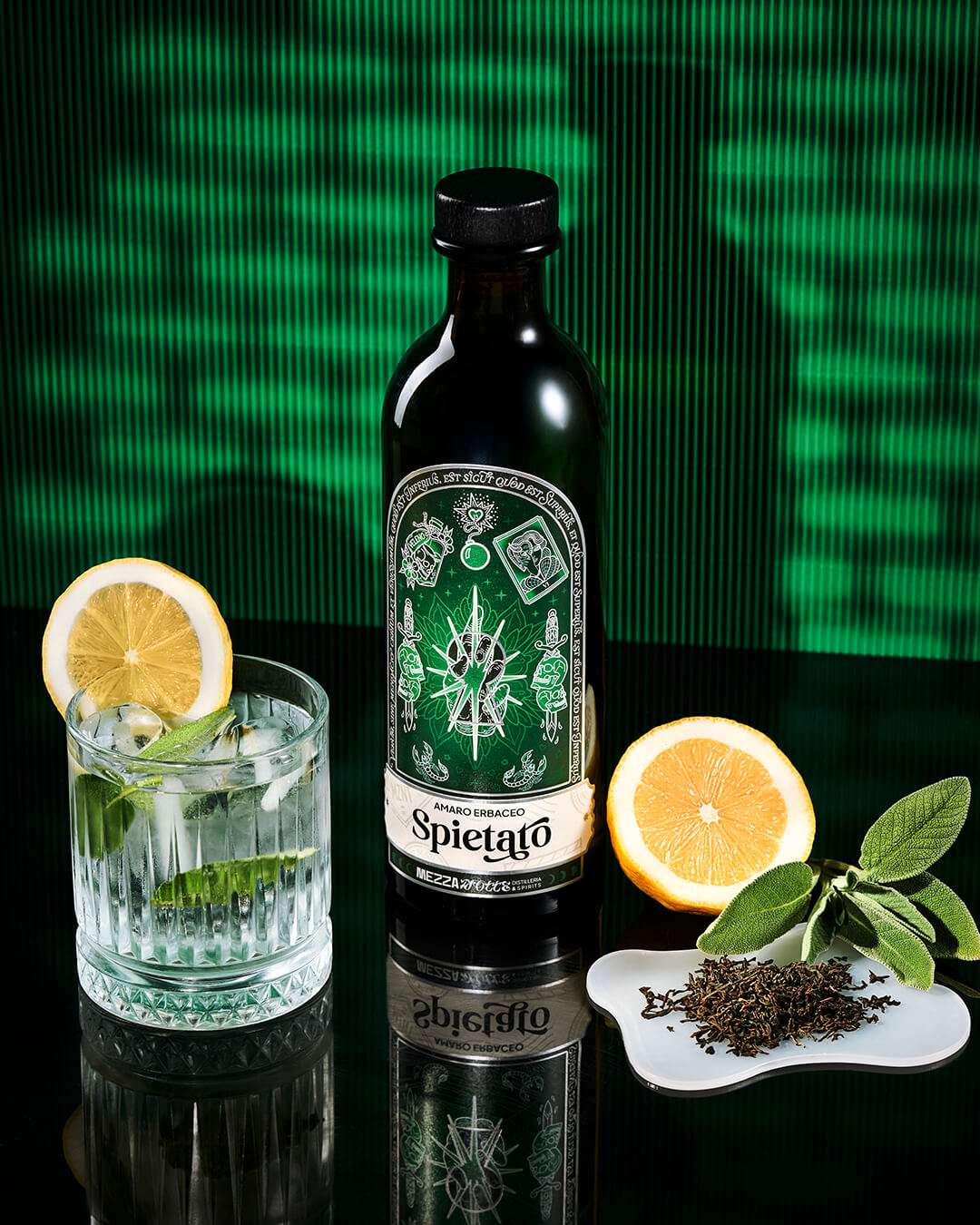
Perfect neat or in signature cocktails, Ruthless is designed for those who love experimenting and seek an unconventional amaro experience. Young adults, mixologists, and craft spirits enthusiasts love it. Sustainable production, artistic packaging, and free shipping over €50 make it highly desirable.
Pros:
-
Artisanal production and attention to the environment.
Creative packaging and pop culture inspiration.
Excellent for mixology and pure tasting.
Against:
Limited distribution, difficult to find in large-scale retail outlets.
Higher price than industrial bitters.
Spietato's uniqueness lies in its storytelling: every sip is a journey through tradition and innovation, with an eye on new trends in amaro for drinking and mixing. For cocktail inspiration, find plenty of ideas at Amari e cocktail: idee e ricette .
Lucanian Bitter
Amaro Lucano is an Italian staple, created in 1894 and still among the most beloved today. Priced between €16 and €20 (70cl, 28% ABV), it offers a secret recipe based on over 30 herbs, with a rich and aromatic flavor.
This amaro is ideal for those seeking a versatile classic: perfect as an after-dinner digestif, but also for adding a twist to more modern cocktails. Italian families have been choosing it for generations, as have bartenders who appreciate its reliability.
Pros:
Easy to find everywhere.
Excellent value for money.
History and international recognition.
Against:
Less innovative than artisanal bitters.
More traditional aromatic profile.
A symbol of Basilicata, Amaro Lucano is perfect for those who want to savor tradition without sacrificing quality. Its success demonstrates how deeply rooted Amaro Italia is in Italian convivial culture.
Amaro Nardini
Looking for an authentic amaro with a centuries-old history? Amaro Nardini, produced by Italy's oldest distillery (since 1779), offers an intense and authentic experience. Priced between €18 and €22 (70cl, 31% ABV), it has a bold profile thanks to the infusion of Alpine herbs and roots.
The ideal target audience is connoisseurs, history lovers, and collectors seeking a journey through time in an amaro. The flavor is persistent, with deep bitter notes, ideal for those who don't mind strong flavors.
Pros:
Tradition and consistent quality.
Historical distillation process.
Excellent for pure tasting.
Against:
Very intense flavour, not suitable for everyone.
Little used in modern mixology.
Amaro Nardini's uniqueness lies in its ability to narrate the Veneto region and the art of Italian distilling, making it a top choice for those who want to discover true signature amaro.
Amaro Montenegro
When it comes to accessible and universally loved amaro, Amaro Montenegro is one of the top choices. It costs between €15 and €18 (70cl, 23% ABV) and stands out for its blend of 40 botanicals from around the world, with a smooth, citrusy note that immediately captivates.
This amaro is perfect for those new to the world of bitters, thanks to its gentle profile and versatile mixology. Young people, novices, and bartenders choose it for its ease of use and iconic packaging.
Pros:
Easily available.
Perfect for cocktails like Montenegro Mule and Spritz.
Secret recipe since 1885.
Against:
Less complex than the artisanal ones.
Less marked aromatic profile.
Its presence in bars around the world testifies to how much the amaro is appreciated even beyond national borders, becoming the protagonist of international cocktails.
Amaro del Capo – Caffo
Amaro del Capo is the king of amaro in the South, particularly in Calabria. Affordably priced (€13-16 for a 70cl bottle, 35% ABV), it stands out for its 29 Calabrian herbs and its fresh, citrusy, and minty flavor.
This liqueur is designed for those seeking a refreshing digestif, perfect served chilled. Young adults and lovers of Mediterranean flavors appreciate it especially in the summer, perhaps in the company of friends.
Pros:
Competitive price.
Recognizable flavor, ideal for the freezer.
Awarded at European level.
Against:
High alcohol content.
Not very suitable for delicate cocktails.
The uniqueness of Amaro del Capo lies in its ability to represent Calabria in every sip, making the amaro an authentic expression of the territory.
Amaro Sibilla – Varnelli
If you're a taste explorer and want a truly unique amaro, Amaro Sibilla is a must-try. Produced in the Marche region, it costs €24-28 (70cl, 34% ABV) and is distinguished by local ingredients like honey from the Sibillini Mountains, gentian, cinchona, and direct-fire processing.
Sibilla amaro is perfect for experts and lovers of artisanal products, thanks to its intense and persistent flavor, with hints of honey and spices that make it ideal both as a digestive and paired with regional desserts.
Pros:
Local ingredients and Slow Food Presidium.
-
Handcrafted and centuries-old history.
Rich and original aromatic profile.
Against:
Limited distribution.
Medium-high price.
Besides being a symbol of the Marche region, this amaro is chosen by those who want to support authentic production and discover extraordinary flavors.
Amaro Averna
Amaro Averna represents Sicily and closes our top 7. The price ranges between €15 and €19 (70cl, 29% abv) and the secret recipe, passed down since 1868, combines local herbs, citrus fruits and spices for a perfectly balanced bittersweet taste.
This amaro is ideal for families, bartenders, and anyone who loves Mediterranean flavors. It's excellent both neat and in cocktails, with a versatility that makes it a staple on many Italian tables.
Pros:
Accessible and recognizable taste.
Iconic history and international presence.
-
Versatile in mixing.
Against:
Less innovative than micro-distillates.
Softer flavor profile.
Amaro Averna is the perfect choice for those who want to savor Sicilian tradition and the more convivial side of Italian amaro, bringing home a piece of history that never goes out of style.
How to Taste and Pair Italian Amaro
Discovering how to taste and pair amaro is a journey of pleasure that engages all the senses. Whether you're a novice or an aficionado, there are small tricks that can transform every sip into a memorable experience.
Tasting techniques
To best appreciate bitterness, serving temperature is crucial. Most bitters are best served between 8 and 12°C, but some, like those from Southern Italy, offer unique sensations even in the freezer.
Use a low glass or a special bitter glass to enhance the aromas and colors. Observe the liquid, bring the glass to your nose, and let the herbaceous and spicy notes surprise you. Sip slowly, allowing the flavor to develop in your mouth.
Many sommeliers recommend guided tastings to discover the nuances of each Italian amaro. In a group, every sip becomes an opportunity for discussion and discovery. Have you ever tried a vertical tasting of regional amaros?
Food pairings
Italian amaro pairs perfectly with dark chocolate, aged cheeses, and dry desserts. Each region offers unique pairings: try a Sibilla with Marche desserts or an Averna with Sicilian cassata.
In gourmet restaurants, chefs and sommeliers propose creative pairings that showcase both the food and the amaro. In recent years, according to reports from World Amaro Day and the market value , pairings between signature cuisine and amaro have grown by 20%. Are you ready to experiment with new combinations?
Bitterness in contemporary cocktails
Amari aren't just for enjoying neat. Today, they're a key ingredient in iconic cocktails like the Negroni, Black Manhattan, and Amaro Spritz. Italian bartenders love mixing amari with gin, vermouth, or whiskey to create signature drinks with unique character.
Want to impress your friends? Experiment with a custom cocktail using your favorite amaro. Ask the bartenders for advice: often, a twist of citrus or spice is enough to create surprising new combinations.
Occasions and rituals of consumption
Amaro Italia accompanies many moments: after-dinner gatherings with friends, relaxed aperitifs, family celebrations. In many homes, it still features prominently in holiday toasts or themed tastings.
Host an Italian amaro-themed evening: choose a few different bottles, pair them with small tastings, and engage your guests in a sensory journey. This way, tradition is renewed and every occasion becomes special.
Trends and Innovations in Italian Amaro for 2026
The world of Italian amaro has never been as dynamic as it is today. As we enter 2026, trends and innovations are redefining the way you experience and savor this Italian delicacy. From the return to sustainability to the digital explosion, every innovation makes Italian amaro more interesting, contemporary, and engaging.
Sustainability and local ingredients
Sustainability has become a top priority for those who produce and choose Italian amaro. More and more distilleries are focusing on locally sourced ingredients, wild herbs, and environmentally friendly techniques. This trend not only improves the quality of Italian amaro, but also promotes the local area and small supply chains.
Many companies are investing in eco-friendly packaging and low-impact production processes, supporting a new generation of conscious consumers. If you'd like to learn more about how distilleries are revolutionizing the industry, learn more about Sustainability in Spirits Production . By 2026, it's estimated that over 30% of amaros on the market will be certified sustainable, a clear sign that Italian amaro is looking to the future without forgetting its roots.
New production techniques
The production techniques for Italian amaro are undergoing an exciting phase of experimentation. Today, the focus is on cold infusions, the extraction of exotic botanicals, and collaborations with Michelin-starred chefs to create unique limited editions. These innovations allow you to discover aromatic nuances never before tasted.
There's no shortage of numbered batches, handcrafted production, and recipes that blend tradition and innovation. For lovers of Italian amaro, each new bottle can become an experience to collect and share with friends. The creativity of Italian micro-distilleries is also winning over an international audience.
Storytelling and digital experience
In 2026, the story of Italian amaro is also moving digital. Distilleries and brands are offering virtual tastings, online tours, and social communities where you can exchange opinions, recipes, and tips. Packaging is becoming interactive: QR codes and augmented reality allow you to discover the story behind each label.
This immersive experience strengthens the bond between producer and consumer, making every bottle of Amaro Italia a mini cultural journey. Social tastings and livestreams with experts are changing the way we understand and appreciate Amaro Italia, creating an increasingly passionate community.
Export growth and international recognition
Amaro Italia continues to conquer new markets and palates around the world. Exports have grown 15% annually in recent years, bringing Amaro Italia to the tables of international restaurants and cocktail bars. Awards and mentions in specialized magazines confirm the quality and originality of Italian products.
According to recent data on the growth of the amari market , global demand for amaro italia is expected to continue to grow, thanks in part to the drive of younger generations and interest in authentic traditions. The future of amaro italia is bright, full of opportunities and recognition.
Want to truly discover what makes today's Italian amaro unique? After exploring the stories, traditions, and most intriguing trends of 2026, you deserve an authentic experience. Whether you're already passionate about craft spirits or simply curious to try something new, why not let the artisanal quality and creativity you've just read about guide you? Check out the most original offerings, featuring local ingredients, stories to tell, and a genuine commitment to sustainability. Ready to find your new favorite amaro?
Discover our bitters