

Discover the main types of gin in 2026: London Dry, Old Tom, Navy Strength, and New Western Dry. A complete guide to characteristics, botanicals, and production methods to choose the perfect gin.
Types of Gin: A Complete Guide to Varieties 2026
Mar 15, 2026

Many enthusiasts believe that gin is a uniform spirit, but the reality is surprisingly different. Gin varies enormously based on botanical composition, production methods, and regional traditions. Each type offers a unique aromatic profile that reflects precise distillation choices and ingredient selection. This guide explores the main categories of gin, explaining what makes each distinctive and how to recognize them. You will discover how the choice of botanicals and production techniques create radically different tasting experiences, allowing you to fully appreciate the complexity of this versatile spirit.
Table of Contents
- Origins and Production: The Heart of Gin
- The Main Types of Gin and Their Characteristics
- The Role of Botanicals: Beyond Juniper
- How to Choose and Taste Different Types of Gin
- Discover Mezzanotte's Unique Craft Gins
- Frequently Asked Questions about Gin Types
Key Points
| Point | Details |
|---|---|
| Essential Definition | Gin is defined by the predominant juniper flavor and botanical infusion in neutral alcohol |
| Variety of Styles | Production methods and botanical blends create distinct styles such as London Dry, Old Tom, and Navy Strength |
| Aromatic Complexity | Botanicals beyond juniper add depth and unique character to each type |
| Informed Choice | Understanding these differences enhances the selection and appreciation of the perfect gin for every occasion |
Origins and Production: The Heart of Gin
Juniper represents the soul of gin. Without the predominant juniper flavor, a spirit cannot legally be called gin. This fundamental rule unites all types, but production methods vary considerably. The base neutral alcohol is infused or distilled with selected botanicals, creating aromatic profiles ranging from dry and pungent to floral and soft.
Producers use various techniques to extract the aromatic components of gin from botanicals. Traditional pot still distillation immerses botanicals directly in alcohol, while vapor infusion suspends them above the liquid, allowing vapors to pass through. Cold compounding macerates botanicals in alcohol without redistillation. Each method extracts aromatic compounds differently, influencing the intensity and balance of the final product.
The spirit distillation guide reveals that the ratio of botanicals is crucial. Terpinen-4-ol, a key juniper compound, has unique chemical properties that influence its extraction. Its high polarity requires specific distillation parameters to fully capture its characteristic aroma. Experienced distillers calibrate temperature, time, and pressure to optimize the extraction of each botanical component.
Pro Tip: When visiting a distillery, observe the still used. Copper stills with a tall neck produce more delicate gins, while those with a short neck create more robust and intense profiles.
Main production methods include:
- Direct distillation with botanicals steeped in alcohol
- Vapor infusion that captures delicate volatile aromas
- Cold compounding to preserve fresh and citrus notes
- Multiple redistillation to refine purity and complexity
The Main Types of Gin and Their Characteristics
London Dry represents the benchmark for many connoisseurs. This category requires all botanicals to be added during distillation, without sugars or post-production additives. The result is a dry, clean profile where juniper dominates, supported by notes of citrus and spice. Despite the name, London Dry can be produced anywhere, provided it meets rigorous production requirements.
Old Tom offers a fascinating contrast with its slight sweetness. Popular in 18th-century England, this style was a favorite for classic cocktails like the Tom Collins. Producers add small amounts of sugar after distillation, creating a soft balance that mellows the intensity of juniper without masking its character.

Plymouth gin enjoys geographical protection, produced only in the eponymous English city. It has a more earthy and soft profile than London Dry, with less emphasis on citrus and a greater presence of roots like angelica and orris. Its velvety texture makes it excellent both in cocktails and for pure tasting.
| Type | ABV | Aromatic Profile | Distinctive Method |
|---|---|---|---|
| London Dry | 37.5-47% | Dry, dominant juniper, citrus | Pure distillation without additives |
| Old Tom | 40-45% | Slightly sweet, balanced | Sugar added post-distillation |
| Plymouth | 41.2% | Earthy, soft, roots | Geographical protection, traditional recipe |
| Navy Strength | 57%+ | Intense, concentrated, robust | High proof for preservation |
| New Western Dry | 40-47% | Diverse botanicals, secondary juniper | Emphasis on non-traditional ingredients |
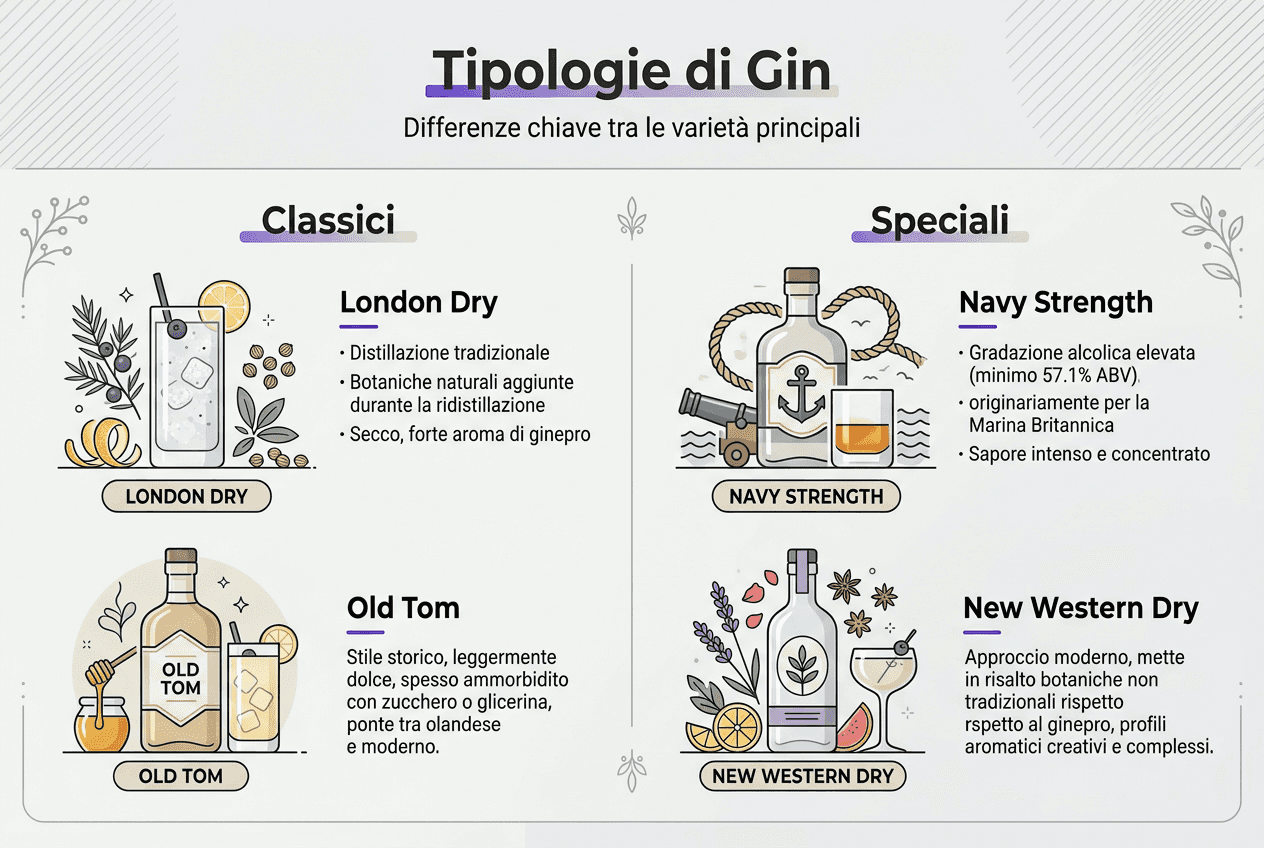
Navy Strength emerged from historical military needs. With a minimum proof of 57%, this type ensured that gunpowder remained flammable even if soaked in gin during long sea voyages. Today, enthusiasts appreciate its concentrated intensity and ability to maintain character even in complex cocktails.
New Western Dry represents contemporary evolution. These experimental gins use unconventional botanicals like cucumber, rose, tea, or pepper, reducing the dominance of juniper. The London Dry gin guide highlights how this category challenges traditional conventions, creating aromatic profiles that attract new consumers.
Pro Tip: To quickly identify a style, sniff the gin before tasting. If juniper hits immediately, it's likely a London Dry or Navy Strength. If you perceive other botanicals first, you are exploring a New Western Dry.
Italian craft gin types often combine tradition and innovation, using Mediterranean botanicals like basil, rosemary, and local citrus to create unique expressions that reflect the territory.
The Role of Botanicals: Beyond Juniper
After the obligatory juniper, distillers select complementary botanicals that define the gin's identity. Coriander adds spicy and citrus notes, angelica provides earthy structure, citrus peel brings vibrant freshness, while orris root fixes volatile aromas, acting as an aromatic binder. Each botanical contributes layers of complexity that gradually reveal themselves during tasting.
The chemistry behind botanical extraction is fascinating. Terpinen-4-ol has the highest dipole moment, influencing how solvents extract it during distillation. This chemical property explains why some gins capture juniper notes better than others, despite using similar amounts of berries.
Polyphenols present in botanicals offer benefits beyond flavor. These antioxidant compounds contribute to the gin's stability over time and add subtle bitter notes that balance the residual sweetness of the alcohol. Polyphenol-rich botanicals such as chamomile, green tea, or lavender create gins with unexpected depth and aromatic persistence.
Italian craft gins excel in the use of local botanicals. Ingredients like Calabrian bergamot, Amalfi lemons, Tuscan juniper, and Alpine herbs create expressions that tell territorial stories. The role of gin botanicals becomes a vehicle to express cultural identity and regional biodiversity.
Common botanicals and their contributions:
- Coriander: spicy, citrus, and slightly sweet notes
- Angelica: earthy structure, body, and persistence
- Cardamom: spicy warmth, oriental complexity
- Lemon peel: vibrant freshness, palate cleansing
- Orris root: aromatic fixation, velvety texture
Distillation parameters deeply influence extraction efficiency. Temperature, pressure, and duration determine which aromatic compounds pass into the final distillate. The botanical aromatic variety requires personalized approaches: delicate botanicals like rose petals need low temperatures, while robust roots tolerate more aggressive extractions.
Botanical selection process for distillers:
- Identify the desired aromatic profile
- Select primary botanicals for basic structure
- Add secondary botanicals for complexity
- Balance high, medium, and low notes
- Test ratios through micro-distillations
- Refine the final recipe based on tastings
How to Choose and Taste Different Types of Gin
Carefully reading the label reveals crucial information before purchase. Look for indications about the style, the list of main botanicals, and the alcohol content. Gins that list specific botanicals demonstrate transparency and often superior quality. Geographical origin can indicate distinctive characteristics linked to the territory.
Professional tasting follows a precise sequence that maximizes the sensory experience. Use a clean, room-temperature tulip glass to concentrate aromas. Avoid ice during the initial evaluation, as cold suppresses volatile compounds and masks delicate nuances.
Steps for a complete tasting:
- Observe color and clarity against a white surface
- Gently sniff without swirling to capture volatile top notes
- Swirl the glass to release deeper aromas
- Take a small sip, distributing it across the entire tongue
- Evaluate the evolution from the initial impact to the persistent finish
- Add a drop of water to open up hidden aromas
Pairing with appropriate mixers enhances the characteristics of each type. London Dry shines with classic tonic water that respects its dry profile. Old Tom prefers soda or ginger ale that complement its sweetness. New Western Drys require neutral or botanical mixers that don't compete with their unique botanicals. An balanced gin and tonic recipe depends on understanding these dynamics.
Pro Tip: Swirl the glass before sniffing. This movement releases trapped aromatic molecules, revealing hidden layers of complexity that would otherwise remain dormant.
Experimenting with different types accelerates the discovery of personal preferences. Organize comparative tastings alongside London Dry, Old Tom, and New Western Dry. This direct experience educates the palate more effectively than any theoretical description. The gin tasting tips emphasize the importance of a systematic approach and an open mind.
Considerations for choice:
- For classic cocktails: London Dry or Plymouth for clean structure
- For pure sipping: Navy Strength or craft gins with complex botanicals
- For explorers: New Western Dry with innovative profiles
- For balanced sweetness: Old Tom in vintage cocktails
Serving temperature dramatically influences perception. Cold gin emphasizes freshness and cleanliness, while room-temperature gin reveals full aromatic complexity. When tasting to evaluate quality, always start at room temperature, then experiment with gradual cooling to observe how perceptions change.
Discover Mezzanotte's Unique Craft Gins
After exploring the diversity of gin types, it's natural to want to apply this knowledge with authentic and distinctive products. Mezzanotte offers a curated selection of craft gin that embody the excellence of Italian distillation, combining tradition and botanical innovation.

Each gin in the Mezzanotte collection tells a unique story through selected botanicals and refined distillation techniques. From classic expressions that honor the canons of London Dry to contemporary interpretations that explore the Italian aromatic territory, you will find profiles that resonate with every preference. The craft vodka collection applies the same philosophy of quality and craftsmanship, offering alternatives for those who appreciate premium spirits. Explore the catalog to transform theory into an authentic sensory experience.
Frequently Asked Questions about Gin Types
How do I distinguish a London Dry from a New Western Dry?
London Dry features dominant juniper with dry, clean notes of citrus and spice. New Western Dry reduces juniper in favor of innovative botanicals like cucumber, rose, or pepper, creating more floral or herbaceous profiles. Sniff before tasting: if juniper isn't the first note, it's probably a New Western Dry.
Why is alcohol content important in gin?
The alcohol content influences aromatic intensity, texture, and versatility. Navy Strength at 57% offers maximum concentration, maintaining character even in diluted cocktails. Standard proofs around 40-45% balance accessibility and complexity. Stronger gins require more dilution but offer superior control over the final drink's balance.
How do I store gin to preserve its flavor?
Store gin upright, away from direct light and heat sources. Once opened, consume it within 1-2 years for optimal quality. Volatile botanicals gradually degrade with oxygen exposure. Airtight caps slow oxidation, while constant temperatures prevent chemical alterations that compromise aromatic balance.
Can gin contain added sugar?
London Dry cannot contain sugars or post-distillation additives by legal definition. Old Tom traditionally includes small additions of sugar to soften the profile. Other styles may add natural sweeteners, but quality producers declare these additions on the label. Transparency distinguishes craft producers from industrial ones.
Which gin do I choose for cocktails versus neat tasting?
For classic cocktails like Martinis or Negronis, prefer London Dry or Plymouth with a clean structure that resists dilution. For neat sipping, choose Navy Strength or craft gins with complex botanicals that reveal progressive layers. New Western Drys work well in contemporary cocktails that celebrate their unique botanicals. Experiment to discover which expression resonates with your palate.
Recommendation
- Artisanal Gin Types Guide: Informed Choice 2026 – Mezzanotte | Distillery & Spirits
- Definition of Premium Gin: Enthusiast's Guide 2026 – Mezzanotte | Distillery & Spirits
- Types of Italian Gin 2026: Complete Guide for Demanding Enthusiasts – Mezzanotte | Distillery & Spirits
- Tips for Tasting Gin: 57% More Sensory Experience – Mezzanotte | Distillery & Spirits