

Discover essential distillation terminology: heads, hearts, tails, and techniques for artisanal gin and bitters. A complete guide for enthusiasts.
Distillation Terminology: A Guide for Enthusiasts 2026
Mar 23, 2026

Many believe that distillation is simply boiling a liquid and cooling it. In reality, behind every craft gin or fine bitter lies a universe of precise technical terms that define the quality, purity, and character of the distillate. Understanding distillation terminology is not just an academic matter: it is the key to truly appreciating the art and science that transform simple raw materials into complex and memorable spirits. This guide will take you from initial confusion to full mastery of essential concepts, from distillation fractions to specific techniques for gins and bitters.
Table of Contents
- Key Points
- Fundamentals of Distillation: Key Definitions and Principles
- Types of Distillation and Their Specific Terminology
- Distillation Fractions: Heads, Hearts, and Tails and Their Importance
- Specific Terminology and Techniques in Craft Gin and Bitter Distillation
- Discover Our Unique Craft Gins and Vodkas
- Distillation Terminology: Frequently Asked Questions
Key Points
| Point | Details |
|---|---|
| Fundamental Principles | Distillation separates a mixture by partial evaporation and condensation of the most volatile vapors. |
| Distillation Fractions | Distilled fractions differ in volatile content and alcoholic concentration compared to the initial mixture. |
| Types of Distillation | Simple differential distillation uses a single pass while fractional distillation employs columns with plates to increase purity. |
| Vacuum Distillation | Operating at reduced pressure lowers boiling points to protect delicate extracts and aromas. |
| Gin Terminology | Understanding technical terms related to botanicals and methods improves production and tasting experience. |
Key Points
| Concept | Essential Explanation |
|---|---|
| Basic Principle | Distillation separates liquid mixtures through controlled evaporation and condensation of more volatile vapors |
| Critical Fractions | Heads, hearts, and tails represent the three fundamental parts of the distillate, each with distinct chemical composition and qualities |
| Operational Types | Simple, fractional, vacuum, and steam distillation offer different results for purity and aromatic complexity |
| Gin Terminology | London Dry, Distilled Gin, and botanical techniques like vapor infusion define specific categories and production methods |
| Practical Value | Mastering these terms enhances both the ability to produce craft spirits and a conscious tasting experience |
Fundamentals of Distillation: Key Definitions and Principles
Distillation is an operation to separate a liquid mixture based on the partial evaporation and subsequent condensation of vapors enriched with the most volatile components. This process exploits differences in the boiling points of substances present in the initial mixture. When you heat a liquid mixture, components with lower boiling points evaporate first, creating vapors that are then cooled and recondensed into a separate liquid form.
Volatile components are substances that evaporate easily at relatively low temperatures. In the context of spirit distillation, these include ethyl alcohol, aromatic compounds, and essential oils that define the final organoleptic profile. Volatility determines the order of separation: the more volatile a substance, the sooner it turns into vapor during heating.
The main phases of the process include:
- Heating the liquid mixture to the boiling point of the most volatile component
- Partial evaporation which creates vapors enriched with volatile substances
- Controlled cooling of vapors through coils or condensers
- Condensation that returns vapors to their purified liquid state
- Collection of the distillate separated from the original mixture
The difference between the initial liquid mixture and the distilled fractions is substantial. The starting mixture contains all components in their original proportions, while the collected fractions have very different concentrations. In the case of craft gin or vodka production, the initial mixture might contain 8-12% alcohol, while the heart of the distillate reaches 70-85% alcohol concentration.
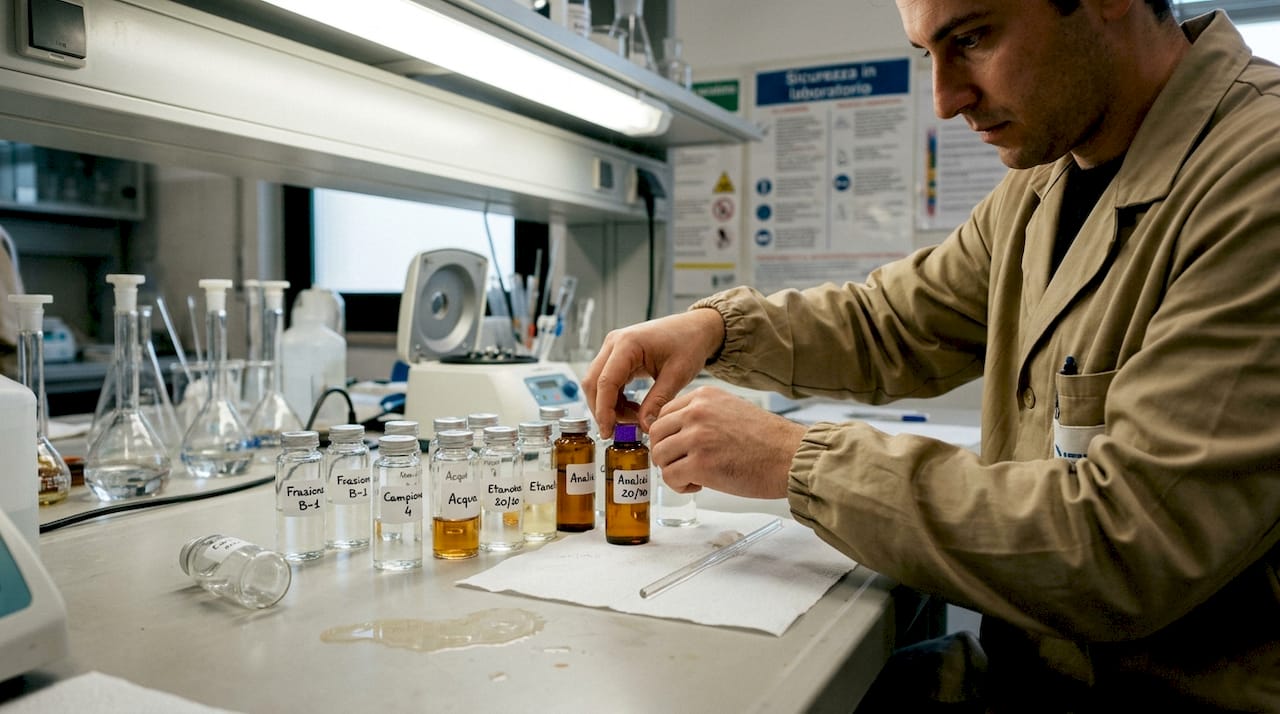
Terms like "vapors," "liquid mixture," and "partial evaporation" constantly recur in technical discussions. Vapors represent the temporary gaseous state of substances during the process. Partial evaporation indicates that not all of the mixture turns into vapor simultaneously, allowing for selective separation. This selectivity is the core of effective distillation.
Types of Distillation and Their Specific Terminology
Simple or differential distillation represents the basic method with a single evaporation and condensation pass. This approach works well when components have very distant boiling points. In craft practice, simple distillation is used for initial separations or when aromatic complexity is desired.
Fractional distillation employs rectification columns with plates or packing that allow for multiple successive separations. Each plate acts as a mini-distillation, drastically increasing final purity. This method is essential for producing neutral vodka or high-proof base alcohol. Modern columns can have 20-50 theoretical plates, each further refining the separation.
Vacuum distillation operates at reduced pressure, artificially lowering boiling points. This protects thermosensitive products such as delicate botanical extracts or aromatic compounds that would degrade at normal temperatures. By reducing pressure to 50-100 mbar, you can distill at 40-60°C instead of 78°C, preserving fragile floral and citrus notes.
Steam distillation passes steam through botanical material without direct immersion in the liquid. This technique extracts essential oils and aromas without extracting bitter or astringent components. It is particularly valued in botanical gin production where aromatic delicacy is a priority.
| Type of Distillation | Key Features | Typical Application |
|---|---|---|
| Simple/Differential | One pass, maintains complexity | Grappa, craft whiskies |
| Fractional/Rectification | Multiple columns, high purity | Vodka, neutral alcohol |
| Vacuum | Low temperatures, preserves aromas | Delicate botanical extracts |
| Steam | Extraction without direct contact | Gin with botanical basket |
| Extractive | Adds solvent to separate azeotropes | Industrial absolute alcohol |
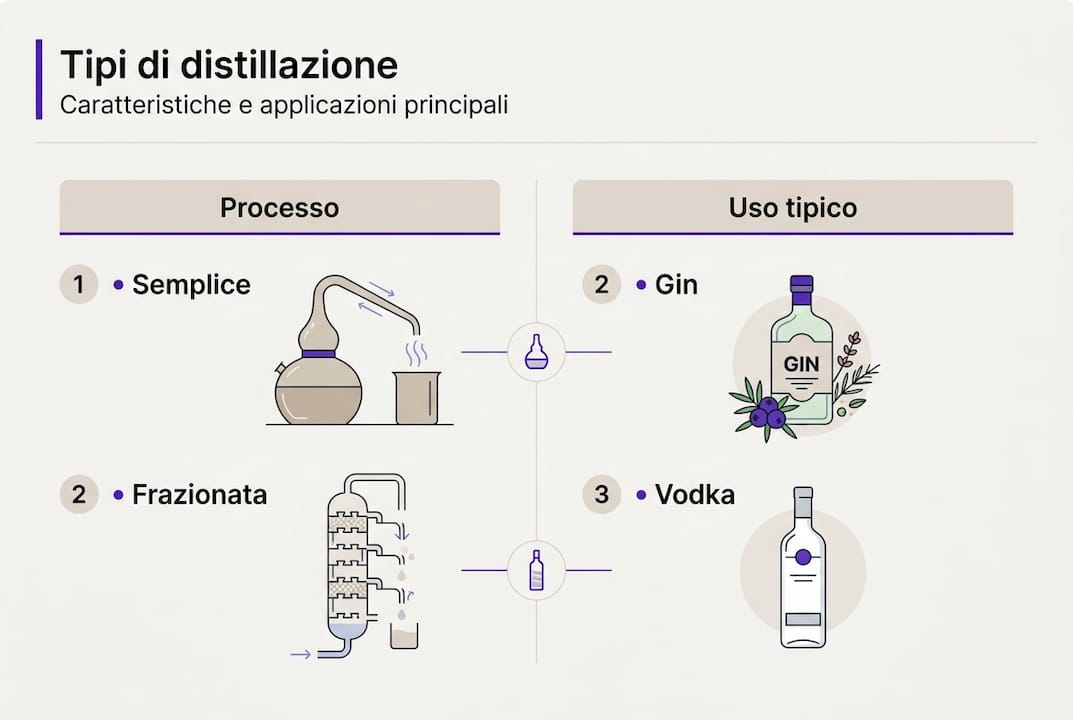
Extractive and azeotropic distillation solve problems of difficult mixtures where components form bonds that prevent normal separation. An azeotrope is a mixture that boils at a constant temperature as if it were pure. The classic example is the 95.6% ethanol-water mixture that cannot be further concentrated with ordinary distillation. Extractive techniques add a third component that breaks this equilibrium.
Understanding these distinctions allows you to critically evaluate producers' claims. When a label mentions "column distillation" versus "pot still," you are reading fundamental information about the character and purity of the final product.
Distillation Fractions: Heads, Hearts, and Tails and Their Importance
Heads represent the first fraction that evaporates during distillation, containing undesirable volatile compounds such as methanol, acetone, acetaldehyde, and light esters. These compounds have boiling points lower than ethanol (78°C) and typically distill between 64-75°C. Methanol is particularly dangerous, causing blindness or death even in small quantities. Heads emit pungent, chemical, or solvent odors that immediately signal their presence.
The heart contains ethanol and the precious aromas that define the spirit's character. This central fraction distills between 78-82°C and represents the commercially valuable part. In the heart, you find high concentrations of ethyl alcohol along with fruity esters, floral compounds, and desirable spicy notes. The quality of the heart depends directly on the precision of fraction cutting and the cleanliness of the initial fermentation.
Tails comprise higher alcohols, heavy oils, and oily compounds that distill above 82-85°C. These include amyl alcohol, butanol, and glycerol, which impart oily sensations, bitter flavors, and unpleasant aftertastes. Tails often appear cloudy when diluted with water, a practical test to identify them. Small amounts of tails can add body and roundness, but excess ruins the product.
Pro Tip: During cutting, collect separate samples of 100ml each and smell/taste them diluted to 40%. This teaches you to recognize the subtle transitions between fractions. With experience, you will develop a "nose" to identify the exact cutting moment without instruments.
Typical temperature provides general indications but not absolute rules. Factors such as atmospheric pressure, initial alcohol concentration, and still design influence transition points. An experienced distiller relies more on their senses (smell, taste, visual observation) than on the thermometer alone. The art of fraction cutting is experiential, requiring years of practice to master the nuances.
Specific chemical components include:
- Heads: methanol (64°C), acetaldehyde (21°C), ethyl acetate (77°C), acetone (56°C)
- Heart: ethanol (78°C), fruity esters, desirable aromatic compounds
- Tails: amyl alcohol (138°C), butanol (117°C), acetic acid, glycerol
A wider cut that includes portions of heads and tails creates greater body and complexity, suitable for characterful whiskies or rums. A narrow cut focused exclusively on the pure heart produces crystalline vodkas or delicate gins with clean aromatic profiles. The choice reflects the production philosophy and desired style.
The copper of the still plays an active chemical role, reacting with undesirable sulfur compounds and catalyzing reactions that improve the aromatic profile. This explains why copper stills produce smoother distillates than stainless steel equivalents. The copper-vapor contact surface directly influences the final quality.
Specific Terminology and Techniques in Craft Gin and Bitter Distillation
London Dry Gin represents the purest and most rigorous category, requiring that all aromas come exclusively from the redistillation of neutral alcohol with natural botanicals. You cannot add colorings, sweeteners, or artificial flavors after distillation. The name "London Dry" does not indicate geographical origin but rather a production method. This category emphasizes prominent juniper with balanced complementary botanicals.
Distilled Gin allows the addition of natural or artificial flavors after distillation, offering greater creative flexibility. This category includes many experimental modern gins that combine traditional distillation with cold infusions post-production. Plymouth Gin is a protected geographical indication limited to the city of Plymouth, characterized by a softer and earthier profile.
Old Tom Gin represents a slightly sweetened historical style, popular in the 19th century and recently rediscovered by bartenders for classic cocktails. Compound Gin (or "bathtub gin") simply macerates botanicals in neutral alcohol without redistillation, a cheaper but less refined method.
Botanical infusion techniques profoundly determine the final character:
- Cold maceration: immersing botanicals directly in alcohol for hours or days before distillation, extracting essential oils and soluble compounds
- Vapor infusion (basket): placing botanicals in a basket above the liquid where vapors pass through, extracting aromas without direct contact
- Direct distillation: boiling botanicals immersed in the liquid, a traditional method that extracts intensely but can lead to bitter notes
- Post-distillation infusion: adding extracts or tinctures after distillation for fresh and delicate notes
The obligation of juniper in authentic gin production is regulatory and defines the category legally. Gin must have a predominant juniper flavor, distinguishing it from other botanical spirits. This requirement preserves the historical identity of the category while allowing innovation in secondary botanicals.
Key steps in craft gin production include:
- Selection and preparation of botanicals (drying, grinding, precise dosing)
- Maceration in 96% neutral alcohol for 12-48 hours at controlled temperature
- Loading the still and gradual heating until distillation begins
- Careful separation of fractions with discarding of heads and tails
- Collection of the aromatic heart between 78-82°C with organoleptic monitoring
- Dilution to commercial strength (40-47%) with demineralized water
- Resting for aromatic integration (optional, from days to months)
- Final filtration and bottling
Pro Tip: Using local botanicals and delicate methods like vapor infusion allows for unique aromatic profiles that reflect the territory. Experiment with small batches by varying individual botanicals to understand their specific contribution to the final profile.
The differences between craft and industrial distillation for gins and bitters are substantial:
- Scale: craft produces 50-500 liters per batch, industrial 5,000-50,000 liters
- Equipment: discontinuous copper stills versus automated continuous columns
- Control: manual sensory monitoring versus automatic sensors and programmed cuts
- Botanicals: manual selection of premium ingredients versus standardized bulk purchases
- Time: slow process with extended maceration versus rapid cycles optimized for efficiency
- Customization: each batch may vary slightly versus absolute uniformity required
These distinctions explain the price and character differences between craft gins and mass productions. Terminology allows you to decode labels and understand what you are actually buying.
Discover our unique artisan gins and vodkas
After exploring the terminology and techniques that define quality spirits, it's natural to want to experience distillates that embody these principles. Mezzanotte offers an exclusive selection of artisan gin and artisan vodka crafted with meticulous attention to quality and expert use of local botanicals.

Each bottle represents the practical application of the concepts you've just learned: precise fractional cuts, careful selection of botanicals, and small-batch distillation using copper stills. Our spirits allow you to recognize the master distiller's technical choices during tasting. Whether you're looking for a classic London Dry with prominent juniper or a crystal-clear vodka obtained through meticulous fractional distillation, you'll find products that celebrate the art and science of Italian artisan distillation.
Distillation Terminology: Frequently Asked Questions
What is the main difference between heads, hearts, and tails?
Heads contain volatile, dangerous compounds like methanol that distill first, below 78°C. Hearts are the prized fraction with pure ethanol and desirable aromas, between 78-82°C. Tails include heavy alcohols and oils that distill above 82°C, imparting unpleasant flavors if not discarded.
Can fractional cutting be automated, or does it always require manual intervention?
Cutting can be partially automated using temperature and conductivity sensors, but artisan distillers prefer manual sensory evaluation. Scent and taste detect nuances that sensors miss, allowing for more refined decisions that define the unique character of the spirit.
Why is juniper mandatory in gin, but other botanicals are optional?
Juniper legally defines the "gin" category according to European and international regulations, distinguishing it from other botanical spirits. This rule preserves gin's historical identity as a juniper-based spirit, while allowing unlimited creativity in secondary botanicals that complete the aromatic profile.
What are azeotropes, and why do they complicate distillation?
Azeotropes are mixtures that boil at a constant temperature like pure substances, preventing further separation. The ethanol-water mixture forms an azeotrope at 95.6% that cannot be surpassed with ordinary distillation. To obtain 100% absolute alcohol, special techniques like extractive distillation or molecular dehydration are needed.
Does vacuum distillation always improve distillate quality?
Vacuum distillation preserves heat-sensitive aromatic compounds that would degrade at normal temperatures, ideal for delicate botanical extracts. However, some spirits like whisky or rum benefit from the chemical reactions that occur at higher temperatures. The choice depends on the desired aromatic profile and the nature of the raw materials.
How can I avoid common distillation errors?
Major errors include imprecise fractional cuts, overly rapid heating, insufficient equipment cleaning, and contaminated fermentation. Invest time in sensory learning to recognize transitions between fractions, maintain stable temperatures, meticulously clean the still after each use, and rigorously control initial fermentation to prevent undesirable compounds.
Recommendation
- Spirits Distillation Guide 2026: Avoid 40% Common Errors – Mezzanotte | Distilleria & Spirits
- What premium distillate means: complete guide 2026 – Mezzanotte | Distilleria & Spirits
- Complete guide to the artisan distillation process 2026 – Mezzanotte | Distilleria & Spirits
- Italian spirits tasting method: practical guide 2026 – Mezzanotte | Distilleria & Spirits