

Discover how 70% of European juniper berries shape the aromas of gin. Complete guide on ingredient origins to enrich your tasting and collection.
Gin ingredient origin: 70% of berries from Europe
Feb 28, 2026

Do you think all juniper berries come from Europe? Think again. This common belief hides a fascinating reality: the geographical origins of gin ingredients are much more varied and directly influence the aromatic profiles you taste. Understanding these origins allows you to enhance your collection and refine your choices.
Table of Contents
- Introduction to the Origin of Gin Ingredients
- Juniper Berries: Origin, Impact, and Diversity
- Secondary Botanicals: Diversity and Geographical Specificities
- Artisanal Methods of Ingredient Selection and Integration
- Regulatory Influence and Market: Local vs. International
- Case Studies on Local Origin and Commercial Success
- Corrections of Common Misconceptions About Ingredient Origin
- Conclusion and Tips for Enhancing Your Tasting Experience
- Discover Our Artisanal Gins with Guaranteed Origin
- Frequently Asked Questions
Key Points
| Point | Details |
|---|---|
| Dominant European Origin | Over 70% of juniper berries come from specific European areas like the Balkans and Central Europe |
| Impact of Secondary Botanicals | Aromatic plants shape approximately 70% of gin's flavour complexity |
| Decisive Artisanal Methods | Manual harvesting and rigorous selection ensure superior aromatic profiles |
| Absence of Regulatory Constraint | Even the London Dry label imposes no strict geographical requirements on ingredient origin |
Introduction to the Origin of Gin Ingredients
Gin relies on two categories of ingredients: juniper berries and secondary botanicals. Juniper berries are the mandatory element and define the spirit's main character. Secondary botanicals include aromatic plants, spices, citrus, and flowers that complete the flavour profile.
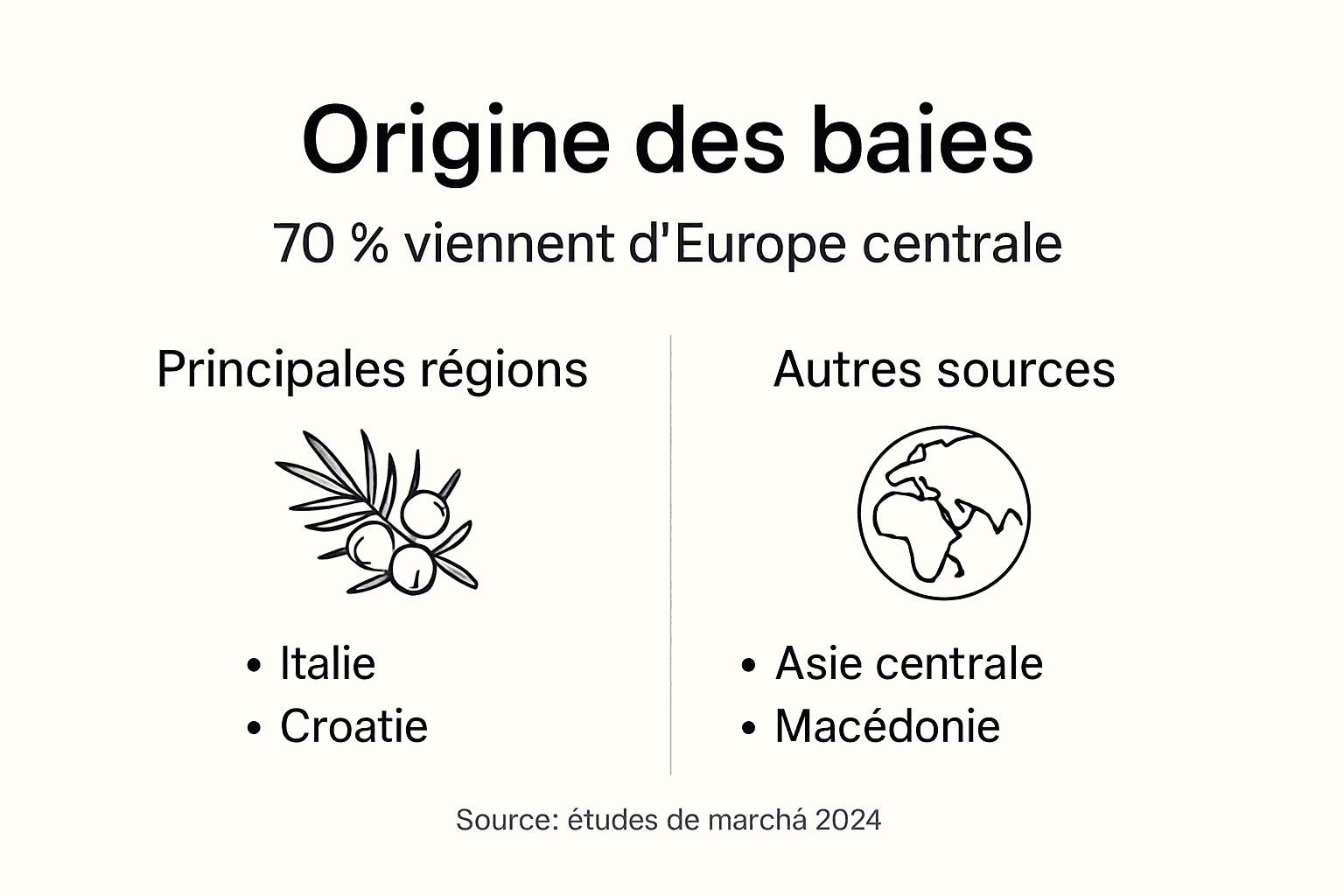
Over 70% of juniper berries used in artisanal gins come from specific European areas. These regions primarily include Central Europe, the Balkans, and certain Mediterranean areas. The geographical origin directly influences the aromatic nuances you perceive during tasting.
Berries dominate gin's profile because regulations require their predominant presence. However, secondary botanicals provide the diversity that distinguishes an artisanal gin from an industrial product. This combination creates the unique aromatic signature of each distillate.
For an informed connoisseur, knowing the origin of ingredients offers several advantages:
- Identifying desired flavour profiles based on origin
- Highlighting artisanal gins using authentic local ingredients
- Understanding price variations linked to raw material quality
- Enriching the tasting experience through geographical storytelling
The origin of ingredients is not limited to a technical detail. It represents the soul of gin and tells the story of its terroir. Discerning collectors seek this transparency to build a coherent and distinctive cellar.
Juniper Berries: Origin, Impact, and Diversity
The main juniper berry producing regions are located in Central Europe, particularly in Italy, Croatia, and Macedonia. These areas offer ideal climatic conditions for the growth of common juniper. Italian Tuscany produces berries renowned for their balanced resinous notes.
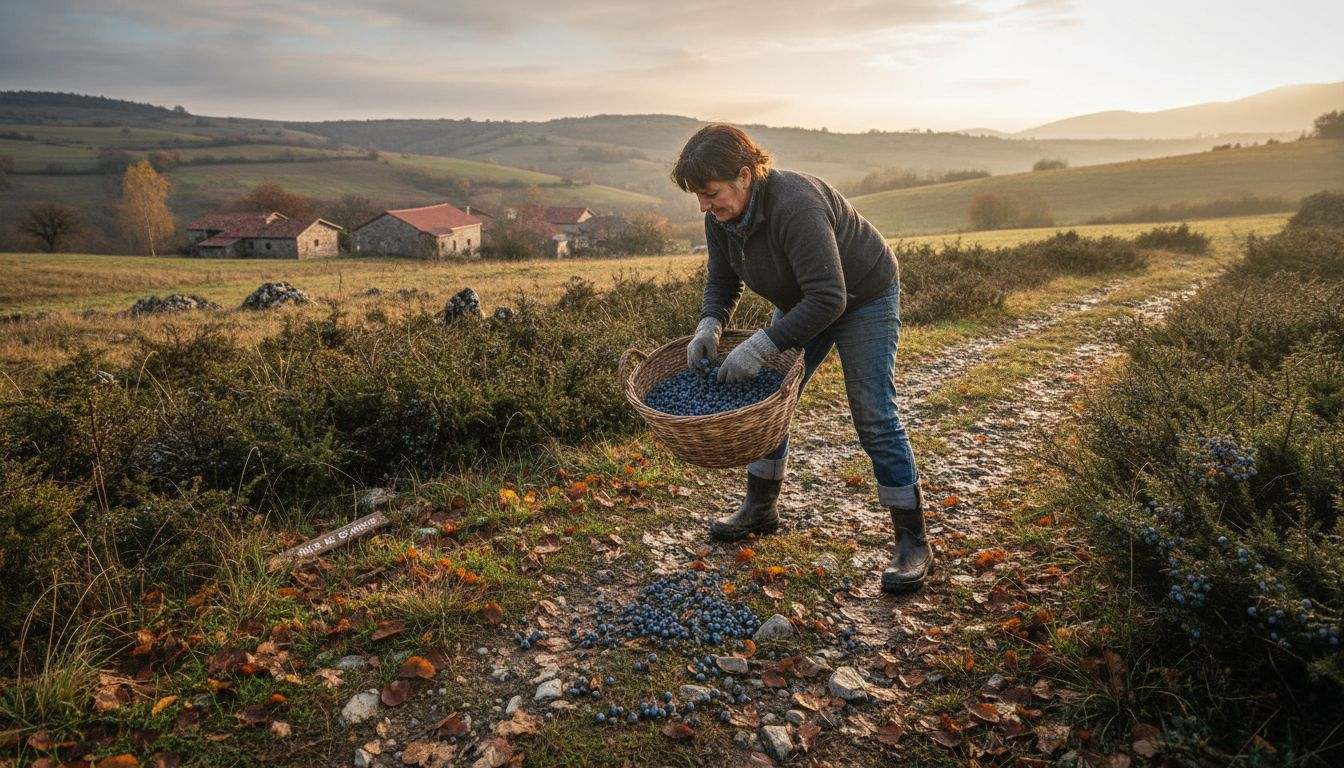
Flavour differences based on origin are distinct. Mediterranean berries bring softer, fruitier nuances. Balkan berries offer spicier, more resinous profiles. This diversity allows distillers to create distinct aromatic signatures.
The use of fresh versus dried berries also influences the final result. Fresh berries release livelier, more citrusy aromas. Dried berries concentrate essential oils and produce deeper, woodier notes. Artisanal distillers choose based on the desired profile.
Approximately 15% of European artisanal gins use berries imported from Central Asia, which bring distinct aromatic profiles. These berries from Uzbekistan or Kazakhstan offer earthier, wilder notes. Their integration remains minor but demonstrates the creative exploration of distillers.
Artisanal gins generally prioritize a limited percentage of berries to allow secondary botanicals to express themselves. This approach contrasts with industrial gins that saturate the profile with juniper. The subtlety of dosage reveals the master distiller's expertise.
Pro Tip: For your next purchase, check if the label mentions the origin of the juniper berries. This transparency often indicates a producer concerned with quality and authenticity. Italian gins frequently mention the Tuscan or Alpine origin of their berries.
Harvest seasonality also impacts quality. Berries harvested in autumn at full ripeness offer optimal concentration of essential oils. This narrow time window explains why some artisanal gins produce limited annual batches.
Secondary Botanicals: Diversity and Geographical Specificities
Mediterranean botanicals dominate the recipes of European artisanal gins. Basil, rosemary, lavender, and thyme bring characteristic herbaceous notes. Citrus fruits like Sicilian lemon or Calabrian bergamot add freshness and complexity.
Approximately 70% of gin's aromatic complexity is linked to secondary botanicals and distillation techniques. This surprising statistic reveals that juniper, though mandatory, constitutes only the base upon which the spirit's true identity is built. Master distillers play with this palette to create their signatures.
Terroir deeply influences botanical characteristics. The same plant grown at alpine altitudes or on Mediterranean coasts will develop different aromatic profiles. Soil conditions, sunlight, and humidity modify the concentration of essential oils.
Seasonality also plays a crucial role. Flowers harvested in spring offer more delicate aromas than those in summer. Roots collected in autumn concentrate more aromatic compounds. Artisanal distillers synchronize their production with these natural cycles.
Some examples of local ingredients valued in artisanal gins:
- Elderflower harvested in the Italian Alps for delicate floral notes
- Amalfi lemon peel sun-dried for maximum aromatic intensity
- Green cardamom imported from Kerala for complex spicy touches
- Coriander from Provence for subtle citrus nuances
The rigorous selection of secondary botanicals distinguishes an exceptional gin from an ordinary product. Artisanal distillers establish direct relationships with local producers. This traceability ensures consistent quality and allows for telling the story of each ingredient.
Artisanal Methods of Ingredient Selection and Integration
Manual harvesting and strict selection of plant maturity ensure superior aromatic profiles. Artisanal distillers inspect each batch to eliminate imperfect elements. This attention to detail is directly reflected in the taste purity of the final product.
The preparation and drying of botanicals follow precise protocols. Some plants are air-dried to preserve their volatile oils. Others are lightly roasted to develop deeper notes. The timing of each step influences the aromatic result.
Local water plays an often underestimated role in flavour integration. Alpine spring water brings a minerality that amplifies certain floral notes. Softer water allows spices to fully express themselves. Distillers consider water an ingredient in its own right.
Here are the key steps in the artisanal process:
- Manual selection of botanicals at their peak aromatic maturity
- Specific preparation according to each type of ingredient (drying, roasting, infusion)
- Controlled maceration to extract essential oils without bitterness
- Small-batch distillation to maintain aromatic precision
- Final blending adjusting proportions according to the desired profile
The perceptible effects in tasting are numerous. An artisanal gin reveals distinct aromatic layers that evolve on the palate. Top, heart, and base notes follow harmoniously. This complexity contrasts with the linearity of industrial gins.
Pro Tip: To recognize an authentic artisanal gin, pour a small amount at room temperature and observe the aromatic evolution over 5 minutes. A quality product will gradually reveal different facets. Traditional manufacturing methods produce this characteristic depth.
Regulatory Influence and Market: Local vs. International
The London Dry label requires a dominant dosage of juniper berries but does not specify a geographical origin. This standard focuses on production methods rather than ingredient provenance. A London Dry gin can therefore use berries from multiple origins.
The absence of strict geographical requirements in regulations offers creative freedom to distillers. Unlike wine appellations of origin, gin does not impose a specific terroir. This flexibility allows for innovation but also complicates traceability for demanding consumers.
Differences between industrial and artisanal gin are clearly manifested in ingredient sourcing:
| Criterion | Industrial Gin | Artisanal Gin |
|---|---|---|
| Origin of Berries | Multiple standardized sources | Unique or limited traced origin |
| Secondary Botanicals | Extracts or concentrated flavours | Whole fresh or dried plants |
| Transparency | Minimal information | Complete details on label |
| Production Volume | Thousands of litres per batch | Hundreds of litres maximum |
| Producer Relationships | Commercial intermediaries | Direct local partnerships |
Marketing strategies based on local origin are gaining importance. Distillers highlight their territorial roots to differentiate themselves. This approach particularly resonates with consumers seeking authenticity and traceability.
The commercial value of gins with local ingredients translates into justified higher prices. Collectors are willing to pay more for products that precisely document their sources. This trend encourages artisanal producers to invest in quality and transparency.
Case Studies on Local Origin and Commercial Success
Italian gins highlighting Mediterranean botanicals receive significant awards in international competitions. These products capitalize on iconic local ingredients like Ligurian basil or Sicilian citrus. Their success demonstrates that territorial authenticity is a decisive competitive advantage.
A notable example concerns a Tuscan distiller exclusively using juniper berries harvested in the surrounding hills. This hyper-local approach allowed for the creation of a unique aromatic profile impossible to replicate elsewhere. The gin won a gold medal at a major European competition.
The impact on competition recognition is explained by several factors. Professional juries value the aromatic consistency provided by a unified terroir. Fresh local ingredients offer superior aromatic intensity. Complete traceability reassures about quality and authenticity.
The cultural storytelling linked to origin reinforces commercial appeal. Each local ingredient tells a geographical and cultural story. A gin using Provencal lavender evokes the fragrant fields of southern France. This narrative dimension enriches the consumption experience.
Challenges for artisanal producers include:
- Securing reliable and consistent local supplies
- Communicating effectively about provenance without resorting to empty marketing
- Balancing local authenticity with commercial accessibility
- Justifying higher prices through total transparency
These concrete examples illustrate that ingredient origin is not just a marketing argument. It forms the foundation of measurable and recognized quality. Informed enthusiasts actively seek these authentic artisanal gins to enrich their collection.
Corrections of Common Misconceptions About Ingredient Origin
Contrary to popular belief, not all juniper berries exclusively come from Europe. Approximately 15% are imported from Central Asia and bring distinct profiles. This diversity enriches the aromatic palette available to creative distillers.
The London Dry label imposes no geographical constraints on ingredient origin. It only regulates production methods and the minimum juniper dosage. This frequent confusion leads some consumers to overestimate the guarantees offered by this appellation.
Aromatic complexity is mostly linked to secondary botanicals, not just berries. 70% of the complexity comes from added aromatic plants, spices, and citrus. Juniper provides the basic structure but not the final taste diversity.
Several myths persist on this subject:
- Believing that more juniper means better quality (false: balance is key)
- Thinking that only European gins use authentic ingredients (inaccurate: excellent artisanal gins exist worldwide)
- Assuming that local origin automatically guarantees superiority (true only if selection and production are rigorous)
- Imagining that regulations protect provenance (they regulate methods, not sources)
The importance of secondary botanicals is often underestimated by novices. These ingredients truly shape gin's identity. A talented distiller can create radically different profiles by varying only the secondary plants.
Aromatic complexity results from multiple interdependent factors. The origin of ingredients matters, but also their quality, freshness, preparation, and integration. An exceptional gin harmonizes all these elements in a delicate balance.
Conclusion and Tips to Enhance Your Tasting Experience
The origin of gin ingredients directly influences aromatic profiles and taste quality. European juniper berries dominate but coexist with Asian sources, bringing diversity. Secondary botanicals shape 70% of the complexity you perceive during tasting.
To select your gins based on a clear provenance, prioritize producers who explicitly mention their sources. Look for details on labels regarding the origin of berries and botanicals. This transparency generally signals an authentic commitment to quality.
Use this knowledge to enrich your tastings by contextualizing each aroma. Identifying a note of Sicilian lemon or Alpine lavender adds a cultural dimension to the experience. This approach transforms tasting into a geographical and sensory journey.
The promotion of culture and artisanal heritage comes through your purchasing choices. Supporting distillers who are transparent about their sources encourages quality practices. Your collection thus becomes a reflection of a commitment to authenticity.
Some practical tips to deepen your expertise:
- Create a tasting journal noting the origin of ingredients for each gin
- Compare gins using berries from different provenances
- Participate in guided tastings highlighting terroirs
- Visit artisanal distilleries to understand the selection processes
Curiosity and exploration are key to developing your palate. Each new artisanal gin represents a learning opportunity. The origin of the ingredients offers you a framework for deciphering and fully appreciating these complex spirits.
Discover Our Artisanal Gins with Guaranteed Origin
You now understand how the origin of ingredients shapes the quality and character of an exceptional gin. This knowledge allows you to fully appreciate the transparency we guarantee on every bottle. Our artisanal Italian gins highlight carefully selected Mediterranean botanicals from local producers.

Each distillate in our collection tells the story of its terroir through traced and documented ingredients. Juniper berries come from the Tuscan hills, citrus fruits from Sicilian orchards, aromatic plants from the Italian Alps. This hyperlocal approach guarantees unique aromatic profiles impossible to reproduce elsewhere.
Explore our complete guide to Italian gin to discover how master distillers transform these exceptional ingredients into award-winning spirits. Our collection of artisanal spirits testifies to the excellence brought by rigorous selection and total transparency.
Frequently Asked Questions
What are the main origins of juniper berries used in gin?
The berries mainly come from Central Europe and the Balkans, particularly Italy, Croatia, and Macedonia. Approximately 15% are imported from Central Asia, especially Uzbekistan and Kazakhstan. These different origins bring distinct aromatic nuances, from sweet Mediterranean notes to spicier Balkan profiles.
How do secondary botanicals influence the aromatic profile?
Secondary botanicals shape about 70% of the gustatory complexity of gin. They bring a diversity of aromas ranging from delicate floral notes to intense spicy touches. Juniper provides the basic structure, but it is the aromatic plants, spices, and citrus fruits that create the unique signature of each distillate.
Does the London Dry label impose a specific geographical origin?
No, the London Dry label imposes no geographical constraints on the origin of ingredients. It only regulates production methods and requires a dominance of juniper berries in the aromatic profile. A London Dry gin can therefore use ingredients from multiple regions of the world.
Why are artisanal gins more expensive than industrial versions?
Artisanal gins use fresh, carefully selected ingredients with full traceability, unlike the standardized extracts of industrial versions. Small-batch production, manual harvesting, and direct partnerships with local producers increase costs. This approach guarantees superior quality and authenticity, justifying the price.
How to recognize a gin using authentic origin ingredients?
Look for labels explicitly mentioning the provenance of juniper berries and secondary botanicals. Transparent producers detail their sources and selection methods. Pour a small amount at room temperature and observe the aromatic evolution: a quality gin gradually reveals different complex layers over several minutes.
Recommendation
- 6 best gin cocktails to discover – Mezzanotte | Distilleria & Spirits
- Gin Tasting Guide 2026: Mastering the Art of Tasting – Mezzanotte | Distilleria & Spirits
- 7 Botanical Gins to Try in 2026 for a Unique Taste – Mezzanotte | Distilleria & Spirits
- Traditional Gin Production: Craftsmanship and Character – Mezzanotte | Distilleria & Spirits