

Discover how to prepare perfect cocktails at home with simple techniques, artisanal Italian spirits, and practical tips for every experience level.
How to Make a Perfect Cocktail: A Practical Italian Guide
Apr 16, 2026

TL;DR:
- Technique, such as the correct pouring sequence and the use of large ice, makes all the difference in homemade cocktails.
- Essential tools include a jigger, bar spoon, strainer, and plenty of ice for a professional result.
- Experimenting with Italian artisan spirits, modifying one variable at a time, allows for the creation of personalized and high-quality variations.
You made a cocktail at home, following the recipe to the letter, but the result was light-years away from your favorite bar. This happens almost every time, and the reason isn't your palate: it's the technique. The difference between a mediocre drink and an excellent one lies in a few precise details: ingredient quality, pouring sequence, the right ice, and, most importantly, the choice of spirits. In this guide, you'll find everything you need to mix truly good cocktails at home, showcasing the best that Italian artisanal tradition has to offer.
Table of Contents
- What you need to prepare a quality cocktail
- Basic technique: how to build and mix a cocktail
- Creative variations and the use of Italian artisanal spirits
- Alternative cocktails and pairings: beer and non-alcoholic options
- Why innovating with method truly makes a difference
- Discover the best artisanal spirits for your cocktails
- Frequently Asked Questions
Key Points
| Point | Details |
|---|---|
| Key tools and ingredients | For a great cocktail, you need simple equipment, quality ice, and carefully chosen spirits. |
| Step-by-step technique | Follow the correct sequence and precise measurements for balanced and repeatable drinks. |
| Experiment methodically | Change only one variable at a time to explore new flavors without losing harmony. |
| Alternatives for everyone | Beer and non-alcoholic recipes expand possibilities for every guest. |
What you need to prepare a quality cocktail
Before thinking about recipes, you need the right setup. Many skip this step and then wonder why their Negroni tastes like colored water. As the ABC of mixology reminds us, making a cocktail at home requires ice, tools, and correct mixing technique. Nothing more, nothing less.
Essential tools
Here's the basic kit you can't do without:
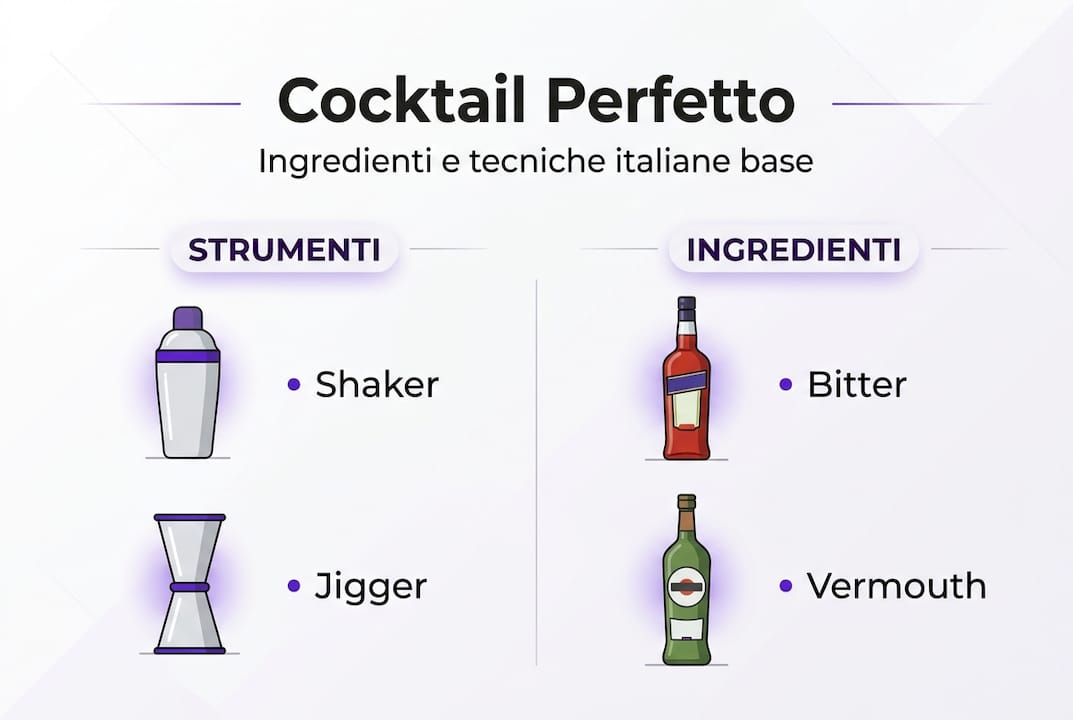
- Jigger (measuring cup): measurements aren't decorative, they determine the drink's balance
- Bar spoon: long, for stirring without shaking and without incorporating air
- Strainer: filters out ice when pouring into the glass
- Correct glasses: low tumbler for built drinks, stemmed glass for chilled cocktails
- Plenty of ice: scarce ice is the number one enemy of homemade cocktails
Ice deserves a separate discussion. It should be abundant and preferably in large cubes: they melt slower and dilute the drink less. Home freezer ice is perfectly fine, but make sure it hasn't absorbed any odors.
Basic ingredients of Italian mixology
| Category | Italian examples | Role in the cocktail |
|---|---|---|
| Bitter | Campari, regional bitters | Bitterness, structure |
| Vermouth | Punt e Mes, Carpano | Sweetness, depth |
| Artisanal gin | Italian botanicals | Alcoholic base |
| Amaro | Fernet, Averna | Long finish |
| Garnish | Orange, lemon, olives | Aroma, aesthetics |
To delve deeper into the world of flavors, it's worth exploring types of Italian bitters and understanding how each one modifies the drink's profile. Similarly, knowing about cocktail garnishes makes a huge difference to the final experience: they're not just decoration.
Pro Tip: To enhance a quality Italian spirit, work with a few carefully chosen ingredients. Three excellent ingredients always beat six mediocre ones.
Basic technique: how to build and mix a cocktail
Once the correct setup is ready, the next step is mastering construction. The "build" technique, meaning direct construction in the glass, is the foundation of almost all great Italian classics.
How to prepare an Americano step by step
- Fill the tumbler glass with plenty of ice
- Pour 30 ml of bitter (Campari or equivalent artisanal)
- Add 30 ml of red vermouth
- Stir gently with a bar spoon for 10-15 seconds
- Top with cold soda water
- Garnish with an orange slice on the rim
This Americano sequence is perfect for understanding the logic of the build: first the ice, then the denser alcoholic components, and finally the carbonated part. Respecting the order prevents losing bubbles and maintains the layering of flavors.
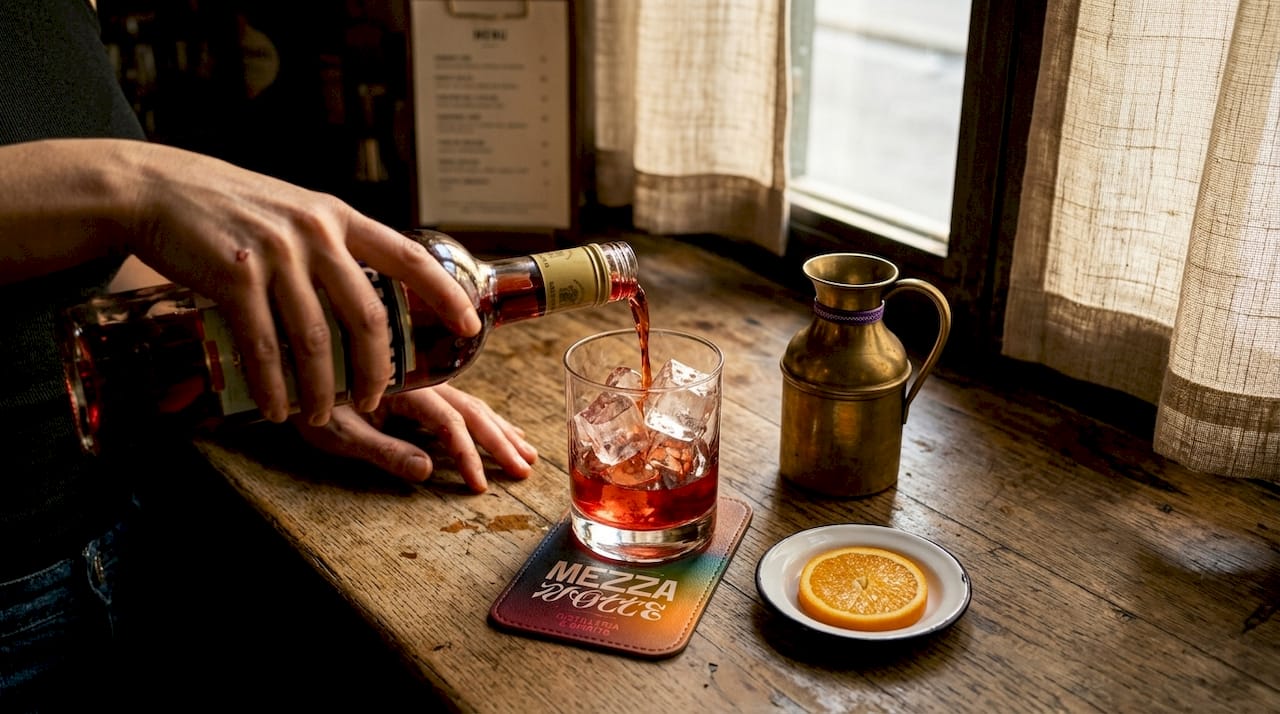
The Negroni extra: mixing in two glasses
For those who want to take it up a notch, the Negroni extra involves separate mixing in two glasses and then final assembly over ice. This technique cools the ingredients better and provides a smoother texture.
| Technique | Difficulty | Result |
|---|---|---|
| Direct build | Easy | Fresh, carbonated cocktails |
| Double mixing | Medium | More refined texture |
| Shaking | Medium | Emulsified, cold drinks |
To delve deeper into preparations with premium spirits, the techniques described in the guide to cocktails with artisanal gin are an excellent reference point. If you want to perfect a modern classic, the perfect gin and tonic recipe explains the balance between botanicals and tonic water in a very practical way.
Pro Tip: Always stir slowly and with regular circular motions. The goal is to cool and dilute just right, not to blend. Twenty seconds of gentle stirring is enough for most built drinks.
Creative variations and the use of Italian artisanal spirits
Once the technique is solid, it's time for the most fun part: experimenting. The richness of Italian artisanal distillation offers endless possibilities, but creativity works best when it follows a logic.
The most effective approach, as the structure of classic cocktails suggests, is to use traditional recipes as a technical base and incorporate Italian artisanal ingredients in place of standard ones. Change only one element at a time: replace the gin with a local botanical one, or the vermouth with a regional artisanal version. This way, you'll know exactly what changed the drink's profile.
The Negroni Extra perfectly demonstrates this concept: maintaining structure and technique and changing only one variable allows you to explore the sensory profile without losing control of the result.
Pairing ideas with Italian spirits
- Mediterranean botanical gin with artisanal red vermouth and alpine herbal bitter
- Regional Amaro instead of bitter in an Americano twist
- Sicilian citrus bitter with dry gin and fresh lemon peel
- Italian artisanal vodka with pink grapefruit juice and sea salt
- Herbal liqueur as a modifier in a white Negroni
"The sensory experience truly improves when you experiment with one variable at a time. It's the fastest way to learn what your palate truly enjoys."
Jot down each variation in a small taste journal: write down what you modified, the measurements, and your impressions. After ten attempts, you'll have a clear understanding of your tastes and combinations that work. You can find continuous inspiration among Italian aperitif cocktail recipes and spirits, or follow guides on how to customize Italian cocktails starting from classic bases.
Pro Tip: Never change two variables at once. If you replace both the gin and the vermouth, you'll never know which of the two changes improved or worsened the drink.
Alternative cocktails and pairings: beer and non-alcoholic options
The universe of Italian cocktails doesn't end with traditional recipes. Craft beer and non-alcoholic versions open up interesting possibilities for every type of guest and occasion.
Beer cocktails: two recipes to try
Beer cocktails require attention to the pairing between beer types and alcoholic bases. A beer that's too bitter can throw everything off; one that's too sweet can flatten the drink.
- Yellow Velvet: cold wheat beer, 20 ml of vodka, fresh peach juice, and a peach slice as garnish. Stir gently to avoid losing the foam.
- Night Cap: dark porter beer, 25 ml of aged brandy, a teaspoon of dissolved chestnut honey, and an orange peel. Build directly in the glass, ice optional.
Non-alcoholic alternatives: ideas for everyone
| Non-alcoholic drink | Main ingredients | Procedure |
|---|---|---|
| Bitter soda | Gentian syrup, soda, orange | Build in glass with ice |
| Green Spritz | Apple juice, sparkling water, mint | Shake with ice, strain and serve |
| Negroni zero | Non-alcoholic aperitif, cold black tea | Stir in glass, lemon garnish |
The advantages of non-alcoholic versions are often underestimated:
- They allow all guests to participate in the aperitif
- They can be paired with meals without affecting attention
- They highlight herbs and botanicals without the masking effect of alcohol
- They are perfect for occasions when driving
To complete your repertoire, you can also find inspiration among Italian aperitif cocktails, where seasonal recipes and creative variations abound.
Why innovating with method truly makes a difference
There's a common trap many enthusiasts fall into: believing that creativity means doing everything differently every time. The result is confusion, not originality. A drink you can't replicate is a drink to be forgotten.
True innovation in cocktails works exactly like in cooking: you need a stable starting point. As the approach to the sensory profile of great Italian bartenders teaches, the benchmark method means sticking to repeatable recipes and changing only one variable to explore new aromatic territories.
"Those who change everything at once discover nothing. Those who change one thing at a time learn something new every time."
This is the approach that distinguishes those who have fun at home from those who build a true drinking culture. You don't have to be a professional. You just have to be methodical. Every Italian spirit you use, every regional bitter you try, becomes a brick in a personal taste vocabulary. To understand how to pair Italian spirits consistently, just start with a solid base and build on it, one change at a time.
Discover the best artisanal spirits for your cocktails
Now that you have the basics and tricks for mixing, it's time to choose quality ingredients to truly elevate your drinks. Perfect technique is worth little without a deserving spirit.

On mezzanotte.shop you'll find a selection of Italian artisanal spirits with stories, detailed aromatic profiles, and unique identities. From the artisanal gin collection, rich in botanicals selected from every corner of Italy, to the artisanal vodka collection for those who love a clean base on which to build unexpected pairings. Every bottle is designed for those who take the drinking experience seriously.
Frequently Asked Questions
What's the easiest first cocktail to make at home?
An Americano is the ideal choice: just 30 ml of Campari bitter, 30 ml of red vermouth, soda, ice, and an orange garnish. Three minutes and the cocktail is ready.
How to choose the right spirit for a cocktail?
Start with the classic, then try replacing a variable like gin or bitter with a local artisanal version to explore different aromatic profiles without overturning the drink.
Can you make cocktails with beer?
Yes, but beer cocktails require attention to the pairing between beer type and spirit: a well-chosen craft beer with gin or brandy can yield surprising results.
How to get a balanced cocktail?
Respect measurements and pouring sequence, use plenty of fresh ice, and stir gently to avoid over-diluting the drink.
Recommendation
- Step-by-step cocktails with artisanal gin: easy guide – Mezzanotte | Distilleria & Spirits
- 6 types of cocktail garnishes you absolutely need to know – Mezzanotte | Distilleria & Spirits
- How to Pair Italian Spirits for Unique Cocktails – Mezzanotte | Distillery & Spirits
- How to customize an Italian cocktail in 2026 – Mezzanotte | Distillery & Spirits
- How to brew specialty coffee at home: a precise guide – Adira Coffee US