

Discover expert techniques for pairing Italian spirits in balanced cocktails. Scientific principles, mixology methodologies, and food pairings for unique experiences.
How to pair Italian spirits for unique cocktails
Mar 26, 2026

Effectively pairing Italian spirits can transform a simple cocktail into a memorable sensory experience, but it requires precise knowledge of aromatic balance, mixology techniques, and cultural sensitivity. Many enthusiasts find themselves disoriented by the variety of artisanal grappas, amari, gins, and vodkas available, risking unharmonious pairings or wasting the potential of high-quality products. This guide takes you step-by-step through the scientific principles of pairing, practical methodologies for creating balanced cocktails, and food pairings that enhance the cultural narrative of Italian spirits, offering you concrete tools to master the art of Italian mixology.
Table of Contents
- Key Points
- Fundamental Principles for Pairing Italian Spirits
- Mixology Methodologies for Pairing Italian Spirits
- Food Pairings and Cultural Narratives in Italian Mixology
- Advanced Tips and Common Mistakes in Italian Spirit Pairing and Mixology
- Discover Mezzanotte's Artisanal Spirits to Create Your Own Pairings
- How to Pair Italian Spirits: Frequently Asked Questions
Key Points
| Point | Details |
|---|---|
| Key aromatic affinities | Identify the three dominant notes of the spirit to guide consistent and harmonious pairings. |
| Pairings for specific spirits | Select cocktails based on the spirit's nature to enhance its aromatic characteristics and the technique used. |
| Balance between tradition and innovation | Combine classic techniques with modern solutions while maintaining gustatory coherence between ingredients and the spirit. |
| Enhancing food pairings | Test spirit-food pairings to enrich the cultural narrative and sensory experience. |
Key Points
Before diving into detailed techniques, here are the essential concepts that will transform your approach to pairing Italian spirits.
| Principle | Practical Application | Expected Outcome |
|---|---|---|
| Aromatic balance | Pair fruity notes with sweet vermouth or herbaceous notes with similar botanicals | Natural sensory harmony |
| Strategic contrast | Combine amari with sweet ingredients or chocolate | Complexity and depth of flavor |
| Contextual selection | Choose spirits suitable for the cocktail's structure (sour, highball, aperitivo) | Optimal ingredient balance |
| Custom infusions | Use juniper, bay leaf, or citrus to enrich the profile | Uniqueness and cultural narrative |
| Targeted food pairing | Pair cured meats with grappa, blue cheeses with amari | Complete gastronomic experience |
Fundamental Principles for Pairing Italian Spirits
Understanding the scientific and sensory mechanisms behind pairing allows you to create intentional rather than random combinations. Italian spirits are distinguished by complex aromatic profiles derived from botanicals, traditional distillation methods, and aging, making it crucial to know how these elements interact with other ingredients.
Aromatic affinity is the main mechanism for building harmonious cocktails with Italian spirits. This principle is based on the sharing of volatile compounds between different ingredients: when a fruity grappa meets a vermouth with notes of peach or apricot, similar chemical compounds create a perception of gustatory coherence. Conversely, strategic contrast exploits complementary oppositions, such as the bitterness of an Italian bitter balanced by the sweetness of dark chocolate or maple syrup, generating complexity without disharmony.
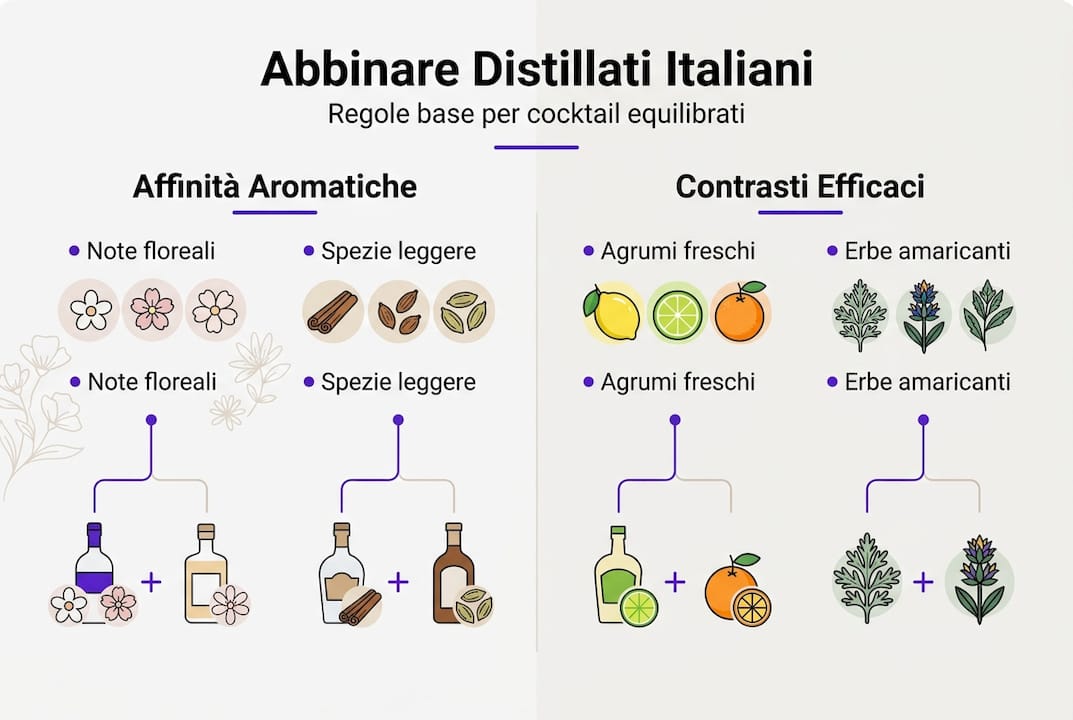
The molecular science of food pairing identifies shared volatile compounds through chemical analysis, allowing for surprising yet scientifically founded combinations. For example, the juniper present in many artisanal gins shares terpenes with rosemary and citrus, making it natural to pair with pink grapefruit-flavored tonic water or cocktails that include fresh Mediterranean herbs. This knowledge allows you to experiment with confidence, knowing that you are building on solid scientific foundations.
Here is a practical table to visualize effective aromatic pairings:
| Spirit Type | Aromatic Affinity | Effective Contrast | Cocktail Example |
|---|---|---|---|
| Young Grappa | White vermouth, green apple | Honey, maple syrup | Grappa Sour |
| Italian Amaro | Chocolate, coffee | Citrus, ginger | Amaro Highball |
| Botanical Gin | Cucumber, basil | Pink pepper, cardamom | Mediterranean G&T |
| Artisanal Vodka | Lemon, mint | Chili pepper, licorice | Vodka Martini Twist |
Pro Tip: When experimenting with new pairings, always start by identifying the three dominant aromatic notes of your spirit (fruity, herbaceous, spicy) and look for ingredients that share at least one of these characteristics to ensure a harmonious base.
To delve deeper into the sensory analysis techniques that help you identify these profiles, consult the Italian spirits tasting method. Understanding the different categories of Italian bitters further amplifies your creative possibilities. The scientific combination of flavors offers additional frameworks for exploring uncharted territory, while cocktail pairing according to experts provides consolidated professional perspectives.
Mixology Methodologies for Pairing Italian Spirits
Moving from theory to practice requires mastery of specific techniques that respect the unique characteristics of Italian spirits. Contemporary Italian mixology balances tradition and innovation, demanding precision in ingredient selection and execution.
The structural selection of the spirit determines the success of the final cocktail. Not all spirits work in every preparation: a young, fragrant grappa is magnificently suited for citrusy sours and light highballs, while an aged grappa requires more structured contexts like twists on the Negroni or Italian Old Fashioned. Italian amari shine in aperitifs and digestives, but require careful balancing with acidity and sweetness to avoid excessive bitterness.
Here is a step-by-step procedure for creating balanced cocktails with Italian spirits:
- Identify the cocktail category best suited for your spirit (aperitivo, sour, highball, stirred drink)
- Select complementary ingredients that respect aromatic affinities or create intentional contrasts
- Balance proportions following classic ratios (2:1:1 for sours, 3:1 for Martini variations) and adjust based on the spirit's intensity
- Prepare custom infusions by macerating botanicals (24-48 hours) to add complexity without overpowering the base spirit
- Use appropriate techniques: shaker for cocktails with juices, mixing glass for spirit-forward drinks
- Apply a double strain to remove particles and achieve a silky texture
- Taste and adjust balance before final service
Pro Tip: Never indiscriminately substitute one spirit for another without considering its alcoholic structure, aromatic profile, and residual sweetness. A neutral artisanal vodka cannot simply replace a botanical gin without profoundly altering the cocktail's balance.
Balanced recipes demonstrate these principles in action: the Casta Negroni replaces traditional gin with aged grappa, requiring a reduction in sweet vermouth to compensate for the higher alcohol content, while the VE.N.TO combines young grappa with Aperol and prosecco, creating a light and refreshing aperitif that enhances the spirit's fruity notes without weighing down the palate.
To further personalize your Italian cocktails with advanced techniques, explore the guide on how to personalize Italian cocktails which offers creative frameworks respectful of tradition.
Food Pairings and Cultural Narratives in Italian Mixology
Elevating the cocktail experience beyond the glass requires understanding how spirits and food interact, creating complete gastronomic moments that tell Italian territorial and cultural stories. Grappa, historically consumed as a digestif in rural family contexts, today finds new life in sophisticated cocktails that maintain a connection to Italian agricultural roots.
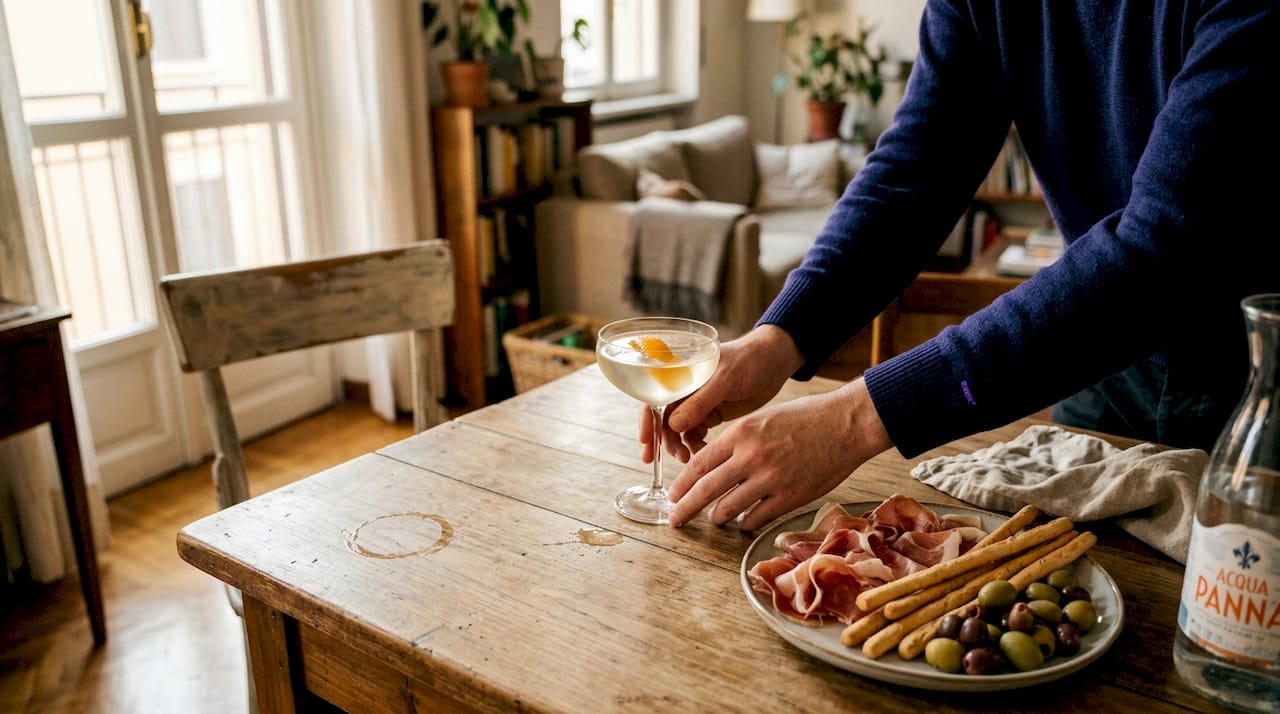
Empirically tested pairings reveal winning combinations: aged cured meats like prosciutto crudo or culatello pair magnificently with young grappa served chilled, as the alcohol cleanses the palate of fat while the fruity notes of grappa contrast the saltiness of the meat. Italian amari accompany blue cheeses like gorgonzola or castelmagno, where the bitterness balances the creamy richness and the spicy notes of the spirit enhance the cheese's complexity.
Here is a comparative table to guide your pairings:
| Occasion | Recommended Spirit | Food Pairing | Suggested Cocktail |
|---|---|---|---|
| Summer Aperitif | Botanical Gin | Olives, focaccia | Citrus Gin Tonic |
| Casual Dinner | Young Grappa | Mixed cured meats | Grappa Spritz |
| Winter After-Dinner | Aged Amaro | Dark chocolate | Amaro Old Fashioned |
| Sunday Brunch | Artisanal Vodka | Smoked salmon | Italian Bloody Mary |
| Formal Tasting | Barrique-aged Grappa | Aged cheeses | Grappa Negroni |
Infusions with officinal herbs add narrative layers to your cocktails. Macerating fresh juniper in grappa for 48 hours creates a bridge between gin tradition and Italian grappa heritage, while infusing bay leaf in artisanal vodka evokes Mediterranean cuisine and allows for cocktails that tell specific territorial stories. These customizations transform the cocktail from a simple drink into a cultural vehicle.
To further explore how cocktails and Italian flavors intertwine in contemporary gastronomic tradition, and to understand the history of Italian spirits that informs these practices, consult the dedicated resources that delve into historical context and modern applications.
Advanced Tips and Common Mistakes in Italian Spirit Pairing and Mixology
Refining your practice requires awareness of often-overlooked technical details and the ability to avoid common pitfalls that compromise even well-conceived cocktails. Optimal serving temperature varies significantly: citrusy cocktails and highballs require cold temperatures (4-6°C) to enhance freshness and maintain carbonation, while spirit-forward drinks with aged spirits benefit from ambient temperatures (18-20°C) that allow complex aromatic compounds to fully express themselves.
Avoid these frequent mistakes that sabotage potentially excellent pairings:
- Using grappa indiscriminately in every cocktail without considering whether the structure requires a neutral or aromatic spirit
- Ignoring the pH of ingredients when creating pairings, resulting in unbalanced or unstable cocktails
- Overloading cocktails with too many complex ingredients, masking the artisanal spirit that should be the star
- Neglecting the final alcohol content, creating drinks that are too strong or too weak for the consumption context
- Pairing food and cocktails based solely on personal preferences without considering principles of gustatory balance
Pro Tip: Always apply the principle of "less is more" when balancing ingredients. Three well-chosen and perfectly balanced components always outperform five mediocre ingredients vying for attention. Start with the dish or gastronomic context to define the pairing, not the isolated spirit.
The valorization of grappa in mixology has overcome initial skepticism thanks to bartenders who have shown how twists on the classic Negroni can enhance the unique characteristics of aged grappa, creating distinctly Italian taste experiences impossible to replicate with other spirits. This evolution, however, requires respect for serving temperature and appropriate preparation techniques.
Precision in measurement and a deep understanding of each ingredient separate memorable cocktails from mediocre drinks. Every milliliter counts when working with high-quality artisanal spirits that deserve contexts worthy of their complexity.
To correctly assess the quality of the spirits you use in your pairings, familiarize yourself with the criteria for evaluating a spirit that allow you to select products worthy of your creative and technical efforts.
Discover Mezzanotte's Artisanal Spirits to Create Your Own Pairings
Now that you master the principles and techniques for pairing Italian spirits, it's time to apply this knowledge with artisanal products that embody quality, cultural narrative, and aromatic complexity. Mezzanotte Spirits offers a curated selection of artisanal gin and artisanal Italian vodka, each with a distinctive botanical profile perfect for experimenting with the pairing methodologies you've learned.

Each spirit in the Mezzanotte collection tells a story through selected botanicals, traditional distillation processes, and iconic design inspired by pop culture and mythology. These elements are not just aesthetic but translate into complex aromatic profiles ideal for cocktails that balance tradition and innovation. Explore further innovative techniques and recipes in the section dedicated to Italian cocktails and flavors, where you'll find inspiration to transform theory into concrete creations that impress and delight.
How to Pair Italian Spirits: Frequently Asked Questions
What is the difference between pairing for balance and pairing for contrast?
Pairing for balance leverages aromatic affinities between ingredients that share similar volatile compounds, creating natural harmony like fruity grappa with sweet vermouth. Strategic contrast combines complementary opposing elements, such as Italian amaro with dark chocolate, generating complexity through balanced gustatory tension.
How do I choose the right spirit for each type of cocktail?
Select spirits based on the cocktail's structure: young grappa for light sours and highballs, aged grappa for spirit-forward drinks, amari for aperitifs and digestifs, botanical gin for complex aromatic cocktails. Always consider alcohol content, dominant aromatic profile, and how these elements interact with other ingredients in the specific recipe.
What precautions should I take for safe homemade infusions?
Always use high-proof alcohol (minimum 40%) to prevent bacterial growth, sterilized glass containers, and thoroughly washed fresh ingredients. Macerate in a cool, dark place for 24-48 hours maximum for delicate botanicals, up to a week for robust spices. Always filter with cheesecloth or a coffee filter before use and store in the refrigerator, consuming within two weeks.
What serving temperature optimizes aromatic profiles?
Citrus cocktails and highballs require 4-6°C to enhance freshness and maintain effervescence. Spirit-forward drinks with aged spirits benefit from 18-20°C, allowing full expression of complex aromas. Young grappa is served chilled as a digestivo, while barrel-aged grappa prefers room temperature to reveal aging notes.
What are the most versatile food pairings with Italian spirits?
Cured meats with chilled young grappa cleanse the palate of fat while maintaining savory balance. Blue cheeses with Italian amari balance creamy richness with bitter and spicy notes. Dark chocolate with aged amari creates a sophisticated sweet-bitter contrast. Olives and focaccia with botanical gin prepare the palate for light aperitifs.
How do I avoid overpowering craft spirits with too many ingredients?
Apply the "less is more" principle by limiting yourself to three to four total ingredients in addition to the base spirit. Each component should have a clear role: alcoholic base, acidic element, sweetener, aromatic modifier. Balance proportions, allowing the spirit to remain a recognizable protagonist, not a generic background. Taste during preparation and adjust incrementally rather than adding everything at once.
Recommendation
- How to customize an Italian cocktail in 2026 – Mezzanotte | Distillery & Spirits
- 6 types of cocktail garnishes you need to know – Mezzanotte | Distillery & Spirits
- Italian spirits tasting method: practical guide 2026 – Mezzanotte | Distillery & Spirits
- Discover Italian bitter types for unique cocktails – Mezzanotte | Distillery & Spirits