

Curious to discover the best Italian artisanal bitters of 2026? Explore stories, unique flavors, and tips to choose the perfect bitter for you!
7 Extraordinary Best Italian Artisanal Liqueurs of 2026
Feb 11, 2026

Have you noticed how Italian artisanal bitters are experiencing a veritable renaissance in 2026? More and more enthusiasts and connoisseurs are seeking the authentic flavors, fascinating stories, and timeless recipes that make the finest Italian artisanal bitters unique.
In this article, I'll guide you through this year's seven standouts. Together, we'll explore surprising flavors, intriguing stories, prices, and details that make all the difference. Get ready to discover how to choose your next amaro and be inspired by this exclusive selection. Read on!
What makes an Italian artisanal amaro unique?
Discovering what makes the best Italian artisanal bitters truly special is like embarking on a journey through history, tradition, and innovation. Have you ever wondered why the taste of an artisanal bitter always leaves an indelible impression? Let's explore together, starting from the roots and working our way to the glass.
Historical origins and regional tradition
Bitter liqueurs have deep roots in Italian history, born in monasteries and families who passed down secrets from generation to generation. The difference between an industrial and an artisanal liqueur is immediately noticeable: the former focuses on mass production, while the latter preserves unique recipes, local ingredients, and small batches.
Each region boasts its own "liquid treasure." From Piedmont, with its Alpine herbs, to Sicily, where citrus fruits and wild plants from Mount Etna create unmistakable aromatic profiles. The Marche region, meanwhile, surprises with bitters rich in native roots and spices. If you'd like to delve deeper into the history and curiosities that make Italy's finest artisanal bitters so iconic, I recommend reading Italian Bitter: History and Curiosities .
This regional heritage not only influences the taste but also speaks to the passion and culture of those who produce it.
Artisanal production techniques
The magic of Italy's finest artisanal bitters comes from slow and meticulous processes. Cold maceration extracts delicate aromas from hand-picked herbs, spices, roots, and citrus fruits. Infusion and distillation are key steps that, combined with manual processing, guarantee authenticity and uniqueness.
Artisanal producers often work in small batches, carefully monitoring every step to offer a superior quality product. In 2025, the artisanal bitters market grew 18%, a sign that more and more people are choosing authentic, carefully crafted products.
Choosing the best ingredients, respecting nature's rhythms, and taking care of every detail ensures that every sip is an inimitable experience.
Organoleptic profile and pairings
When you taste one of Italy's finest artisanal amari, your palate is enveloped in a balance of bitterness, sweetness, and herbaceous and spicy notes. Each label offers a different, often surprising, sensory journey.
Want some ideas on how to best enjoy them? Try them with dark chocolate desserts, aged cheeses, or in creative cocktails. A guided tasting can help you appreciate all the nuances: observe the color, smell the botanical notes, savor slowly, and let the lingering finish carry you away.
Discovering the right pairings is part of the charm that only the best Italian artisanal bitters can offer.
7 Extraordinary Best Italian Artisanal Liqueurs of 2026
Are you ready to discover the best Italian artisanal bitters that are captivating connoisseurs and the curious in 2026? I'll guide you through flavors, stories, and unique characteristics, to help you find the bitters that truly awaken your senses.
Bitter Formidable – Rome
We begin our ranking of the best Italian artisanal bitters with Amaro Formidabile, a true Roman gem.
| Detail | Given |
|---|---|
| Price | €32/500ml |
| Region | Rome |
| Botanicals | Gentian, medicinal herbs |
| Profile | Decisive, herbaceous, persistent |
| Target | Bartenders, enthusiasts |
This artisanal amaro is made from a careful selection of typical Lazio herbs. Gentian dominates the palate, followed by fresh notes of medicinal herbs.
Pros:
- Intense, authentic flavour
- Elegant and modern packaging
Against:
- Limited availability
- Small batch production
Perfect for those who love Roman tradition, Amaro Formidabile is suitable for both pure enjoyment and creative mixology. If you'd like to discover other similar products, I recommend checking out the collection dedicated to artisanal Italian bitters .
Amaro Nardini – Bassano del Grappa
Among the best Italian artisanal bitters, Amaro Nardini, a timeless classic, cannot be missed.
| Detail | Given |
|---|---|
| Price | €24/700ml |
| Region | Veneto |
| Botanicals | Licorice, mint, orange |
| Profile | Balanced, round |
| Target | Classic lovers, restaurateurs |
Nardini's historic recipe offers hints of soft licorice, balsamic mint, and orange zest. The balance of sweetness and bitterness makes it ideal as a digestif after a meal.
Pros:
- Historic brand, great reliability
- Excellent mixability
Against:
- Less innovative than others
- Traditional aromatic profile
If you're looking for reliability and history, this is one of the best artisanal Italian bitters to always keep in your pantry.
Amaro Rubino – Sicily
Amaro Rubino is born in the heart of Sicily, a true expression of the region among the best Italian artisanal bitters.
| Detail | Given |
|---|---|
| Price | €28/500ml |
| Region | Sicily |
| Botanicals | Etna citrus fruits, wild herbs |
| Profile | Fresh, citrusy, mineral |
| Target | Collectors, lovers of the Mediterranean |
Produced in micro-batches, it uses only native citrus fruits and herbs grown on the slopes of Etna. The result is a bitter liqueur with a fresh aromatic profile, with notes of orange zest and mineral hints.
Pros:
- Local and genuine ingredients
- Aromatic complexity
Against:
- Regional distribution
- Seasonal availability
If you want to taste an authentic piece of Sicily, Amaro Rubino is one of the best artisanal Italian bitters for you.
Etna Bitter – Catania
When it comes to the best artisanal Italian bitters, Amaro dell'Etna is a timeless classic.
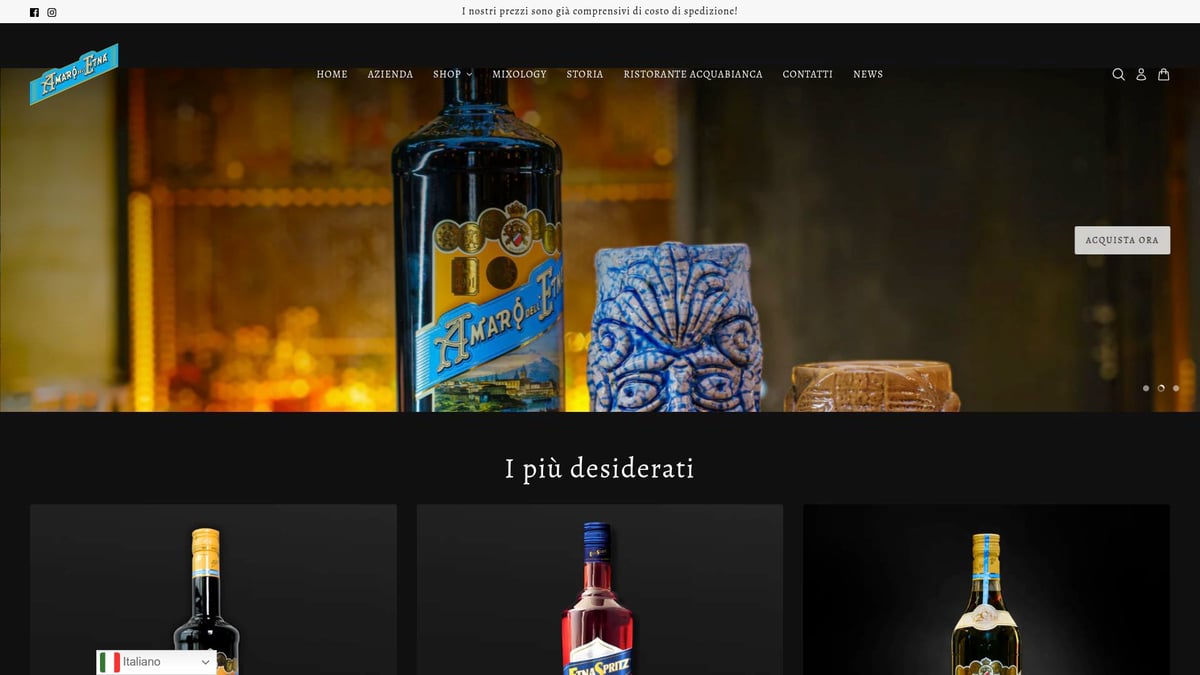
| Detail | Given |
|---|---|
| Price | €19/700ml |
| Region | Sicily (Catania) |
| Botanicals | 26 Secret Herbs and Spices |
| Profile | Intense, spicy, persistent |
| Target | Families, tourists, restaurateurs |
The recipe, preserved since 1901, includes over 26 botanicals, including local herbs and spices. It's intense and spicy on the palate, perfect for ending a meal.
Pros:
- Affordable price
- Centuries-old history
Against:
- Less suited to modern mixology
- Traditional profile
If you're looking for a sure thing, this is one of the best artisanal Italian bitters to try at least once.
Amaro Montenegro – Bologna
Amaro Montenegro is a national icon among the best Italian artisanal bitters, loved for generations.
| Detail | Given |
|---|---|
| Price | €18/700ml |
| Region | Emilia-Romagna (Bologna) |
| Botanicals | 40, between herbs and citrus fruits |
| Profile | Sweet and bitter, citrusy |
| Target | Bartenders, young adults |
The recipe includes 40 botanicals that impart a citrusy aroma and balanced sweetness. Perfect for innovative cocktails and for those who want to experiment.
Pros:
- Wide availability
- Iconic and versatile recipe
Against:
- Large-scale production
- Less artisanal than others
If you want to enter the world of the finest Italian artisanal bitters, Montenegro is an excellent place to start.
Amaro Santoni – Florence
Amaro Santoni, directly from Florence, represents the refinement of the best Italian artisanal bitters.

| Detail | Given |
|---|---|
| Price | €30/700ml |
| Region | Tuscany (Florence) |
| Botanicals | Rhubarb, citrus fruits, spices |
| Profile | Sophisticated, aromatic |
| Target | Mixologist, gourmet |
Made with Tuscan rhubarb, citrus fruits, and fine spices, it stands out for its elegant aromatic profile. It's a popular choice in creative cocktails and trendy bars.
Pros:
- Sophisticated taste
- Artistic and recognizable packaging
Against:
- Medium-high price
- Not always easy to find
For those seeking something refined and modern among the best Italian artisanal bitters, Santoni is the right choice.
Amaro Erbes – Trentino
We close our ranking of the best Italian artisanal bitters with Amaro Erbes, an authentic expression of the Trentino Alps.
| Detail | Given |
|---|---|
| Price | €35/500ml |
| Region | Trentino |
| Botanicals | Alpine herbs, organic |
| Profile | Intense herbaceous, balsamic |
| Target | Organic, mountain lovers |
Erbes uses organic Alpine herbs, hand-picked and aged in barrels. The result is a bitter liqueur with an intense, herbaceous flavor and a balsamic touch reminiscent of the Trentino woods.
Pros:
- Organic ingredients
- Authentic artisan process
Against:
- High price
- Limited production
If you love the best artisanal Italian bitters and want something truly authentic and sustainable, Erbes is the top of the line.
How to choose the perfect artisanal amaro for you
Choosing among the best artisanal Italian amaros can seem like a fascinating journey, but do you really know where to start? First, think about what you truly enjoy: do you prefer a bold, bitter taste, or are you more into sweet, spicy notes? Also pay attention to the herbal nuances and citrus aromas that strike you most. Many enthusiasts rely on instinct, but knowing your preferences helps you find the amaro that seems tailor-made for you.
Don't forget to consider the occasion. Looking for an after-dinner digestif, a special ingredient for your cocktails, or perhaps an original gift for a gourmet friend? Check out this table to help you decide:
| Occasion | Recommended Amaro Style |
|---|---|
| Digestive | Traditional, intense |
| Cocktail | Versatile, citrus aromas |
| Gift | Careful packaging, limited production |
Another key aspect when choosing the best artisanal Italian bitters is the provenance of the ingredients. Choose products with a short supply chain, preferably made with local herbs and spices. Always read the label: look for natural or organic ingredients and learn about the artisanal production process.
If you're new to the craft, a guided tasting can be truly enlightening. Try different amaros in small samples, perhaps comparing the differences between amaro and bitters to better understand what makes each product unique. This article on thedifference between amaro and bitters can help you clarify any doubts and sharpen your palate.
Finally, remember that 62% of Italian consumers prefer artisanal products: you're in good company in your pursuit of excellence! Follow your taste buds, experiment, and be surprised by the variety that only the best Italian artisanal bitters can offer.
Trends and Innovations in Italian Artisanal Liqueurs 2026
In 2026, the landscape of Italy's finest artisanal bitters is rapidly evolving. Innovation intertwines with tradition, giving rise to new experiences that captivate both purists and those approaching this world for the first time. Let's take a look at the most interesting trends redefining the sector.
New ingredients and native botanicals
In recent years, the producers of Italy's finest artisanal bitters have embarked on a quest to discover native botanicals and rare ingredients. They collaborate with small farmers, local botanists, and universities to rediscover forgotten or rarely used herbs, such as Piedmontese rue or Sicilian orange blossom. This leads to previously unseen aromatic profiles, capable of astonishing even the most expert palate.
- Rare local herbs
- Collaborations with botanists
- Continuous experimentation
Experimentation is now a constant and each distillery aims to create a unique identity.
Sustainability and eco-friendly packaging
Sustainability has become a key focus among the distilleries producing the finest Italian artisanal bitters. The use of renewable energy and eco-friendly packaging, such as recycled glass and natural cork closures, is growing. Many companies are adopting virtuous practices, supporting biodiversity and reducing their environmental impact. According to an analysis of the bitters market growth , this focus on sustainability is also driving the industry's global expansion.
These aspects attract a clientele that is increasingly attentive to origin and short supply chains.
Sensory experiences and mixology
2026 marks a boom in events dedicated to amaro: masterclasses, guided tastings, and mixology workshops. The best Italian artisanal amaros are the protagonists of new creative cocktails, enhancing both the pure tasting experience and the pairing with desserts and cheeses. Looking for some inspiration? Discover amaro and cocktails: ideas and recipes for experimenting at home.
- Masterclasses throughout Italy
- Innovative cocktails
- Gourmet pairings
This trend strengthens the culture of bitterness as a social and multisensory experience.
Digitalization and online sales
Digitalization has revolutionized the way you discover and purchase the finest Italian artisanal bitters. Distilleries are investing in e-commerce, specialized platforms, and online communities where enthusiasts share reviews and advice. This has made access to exclusive products easier and more immediate, fostering the emergence of new generations of connoisseurs.
Today, all it takes is one click to receive a handcrafted bottle directly to your home, enriching your collection or offering a unique experience.
Do you want to truly savor the best that artisanal Italy has to offer after this journey through stories, flavors, and innovation? I'm sure you're now curious and perhaps even eager to discover an amaro that also speaks of your region. Want to test your taste buds and try something authentic, crafted with passion and respect for tradition, just like Alex and Giacomo do in their distillery? Then I recommend you take a look here: Discover our Amari
Who knows, maybe the next amaro to conquer your palate will be one of theirs!